
Avenc Emili Sabaté
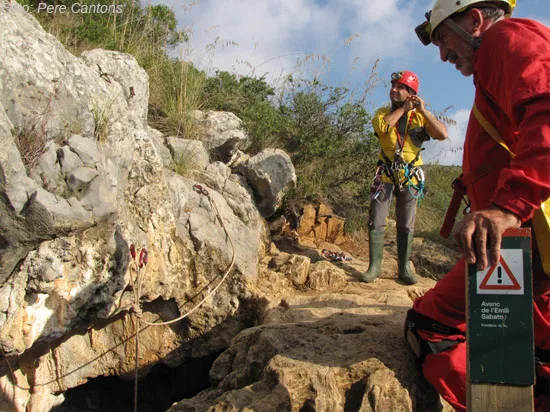
Avenc Emili Sabaté: a Garraf classic, 39 m deep, with a 19 m entrance shaft and decorated chambers.
EspeleoWorld
Avenc Emili Sabaté
Avenc Emili Sabaté: a Garraf classic, 39 m deep, with a 19 m entrance shaft and decorated chambers.
Sitges · Garraf
Length: 134 m · Depth: 39 m
Updated record
https://espeleoworld.com/en/c/avenc-emili-sabate
Information can change. Always verify coordinates, access, weather, and cave conditions before setting out.
Avenc Emili Sabaté: a Garraf classic, 39 m deep, with a 19 m entrance shaft and decorated chambers.
Topographic
Espeleoindex · CC BY-NC 4.0, https://creativecommons.org/licenses/by-nc/4.0/ · Image © its author.
Photos
Espeleoindex · CC BY-NC 4.0, https://creativecommons.org/licenses/by-nc/4.0/ · Image © its author.
Description
Morphology
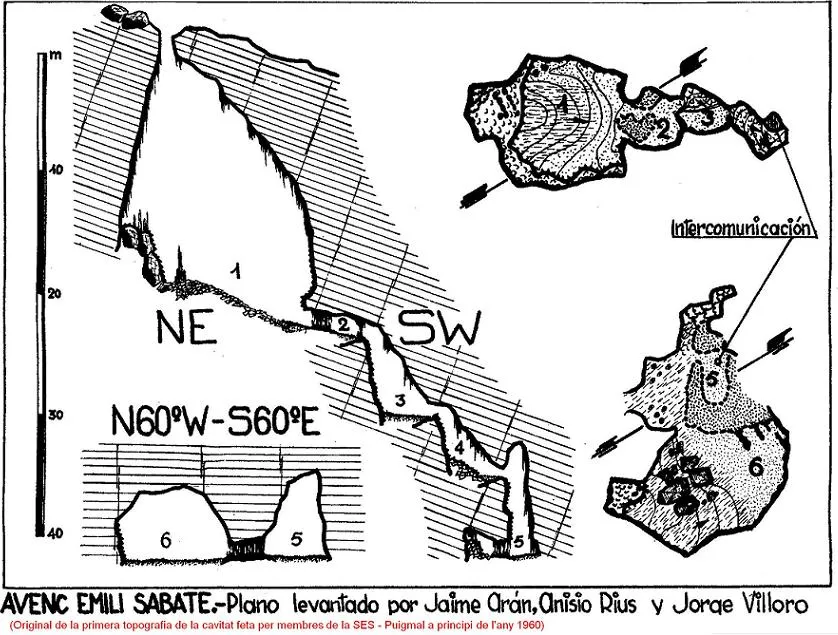
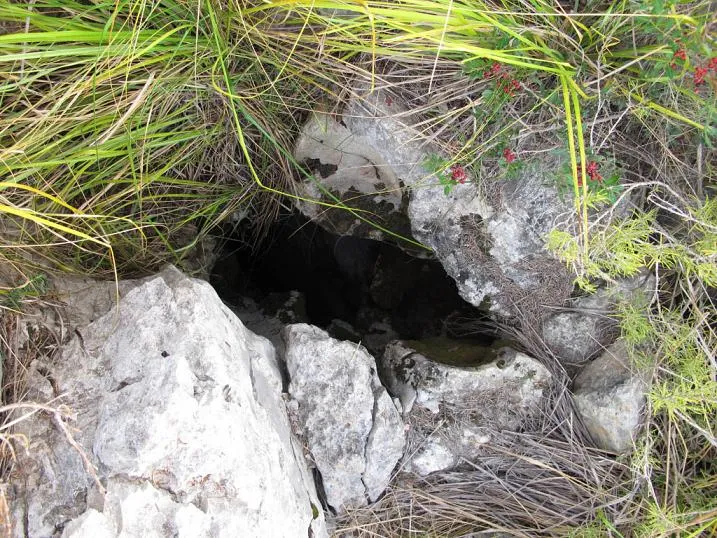
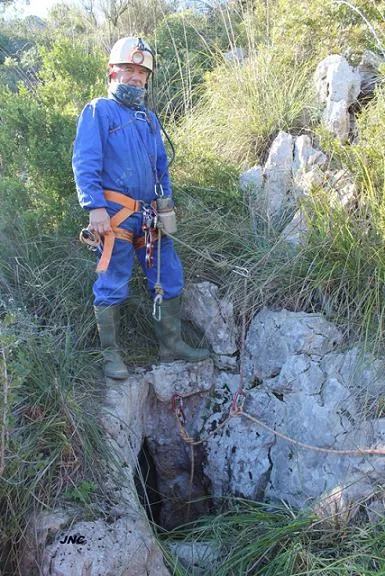
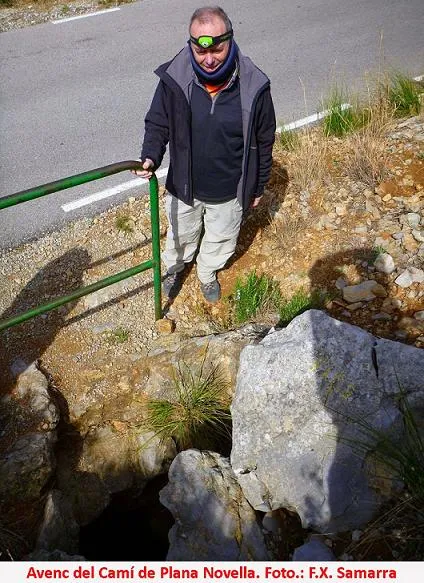
The mouth, opened by digging out (in the early years it was very small, but over time it has been enlarged artificially: approximately 0.6 x 1.4 m), communicates with a magnificent 19-metre vertical shaft that forms an almost circular chamber about 12-15 metres in diameter. From the landing point and below the mouth, it is possible to climb back up, between blocks and massive stalagmitic formations, about 3 metres to reach the highest point of the chamber. In the opposite direction, the floor presents a descending ramp covered by small clastic materials. At the lowest point of the chamber a passage begins, of reduced dimensions but easy to negotiate, which descends by short ramps and small drops, between heavily decorated walls. This leads to a narrow crawl, with very smooth walls (popularly known as el Tap de Xampany), which opens into a small 4-metre shaft. At its bottom a low-roofed passage opens out into a terminal chamber about 10 by 15 metres and 3-4 metres high. At the entrance the floor is flat, but the northernmost side presents an ascending ramp between blocks that climbs until it becomes closed.
Speleothems
The chamber of the entrance shaft still preserves some spectacular lithogenic formations, mainly on the walls. In the low-roofed passage there were many tubular stalactites, macarrons, that formed a curtain.
Progression
At the small 4-metre shaft it is advisable to use a rope. At one time it was almost impossible to get through the low-roofed passage without breaking some of the many tubular stalactites, macarrons, that formed a curtain.
History
As we were told many years ago, some companions from the Puigmal wanted to play an innocent prank on Emili Sabaté and before the Christmas holidays of 1959 they made up that they had found a new pit, that it was in the ravine behind the Pleta and that they could not go because they were holidays and they had to be with their families, so he should go and take a look.
On Sunday 27 December 1959, accompanied by his friend Màrius Folch (Francesc Cardeña told us that he also took part in the trip), they went to look for the pit. After a good while searching in the place they had been told, no hole appeared. They stopped to have breakfast and, while eating, Sabaté was scratching some stones with his hand. Suddenly it seemed to him that a small stone rolled a little through the small opening he had been making. They began to dig out and soon a small mouth appeared that gave access to the magnificent entrance shaft. Needless to say, the surprise was for the companions who had authored the joke when they learned of the discovery.
In the following weeks the total exploration and the survey of the cavity were carried out by the people of the SES Puigmal. For many years the maximum depth was fixed at 46 metres and it was not until 1992 that members of the GE Badalona made a survey revision placing it at -39 metres.
The Avenc Emili Sabaté became possibly the most visited cavity in the Garraf and a true school for many generations of Catalan cavers.
User Comments (0)
No comments yet.
Be the first to share your experience!
Registered Explorations (0)
No explorations registered yet.
Register your visit to this cave!
Bibliography
- Borràs, J. (1974).- Catálogo espeleológico del macizo de Garraf. Vol. II. 166 pp. Barcelona.
- Ferrer, V. (2006).- Avencs de Garraf i d’Ordal. 152 pp. + llibret fitxes i topografies. Edició de l’autor. Barcelona.
- Porcel, E. (2008).- “ Els avencs de les Alzines, dels Arqueòlegs, dels Llambrics, de l'Emili Sabaté i Petit Pasant (Massís de Garraf)”. Cavernes (27): 40-51. Grup d'Espeleologia de Badalona
- SES-CE Puigmal (1960).- Memoria X Curso Oficial de Exploraciones Subterráneas. SES Puigmal: 36 pàgines sense numerar. Barcelona.
- Fotografies extretes del blog: Espeleobloc (post del 10-10-2011)
Nearby caves


Source: Espeleoindex (espeleoindex.com), modified. CC BY-NC 4.0, https://creativecommons.org/licenses/by-nc/4.0/