
les Tunes
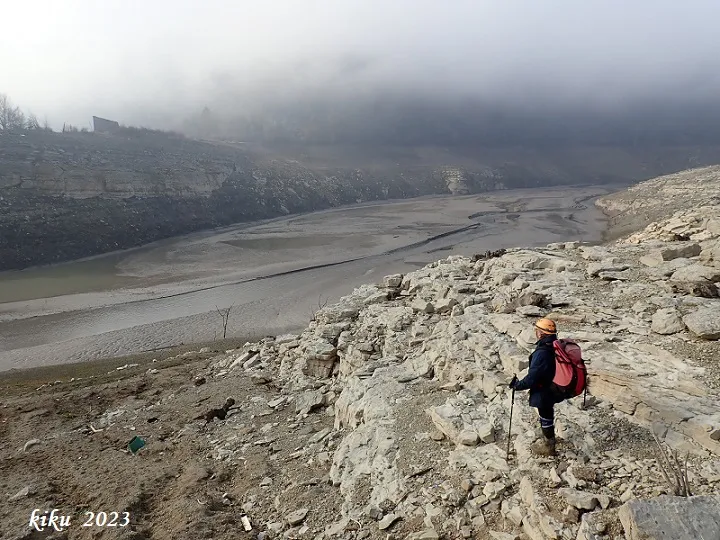
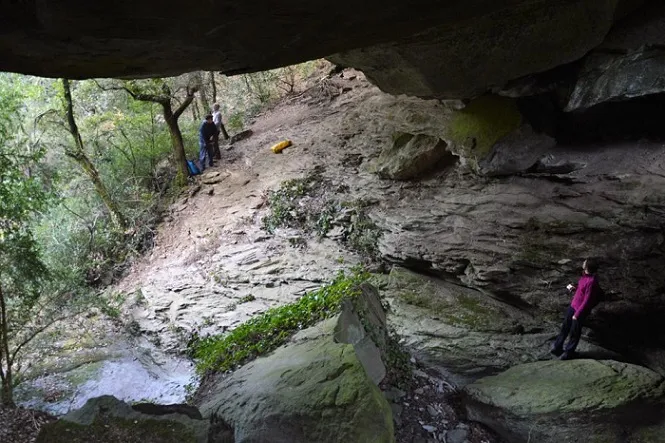
Cova de les Tunes, normally submerged in the Sau reservoir (Tavertet), with two entrances and two-storey galleries.
EspeleoWorld
les Tunes
Cova de les Tunes, normally submerged in the Sau reservoir (Tavertet), with two entrances and two-storey galleries.
Tavertet · Osona
Length: 324 m · Depth: 8 m
Updated record
https://espeleoworld.com/en/c/les-tunes
Information can change. Always verify coordinates, access, weather, and cave conditions before setting out.
Cova de les Tunes, normally submerged in the Sau reservoir (Tavertet), with two entrances and two-storey galleries.
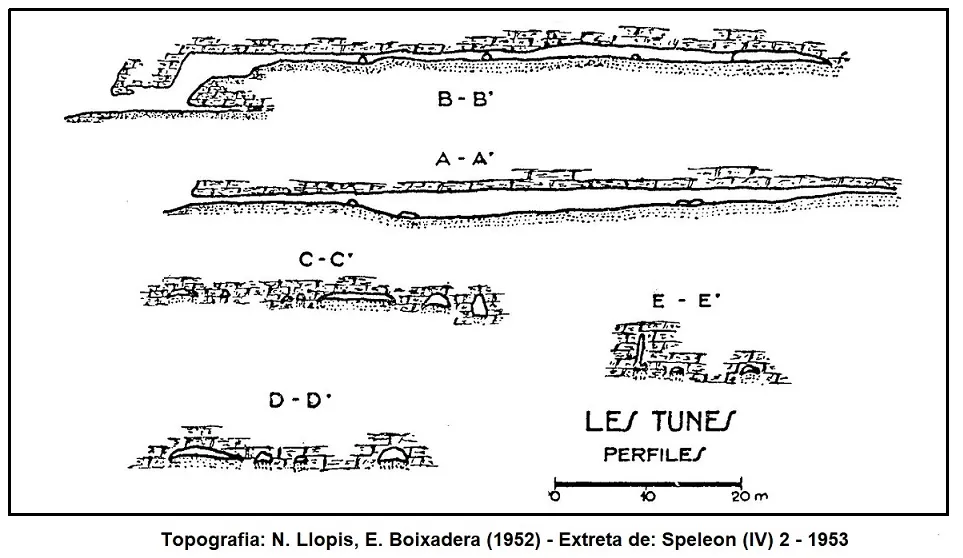
Topographic
Espeleoindex · CC BY-NC 4.0, https://creativecommons.org/licenses/by-nc/4.0/ · Image © its author.
Photos
Espeleoindex · CC BY-NC 4.0, https://creativecommons.org/licenses/by-nc/4.0/ · Image © its author.
Description
Morphology
les Tunes form a complex of primarily horizontal cavities, which can be divided into two storeys separated by a difference of about 5 metres, each of them presenting a direct exit to the exterior.
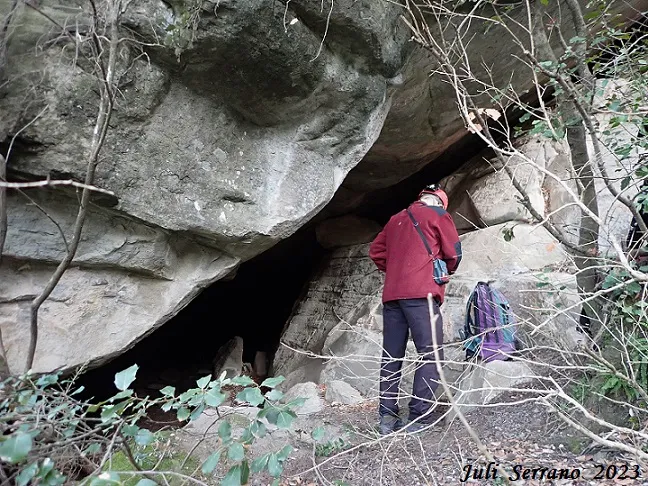
On the lower level there are two small tubular and narrow caves of 12 and 7 m respectively, open beside the entrance of the main cave, which presents an entrance of 1.60 by 0.80 metres, giving way to an elongated chamber from which a lateral diverticulum emerges; the end of the aforementioned chamber is formed by a wall with a 45º inclination, connected at the upper part with the high level of the cavity.
Access to the upper galleries is effected by a tubular passage 17 m long, at which point there is a perpendicular crawlway towards the W and where the gallery becomes descending and continues for a further 50 m until it becomes impenetrable; 22 m before reaching this point we find a small gallery perpendicular towards the W20N, which links with another parallel to the previous one of 24 m, which by means of a conduit similar to the previous one, reaches another N-S gallery that communicates with some very low-ceilinged chambers, which on one side lead to the first bifurcation that we have mentioned of the upper storey, while at the S end they communicate with an N-S gallery that gradually loses width and height until it emerges at the upper part of the lower chamber.
Hydrology
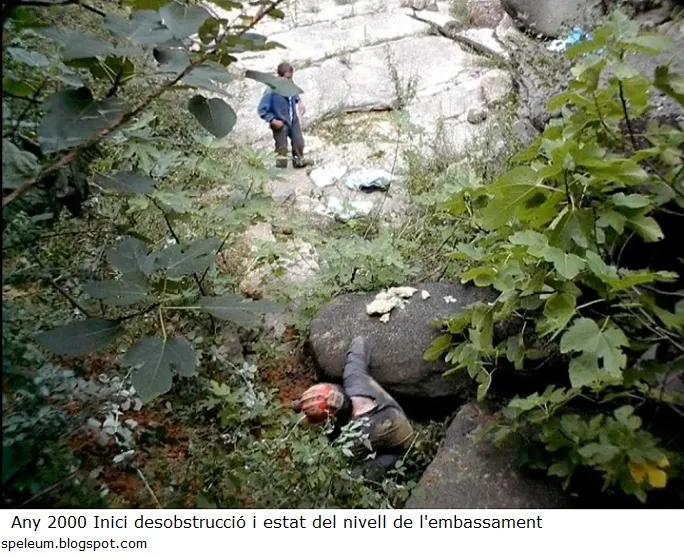
From August 1963 the cavity remains submerged under the waters of the Sau reservoir and it is not until February 2023, due to a long drought, that the reservoir reaches only 17% of its capacity and the upper entrance of the cavity is left uncovered; this, however, is COVERED by sediments; nevertheless, because the reservoir level is below the entrance and the cave is full of water, the load of this has opened a passage between the sediments so that it can drain, therefore access to the cavity is not possible.
In March 2023 the reservoir level reaches 10.2% and the level of the impounded water remains below the level of the lower entrance; water no longer comes out through the upper entrance; now the water comes out through the lower entrance where it has opened a small passage between the sediments to drain.
History
The first reference that we find to les Tunes is in the Catàlech Espeleològich de Catalunya (1897) by N. Font i Sagué, who extracts the data from the interrogation about Catalan cavities that the Centre Excursionista de Catalunya had made to its territorial delegates according to the proposal of the member Dionís Puig the previous year. Font says textually: Sant Pere de Casserres. 136) -les Tunes- Cova situada a la mà esquerra del riu Ter. Forma una llarga galeria interrompuda per una ensulciada.
Faura i Sans also includes it in his Recull (1909).
It seems that in July 1934 Francesc Español visited the cavity for bioespeleological purposes and collected a carabid.
It is not until December 1951 and January 1952 that members of the GES – CMB, led by N. Llopis Lladó, begin the work and study of the whole cavity published in 1953 and which in fact are the only ones known. Those of the GES visited the caves periodically in successive years and we know that the last visit they made was in September 1962, the year in which the Sau reservoir was inaugurated. We have no data but surely les Tunes were visited by other groups in this period of time.
From this date the water flooded the reservoir and the cave remains drowned at quite a few metres below the maximum level of the reservoir. Taking advantage of the great drought that Catalonia has suffered since 2022 and the first months of 2023, a team from Espeleoíndex since December 2021 has gone several times to observe whether the low water level allowed reaching the entrances, but the result had always been negative until 16-2-2023 when the reservoir, with 17% of its capacity and at elevation 389 masl, allowed access to the point where the upper entrance is located, it being impossible to enter due to the accumulated sediments and the water that springs from inside the cavity. A month later and after the political decision to transfer water from the Sau reservoir to that of Susqueda, the Sau reservoir drops to 10.2% of its capacity, standing at elevation 383.1 masl (11-03-2023). This allows access to the point where the lower entrance of the cavity should be, but like the upper one it is full of sediments and in this case it has also opened a passage between them to drain the water accumulated inside.
Bio
Coleoptera; Carabidae; Trechinae
- Porotachys bisulcatus (Nicolaï, 1822) F. Español (7-1934)
User Comments (0)
No comments yet.
Be the first to share your experience!
Registered Explorations (0)
No explorations registered yet.
Register your visit to this cave!
Bibliography
- Font i Sagué, N. (1897). “Catàlech Espeleològich de Catalunya”. Butlletí CEC (24): 8-20, (25) : 79-84. (26) : 107-112. (27) : 141-149. (29) : 197-202. (31):235-23 (32):249-253. (33) : 266-274. (35) : 311-323. CE Catalunya. Barcelona.
- Faura i Sans, M. (1909).- “Recull espeleològic de Catalunya”. Sota Terra I: 1-26 Club Muntanyenc. Barcelona.
- Español, F. (1945).- “Coleópteros nuevos o interesantes para la fauna Ibero-Balear”. Eos (21) 83-105.
- Llopis, N.; Boixadera, E. (1953).- “Les Tunes, fenómenos carsticos en los maciños eocenos del Valle del Ter (prov. de Barcelona)”. Speleon IV (2): 63-83. Oviedo.
- Borràs,J.;Miñarro,JM.;Talavera,F.(1981).-”El Baix Empordà, el Gironès, la Selva, l'Osona, el Vallès Oriental i el Maresme”. Catàleg Espeleològic de Catalunya (Vol.6):1-292. Ed. Políglota. Barcelona.
- Valles, Jordi de (2010).-”Alt Empordà, Baix Empordà, Gironès, Osona, Pla de l'Estany, Selva”. Catàleg Espeleològic de Catalunya (4):1-397. EC Gràcia – FCE.
- Dades, coordenades, situació i fotografies facilitades per Juli Serrano i Montse Roca (SIE-CEA) amb Francesc Rubinat (ERE del CEC), 16 de febrer de 2023 i 11 de març de 2023.
Nearby caves


Source: Espeleoindex (espeleoindex.com), modified. CC BY-NC 4.0, https://creativecommons.org/licenses/by-nc/4.0/