
Cueva de la Lastrilla
Cueva de la Lastrilla, in Sámano (Castro Urdiales, Cantabria), is a cavity of about 15 km of development with three entrances and Paleolithic rock art.
EspeleoWorld
Cueva de la Lastrilla
Cueva de la Lastrilla, in Sámano (Castro Urdiales, Cantabria), is a cavity of about 15 km of development with three entrances and Paleolithic rock art.
Castro-Urdiales
Length: 15000 m · Depth: 250 m
Updated record
https://espeleoworld.com/en/c/cueva-de-la-lastrilla-castro-urdiales
Information can change. Always verify coordinates, access, weather, and cave conditions before setting out.
Cueva de la Lastrilla, in Sámano (Castro Urdiales, Cantabria), is a cavity of about 15 km of development with three entrances and Paleolithic rock art.
Description
Morphology
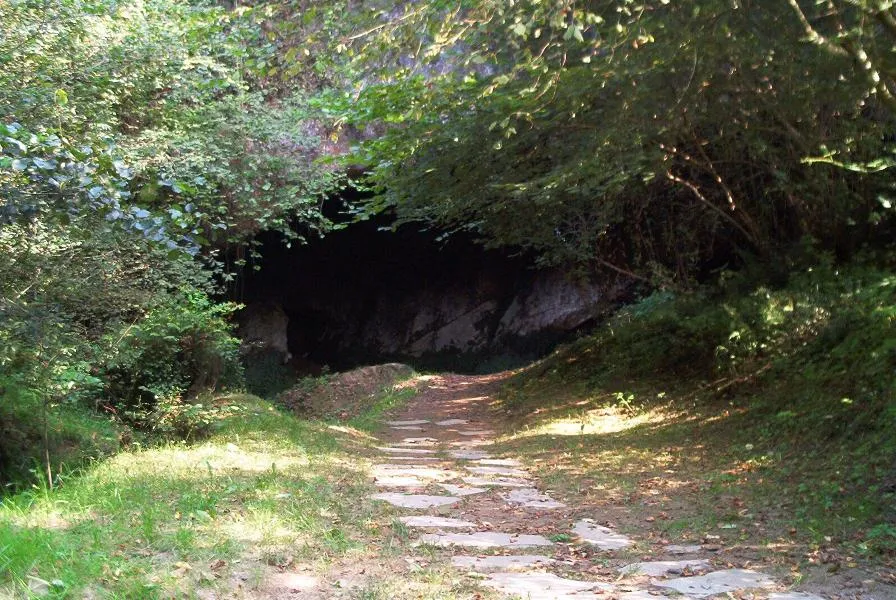
The main entrance hall measures about 20 × 8 m, and most of the archaeological finds come from it. That entrance is prepared for excavation.
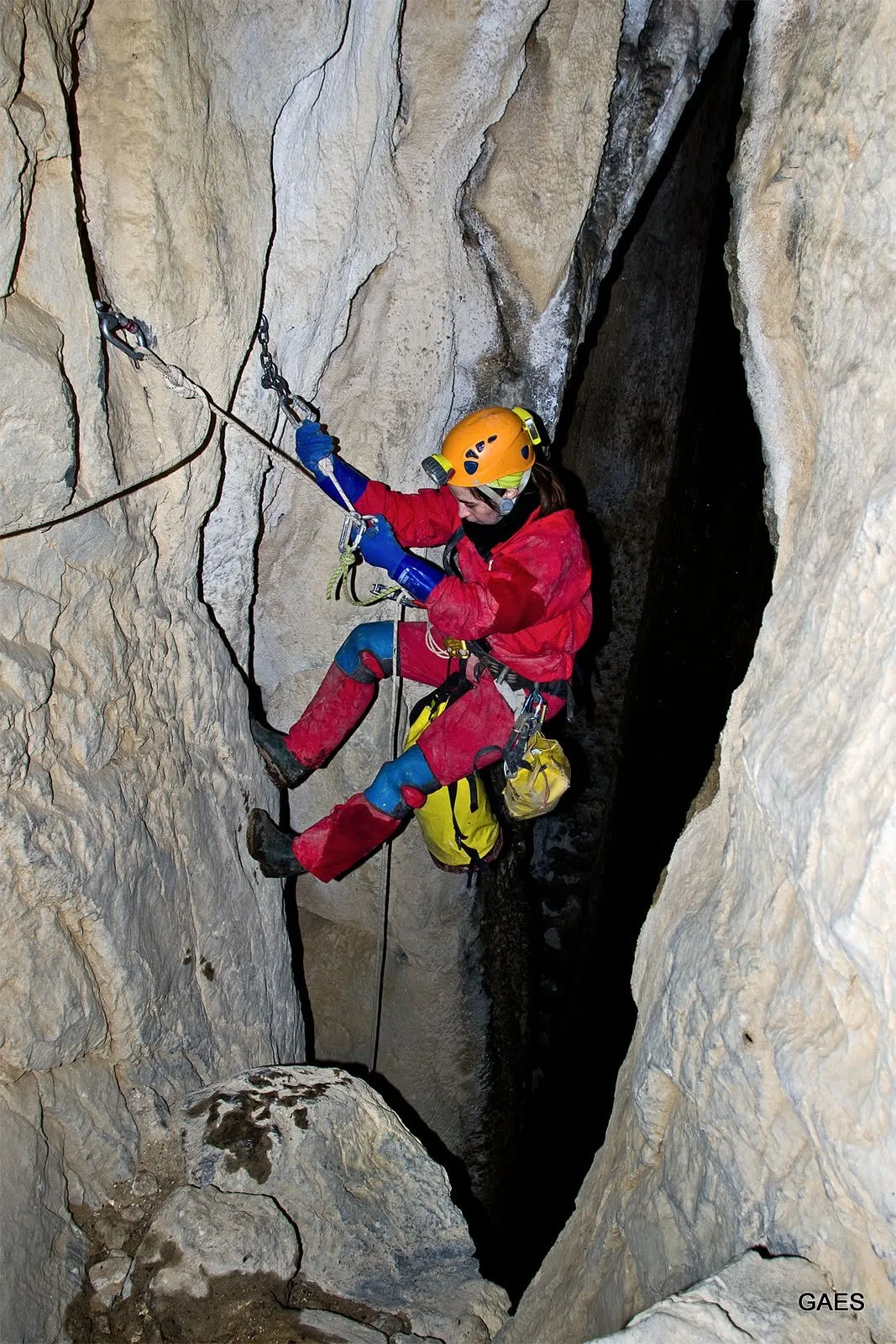
The cave has three entrances at different heights, each open to a different level, and the levels communicate. The lowest is the water outlet of the active network. The highest leads to a gallery. The local club estimates about 15 km of development, not counting the entrance areas.
Hydrology
The lower portal functions as the resurgence of the system, so that the deep part of the cave is traversed by water. The sources consulted do not detail the layout of the active network.
Other details
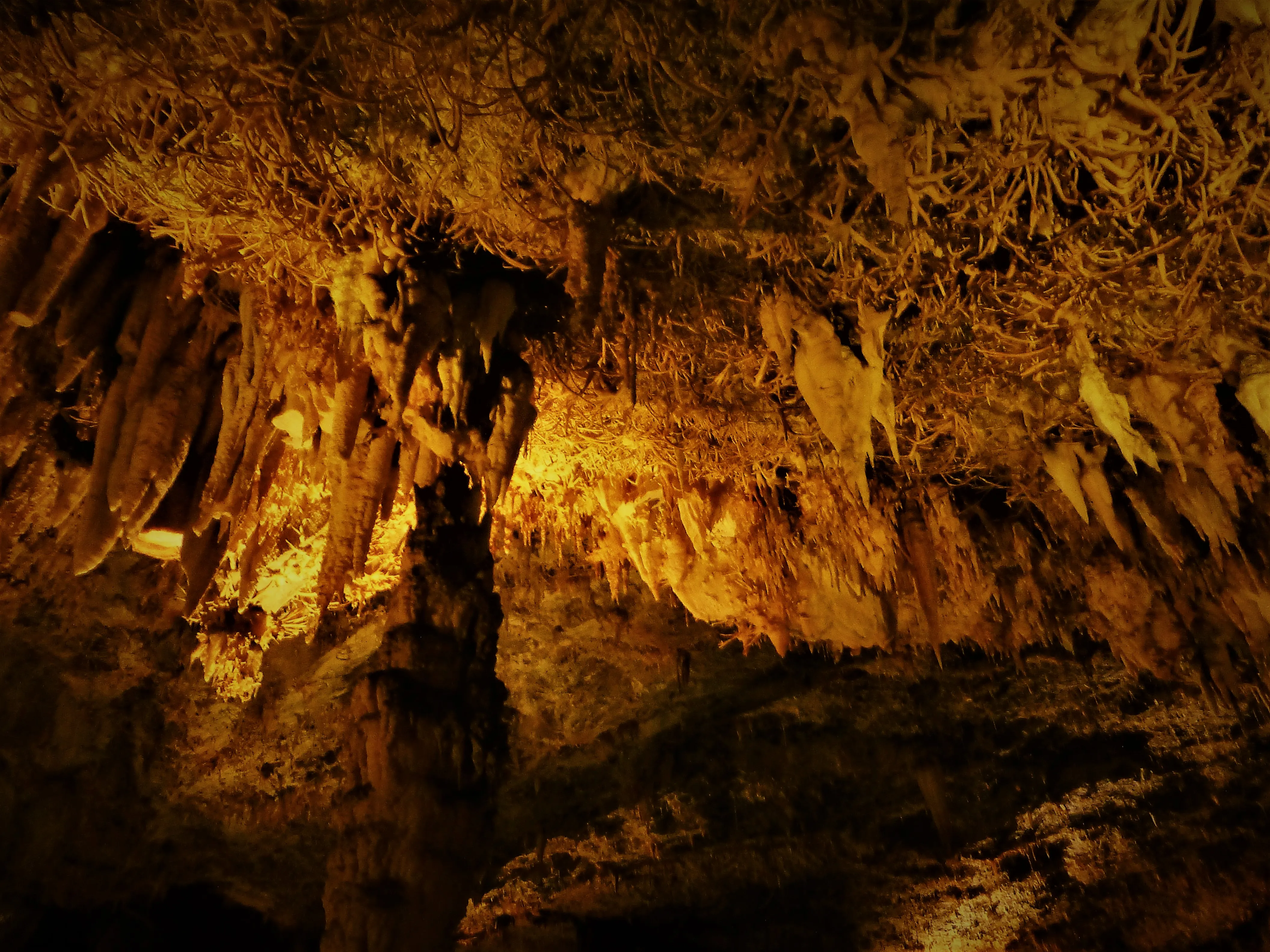
The groups that have studied it describe it as part of a karst system of more than 15 km. The published figures are close but not identical: the Show Caves and Grottocenter record gives 15,000 m of development and 250 m of vertical extent, while the list of large cavities of the Federación Española de Espeleología (2024) records 14,317 m with a date of March 2022. No vertical-extent figure with a dated primary source has been found, nor a complete survey of the network published online; only the plan of the entrance area with the decorated areas, which is an image with reserved rights.
The archaeological site and the art are concentrated in the entrance area. The cavity was declared a Bien de Interés Cultural, with the category of archaeological zone, in 1998. Among the remains there are deposits from the Solutrean to the Bronze Age, and burials were found at the upper level.
History
There are paintings and engravings attributed to several phases of the Upper Paleolithic. They include two ibex, one painted in red and another deeply engraved on a stalagmite column. There are also lines and series of red dots, angular signs and red positive hands.
Chronology of research:
- around 1950: the cave is known; a brochure says it was found by a road maintenance crew of the province
- around 1965: the paintings are identified
- until 1993: several teams carry out test pits
- 2005: excavations directed by Ramón Montes and Emilio Muñoz
The Grupo Espeleológico La Lastrilla (Castro Urdiales) has explored the cave on several occasions and its survey reaches 15 km. With Montes it drew up the plan of the decorated areas.
Bio
The sources consulted do not include data on cave fauna.
User Comments (0)
No comments yet.
Be the first to share your experience!
Registered Explorations (0)
No explorations registered yet.
Register your visit to this cave!
Nearby caves
Contains information from Grottocenter (Wikicaves), grottocenter.org, made available under the Open Database License (ODbL 1.0, https://opendatacommons.org/licenses/odbl/1-0/), modified. · https://grottocenter.org/ui/entrances/168716 · data as of 2026 · Text written by Espeleoworld from public sources. Please ask us before reusing it. · Text by José Luis Membrado Julián (Grandes Cavidades Españolas 2024), Showcaves (Cueva de la Lastrilla (Show Caves of Spain)), Emilio Muñoz Fernández; Ramón Montes Barquín (La Lastrilla, grotte (Bouquetins et Pyrénées)), Wikipedia (Sámano (Wikipedia)), Grottocenter (Grottocenter entrance 168716) · adapted by Espeleoworld (normalized, translated); the adaptation is licensed Our own text, written from public sources. Please ask us before reusing it. · The derived data is available on request under the ODbL: [email protected]