
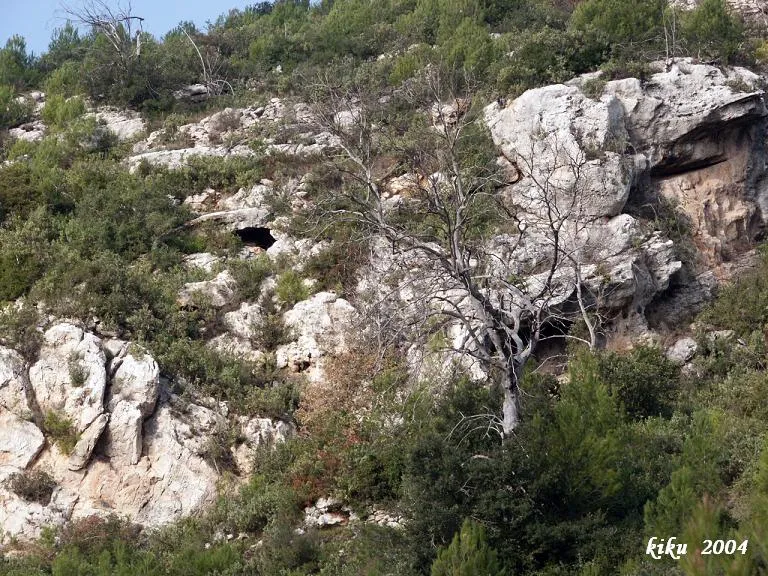
Coves de Santa Anna
Cova de 310 metres de recorregut al peu de la Serra de les Clivelleres, Mediona.
EspeleoWorld
Coves de Santa Anna
Cova de 310 metres de recorregut al peu de la Serra de les Clivelleres, Mediona.
Mediona · Alt Penedès
Length: 310 m · Depth: 23 m
Updated record
https://espeleoworld.com/en/c/coves-de-santa-anna
Information can change. Always verify coordinates, access, weather, and cave conditions before setting out.
A 310-metre-long cave at the foot of the Serra de les Clivelleres, Mediona, with access via the BP-2126 road and a total elevation change of 23 metres (+11/-12).
Topographic
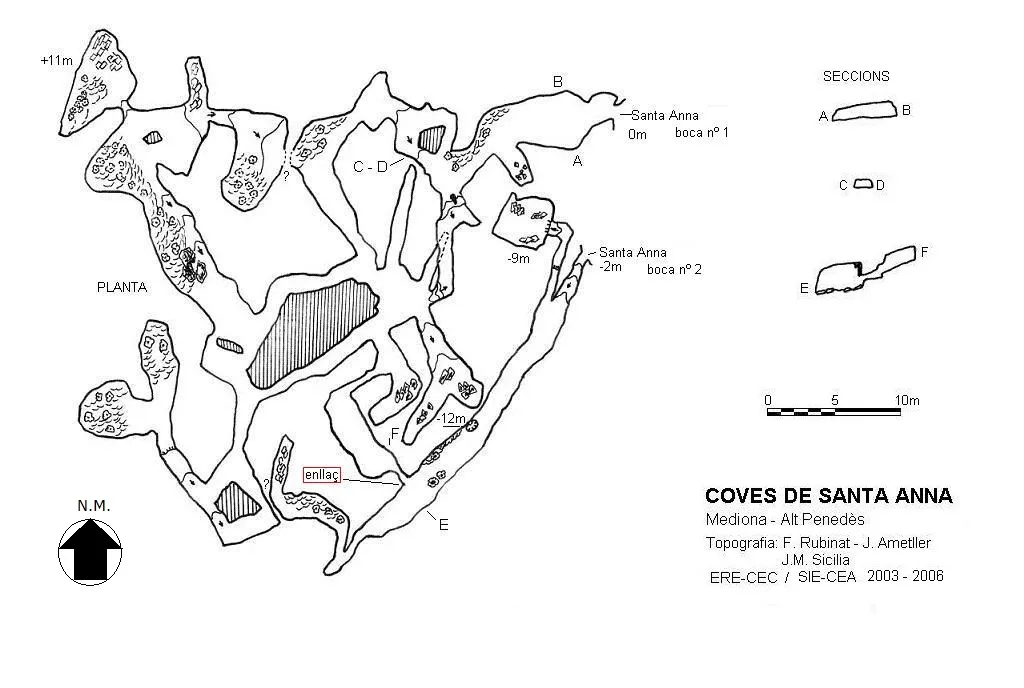
Espeleoindex · CC BY-NC 4.0, https://creativecommons.org/licenses/by-nc/4.0/ · Image © its author.
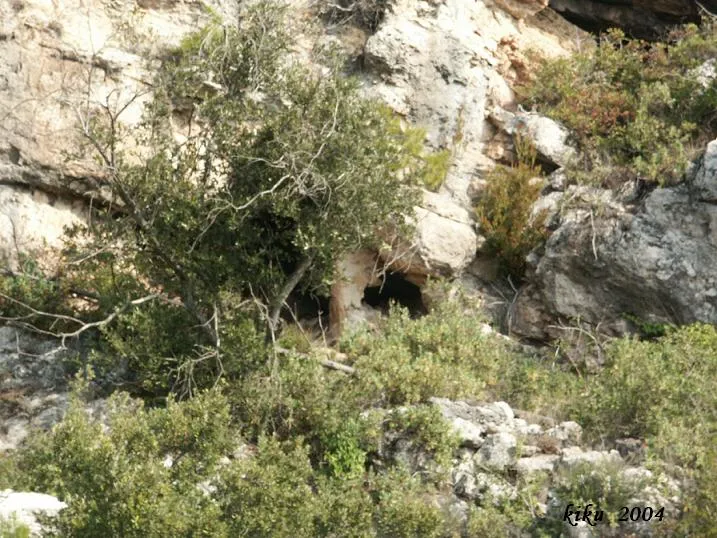
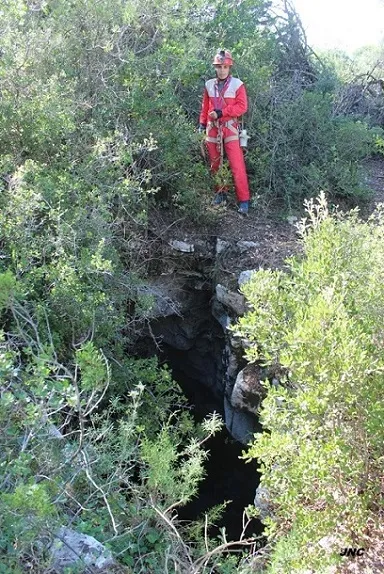
Photos
Espeleoindex · CC BY-NC 4.0, https://creativecommons.org/licenses/by-nc/4.0/ · Image © its author.
Description
Morphology
The cave has a length of 310 metres. The total elevation change is 23 metres (+11/-12).
Speleothems
The lithogenic formation is very abundant. There is a chamber with abundant stalagmitic concretion that prevents continuation towards the W. In a wider gallery there are interesting gypsum formations, together with a stratum of the same material.
Progression
Entering through mouth no. 1, which is the closest to the torrent, we follow a low gallery; at 7 metres we find a branch to the left that ends after a few metres; following the gallery we reach a junction; to the right the gallery ascends; at this point we find a branch also to the right that after a short distance returns to the ascending gallery; continuing along this we will see that it turns towards the W, until reaching a chamber with abundant stalagmitic concretion that prevents continuation towards the W. In the lower part and in a S direction, a narrow passage communicates with another sector of the cavity. Returning to the junction at the end of the entrance gallery, continuing towards the S we find a narrow passage that, once the low gallery is passed, makes a turn towards the SW and rises again, reaching a crossing of galleries. Taking the gallery in a SE direction, it descends a few metres becoming quite wide but with no continuation. If we continue in a NW direction, we will find on the right two short galleries with no continuation; immediately afterwards and also on the right we will find a gallery that communicates with the narrow passage of the chamber indicated above. Continuing along the previous gallery we will reach a wider gallery where we find some interesting gypsum formations, together with a stratum of the same material. Returning again to the crossing, we will follow the gallery in a SW direction; at 4 metres we will find a descending gallery on the left; this has two branches on the right, the last one ends after a few metres, while the first one, once a narrow passage is passed, turns to the left and leads to a narrow passage that communicates with the gallery coming from mouth no. 2. Returning again to the main gallery, this continues in a SW direction until reaching a new junction; to the right we ascend until reaching the crossing where the gypsum formations are; this gallery ascends until reaching a chamber; on the N side a narrow passage allows us to access a chamber in which the formations and blocks force us to go all the way around it. Back in the previous chamber, in an E direction we descend until reaching a point where we are next to the chamber where the formation prevented us from continuing. Returning to the last junction the gallery descends in a SW direction; here we find two conduits on the right, both lead us to an ascending conduit, at the end of which we find, on the right and left, two small chambers.
It should be noted that along the entire route of the cave, except for the area corresponding to the access of mouth no. 2, only at one point along the route can one stand upright; the entire route is full of crawls and laminators.
Entering through mouth no. 2, which is about 10 metres from no. 1, we find a descending ramp; at the end of this and on the right, a conduit goes back until reaching a step that gives onto a square chamber with no continuation. Situated again at the end of the ramp, the gallery continues straight in a SW direction; after a few metres we find a small pit in the floor; at the end of this is the lowest point of the cavity. A few metres further on, on the right and in the upper part of the wall, we find the passage that gives access to the other cave. Following the gallery, a block must be passed that leaves the gallery in the shape of a four; the conduit continues in a NW direction for a few metres, ending next to the galleries of the other cave.
History
Little data is found on these caves, since it seems that all references (both biospeleological and archaeological) refer to the so-called Cova gran de Santa Anna. Despite this, they seem to have been known for quite a few years. J. Virella (1978), in addition to the Cova Gran, mentions the Coves petites de Santa Anna, saying only that they are near the Cova Gran. In an Inventory of Archaeological Heritage of Mediona, they cite Cova A (which we understand is the large one) and caves B and C. It should be noted that the so-called cova gran is the smallest of the three, but due to the volume of the entrance chamber it must have been named thus.
The first specific reference to these cavities is found in 1995, when the survey appears published in a nature sports guide by Eduard Rafecas; this survey was made on 22-4-1994 by the EGAN d'Igualada. This cites the coves de Santa Anna no. 1, which is none other than the cova Gran de Santa Anna; no. 2, which is the one published in the guide mentioned above, and cave no. 3, of which no further details are given. During 2003 and 2004, the SIE del CEA visited it on three occasions (28-9-2003; 15-2-2004; and 9-5-2004), beginning a new survey of cave no. 2.
On 14-5-2006, the ERE del CEC carried out various diggings in some conduits of the cave and finished the survey, noting an interesting air current at a low point of the cave. On 20-5-2006 the ERE carried out the survey of cave no. 3 and located the connection point with cave no. 2; they carried out a simple digging and connected the two cavities.
User Comments (0)
No comments yet.
Be the first to share your experience!
Registered Explorations (0)
No explorations registered yet.
Register your visit to this cave!
Bibliography
- Rafecas, Eduard (1995).- Mediona. Guia d'esports a la natura. 74 pp + mapa. Ajuntament de Mediona.
- Virella, Joan (1978).- “Experiències a l'entorn de la localització d'estacions prehistòriques”. Miscel·lània Penedesenca (1): 241-269. Institut d'Estudis Penedesencs.
Nearby caves

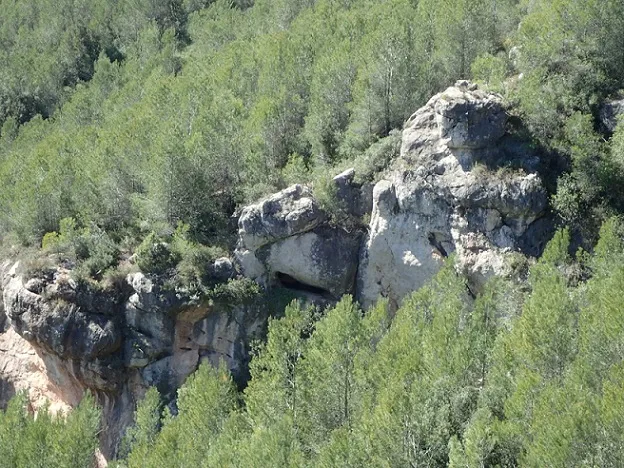


Source: Espeleoindex (espeleoindex.com), modified. CC BY-NC 4.0, https://creativecommons.org/licenses/by-nc/4.0/