
Cova de Roquerols
Small cave of archaeological interest in Seva (Osona), with three entrances and human remains and pottery.
EspeleoWorld
Cova de Roquerols
Small cave of archaeological interest in Seva (Osona), with three entrances and human remains and pottery.
Seva · Osona
Length: 10 m
Updated record
https://espeleoworld.com/en/c/cova-de-roquerols
Information can change. Always verify coordinates, access, weather, and cave conditions before setting out.
Small cave of archaeological interest in Seva (Osona), with three entrances and human remains and pottery.
Topographic
Espeleoindex · CC BY-NC 4.0, https://creativecommons.org/licenses/by-nc/4.0/ · Image © its author.
Photos
Espeleoindex · CC BY-NC 4.0, https://creativecommons.org/licenses/by-nc/4.0/ · Image © its author.
Description
Morphology
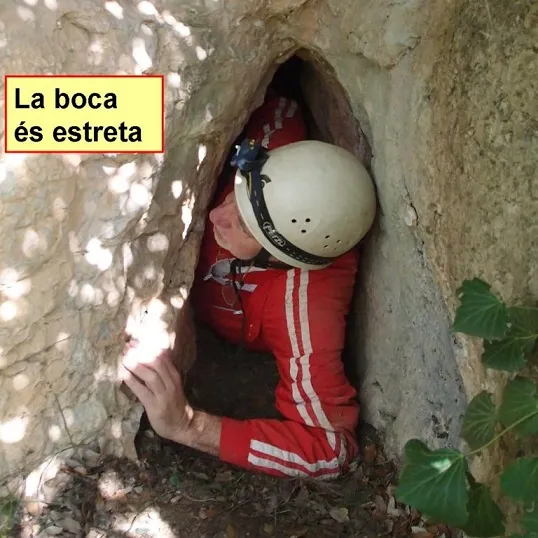
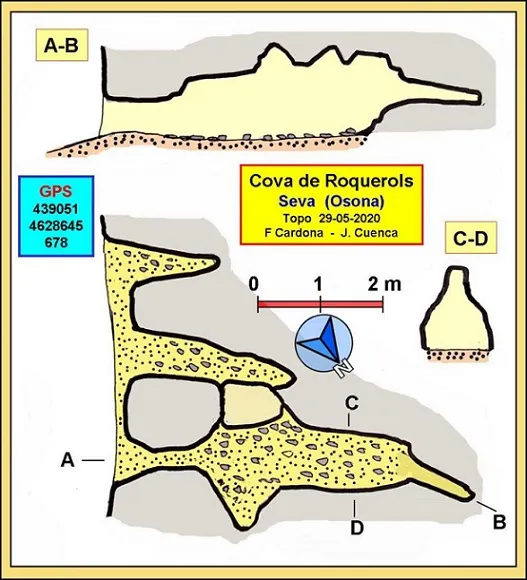
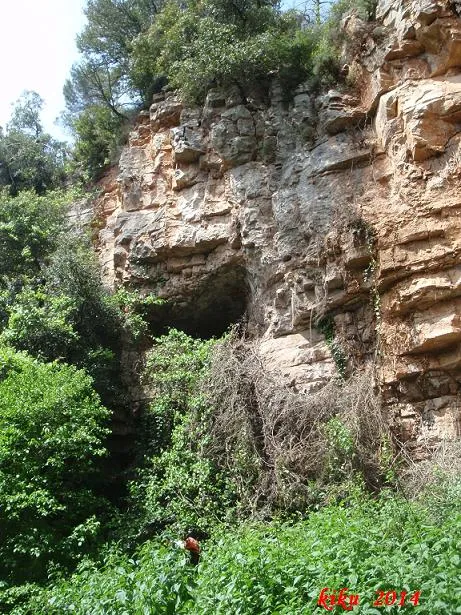
The cave is formed by three entrances, one right next to the other. The main entrance is narrow, shaped like a Gothic arch, 60 cm high by 30 cm wide. It gives access to the main chamber, about 4 metres long by a width on the order of one metre and an average height of 1.2 m, the place where the archaeological remains were found (sepulchral cave?).
On the left wall of the chamber there is a kind of fallen block that leaves at its upper part an impenetrable horizontal fissure that connects with the gallery of the second entrance of the cavity. The cave totals 10 m of passage.
History
The cave was found in February 1990 by David Vilasís and Marc Lassalle, from Seva, while they were carrying out a census of eagle owls. In a later exploration with an archaeologist, they found a human jawbone and fragments of pottery. Then in 2013, on new visits, more bones were found, among them cranial bones and more fragments of pottery.
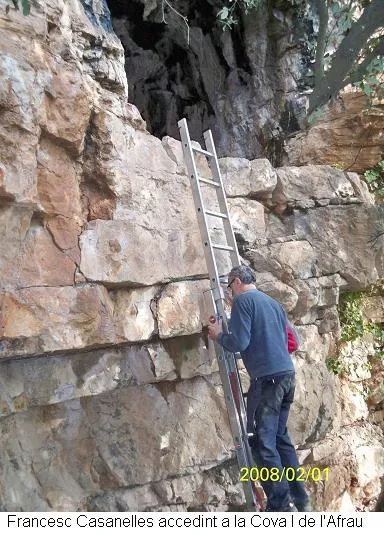
Knowledge of the existence of the cavity was limited to the archaeological sphere, being unknown to speleologists. In that same year 2013, Francesc Casanellas, from Aiguafreda, provided Ferran Cardona with not very precise data about the location of the cave, but it would not be until a few years later that he finally located it.
In 2018, Francesc Casanellas published the self-published book “Restes prehistòriques d'Aiguafreda i el seu entorn”, in which he provides the archaeological data of the cave, which includes photographs of the jawbone and the bones found. So far the bone remains have not been able to be dated; they are at the Ajuntament d'Aiguafreda, except for the jawbone.
User Comments (0)
No comments yet.
Be the first to share your experience!
Registered Explorations (0)
No explorations registered yet.
Register your visit to this cave!
Bibliography
- Totes les dades, topografia i fotografies han estat extretes del web: geb.cat (del Grup d'Espeleologia de Badalona). Apunt del dia 1-6-2020. Dades: Ferran Cardona (ECM Barcelonès) i Josep Cuenca (GE Badalona)
Nearby caves


Source: Espeleoindex (espeleoindex.com), modified. CC BY-NC 4.0, https://creativecommons.org/licenses/by-nc/4.0/