
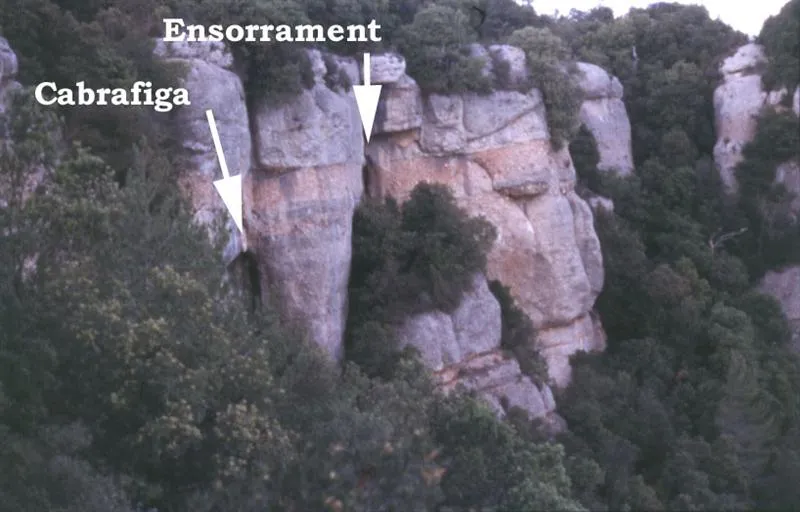
Cova de la Cabrafiga
Petita cova de 14 m. de recorregut a la Canal de Tanca (Sant Llorenç de Munt)
EspeleoWorld
Cova de la Cabrafiga
Petita cova de 14 m. de recorregut a la Canal de Tanca (Sant Llorenç de Munt)
Sant Llorenç Savall · Vallès Occidental
Length: 14 m
Updated record
https://espeleoworld.com/en/c/cova-de-la-cabrafiga
Information can change. Always verify coordinates, access, weather, and cave conditions before setting out.
Small 14 m cave in the Canal de Tanca (Sant Llorenç de Munt), with a steep, bramble-filled access, a narrow section that forces crawling, and remains of small rodent skeletons.
Topographic
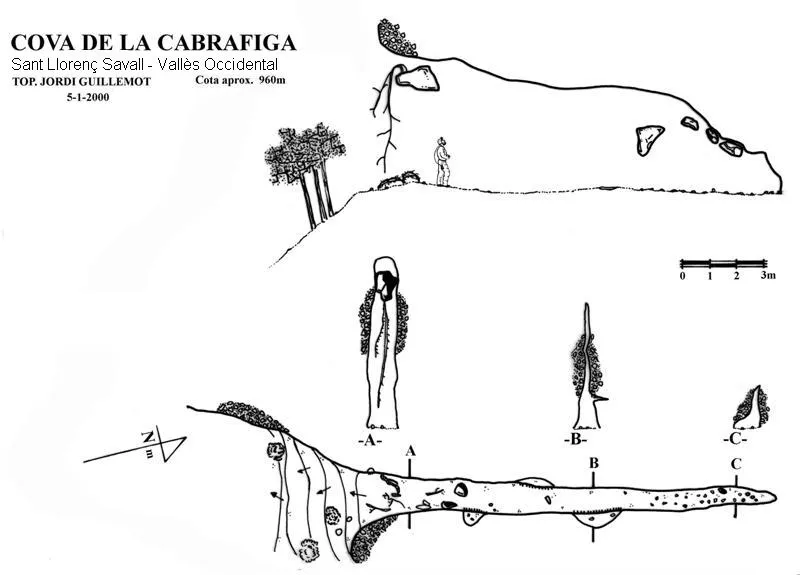

Espeleoindex · CC BY-NC 4.0, https://creativecommons.org/licenses/by-nc/4.0/ · Image © its author.
Photos

Espeleoindex · CC BY-NC 4.0, https://creativecommons.org/licenses/by-nc/4.0/ · Image © its author.
Description
Morphology
Small cave with a 14 m route. Along the 14 metres of route, the cavity comes to have a very narrow section that soon forces us to crawl until reaching the end of the subtly sinuous N15E joint.
The thickness of the layer of more malleable material does not exceed 30 centimetres.
Speleothems
Worth noting are some stretches of walls with concretions featuring anemolite formations and grey stalagmitic flows as well as some ledges that open to the right and left, filled with small macaroni. They are the testimony of the passage of water through a layer of more malleable material.
In the final stretch, the numerous fragments of rust-coloured stalagmitic plate with a green tone and the rubble that carpets the floor are remarkable.
Progression
The steep access, filled with blackberries and unstable soil, will require a good pair of gloves and suction cups on your fingers to cling to walls that, on the other hand, are cracked with small concavities and crevices.
Along the 14 metres of route, the cavity comes to have a very narrow section that soon forces us to crawl until reaching the end of the subtly sinuous N15E joint.
The rubble that carpets the floor makes the route a task more appropriate for a professional fakir than for an amateur hiker.
Other details
The cabrafiga is the fruit of the cabrafiguera, the male foot of the wild fig tree that hangs from the ceiling of the cave as soon as you arrive.
History
Discovered and explored in May 1961 by members of the GES – CMB (O. Andrés and J.Mª Torras) who include them (without topography) in the speleological catalogue of Sant Llorenç de Munt (1974).
In January 2000 it was rediscovered and surveyed by members of the SIS of the CE Terrassa.
Bio
We also highlight the presence of remains of small rodent skeletons as well as clouds of mosquitoes, at the bottom of the cavity.
User Comments (0)
No comments yet.
Be the first to share your experience!
Registered Explorations (0)
No explorations registered yet.
Register your visit to this cave!
Bibliography
- GES-CMB (1974).- Catálogo espeleológico de la provincia de Barcelona. 198 pp. Club Montañés Barcelonés /Diputación Provincial de Barcelona.
- Textos, topografia i fotografia extrets del web: caudelguille.net (Jordi Guillemot)
Nearby caves
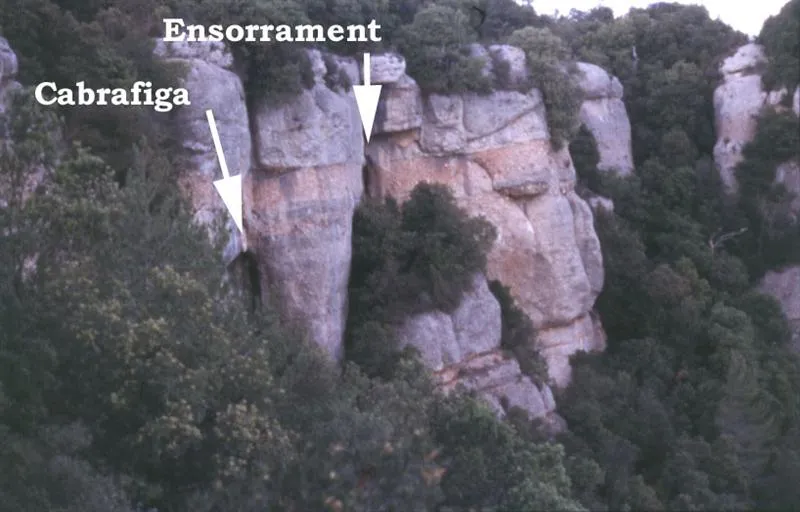
Cova de l'Ensorrament
0.0 km · N
Sant Llorenç Savall (Vallès Occidental)
1 topo.3 photos
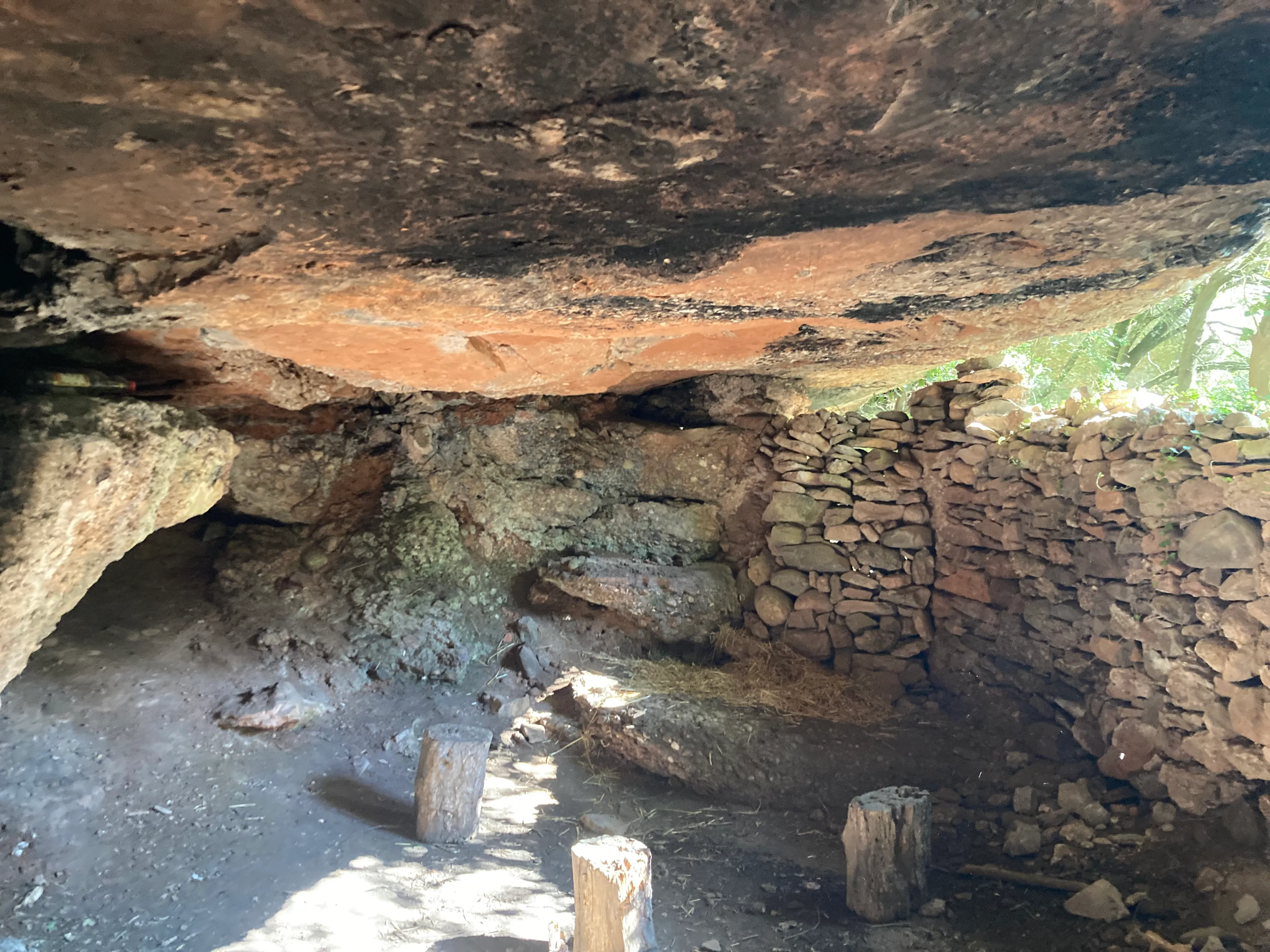
les Casetes del Bofí
0.2 km · SE
Sant Llorenç Savall (Vallès Occidental)
1 topo.1 photos
Avenc de la Canal de la Revella
0.3 km · E
Sant Llorenç Savall (Vallès Occidental)
1 topo.3 photos
Avenc del Daví
0.4 km · S
Sant Llorenç Savall (Vallès Occidental)
3 topo.16 photos
Source: Espeleoindex (espeleoindex.com), modified. CC BY-NC 4.0, https://creativecommons.org/licenses/by-nc/4.0/