
Forat del Barranc de la Clua
Fissure in the barranc de la Clua, in Artesa de Segre, explored on 27 December 2023 by Juli Serrano (SIE-CEA) and Francesc Rubinat (ERE-CEC).
EspeleoWorld
Forat del Barranc de la Clua
Fissure in the barranc de la Clua, in Artesa de Segre, explored on 27 December 2023 by Juli Serrano (SIE-CEA) and Francesc Rubinat (ERE-CEC).
Artesa de Segre · Noguera
Length: 70 m · Depth: 20 m
Updated record
https://espeleoworld.com/en/c/forat-del-barranc-de-la-clua
Information can change. Always verify coordinates, access, weather, and cave conditions before setting out.
Fissure in the barranc de la Clua, in Artesa de Segre, explored on 27 December 2023 by Juli Serrano (SIE-CEA) and Francesc Rubinat (ERE-CEC).
Topographic

Espeleoindex · CC BY-NC 4.0, https://creativecommons.org/licenses/by-nc/4.0/ · Image © its author.
Photos

Espeleoindex · CC BY-NC 4.0, https://creativecommons.org/licenses/by-nc/4.0/ · Image © its author.
Description
Morphology
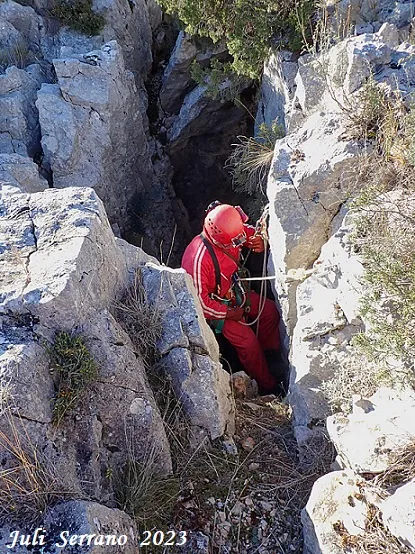
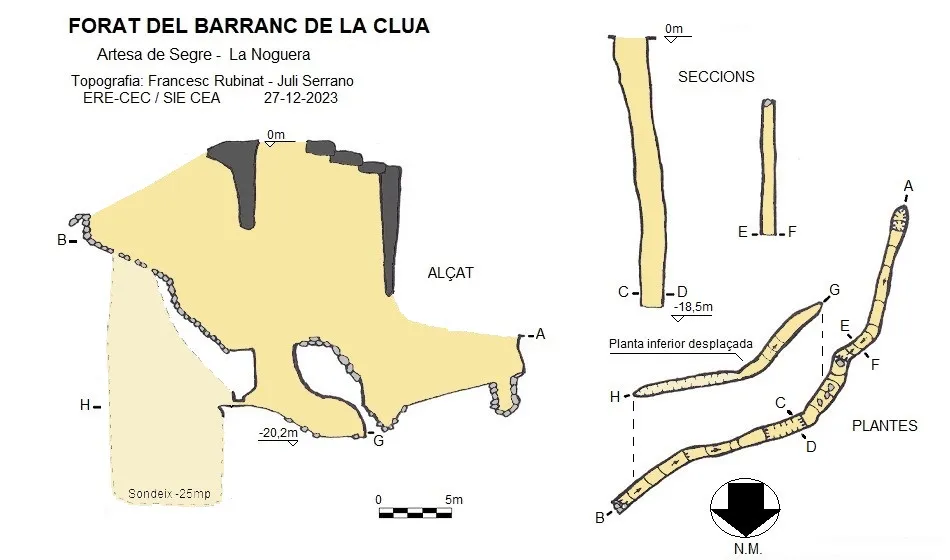
The fissure is located near the cliff. In its widest part we find the upper entrance, which is the most comfortable access to the cavity; it has a shaft that descends to 18.5 metres. The ramp base places us at the deepest part of the cavity at -20.5 metres. The SW side is closed, while on the NE side a narrow impassable passage leads to a shaft that comes from higher up.
In the same access shaft, on reaching the -14 metres level we find that on either side there are galleries that continue along the base of the fissure. If we follow in a SW direction the gallery soon descends steeply, and can be down-climbed without problem; from this point it climbs gently to the end. Here we find a small 2.5 metre shaft formed between loose stones, better not to go into it; climbing back up the fissure, which at this point is only 2.5 metres high, we will come out to the exterior in the lower part of the cliff, at a point on the mountain slope with a steep gradient and very dense vegetation.
If we follow the fissure along the NE side, the fissure climbs, and we can climb up until reaching a point where on one side the fissure collapses, forming part of the shaft observed in the lower gallery; this shaft has been sounded to the -25 metres level, but it is not advisable to descend into it because of the quantity of unstable stones found there. If we continue climbing, we will end up coming out to the exterior at a point not far from the entrance shaft. The fissure continues in the direction of the barranc de la Clua but with dimensions rather small for accessing it.
History
Unpublished speleologically, explored by Juli Serrano (SIE-CEA) and Francesc Rubinat (ERE-CEC) on 27 December 2023.
User Comments (0)
No comments yet.
Be the first to share your experience!
Registered Explorations (0)
No explorations registered yet.
Register your visit to this cave!
Bibliography
- Totes les dades, coordenades, topografia i fotografies han estat facilitades per Juli Serrano (SIE-CEA) i Francesc Rubinat (ERE-CEC).
Nearby caves
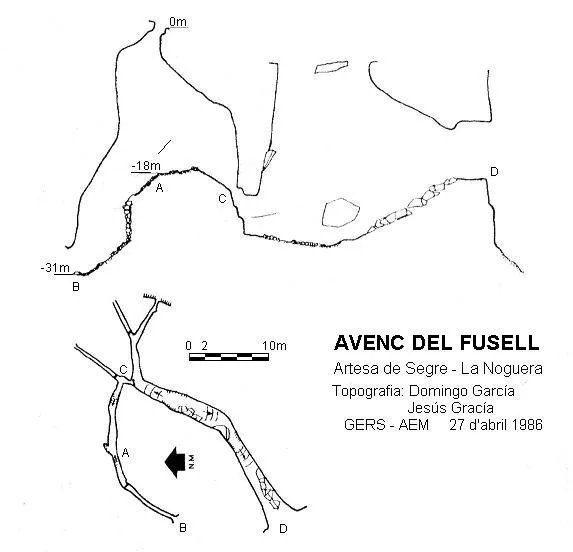
Avenc del Fusell
1.5 km · SE
Artesa de Segre (Noguera)
1 topo.
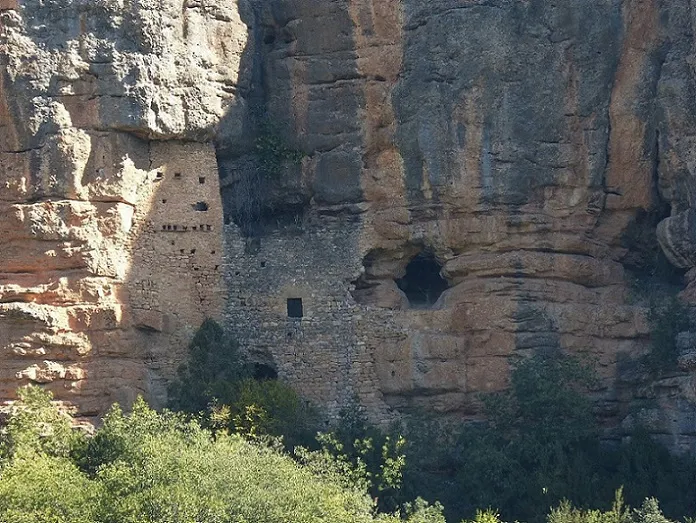
Espluga del Castell de la Clua
2.4 km · SE
Artesa de Segre (Noguera)
1 topo.7 photos
Baborell de la Dona Morta
3.4 km · SW
Alòs de Balaguer (Noguera)
2 topo.12 photos
Baborell d'en Remigio
3.7 km · S
Alòs de Balaguer (Noguera)
1 topo.5 photos
Source: Espeleoindex (espeleoindex.com), modified. CC BY-NC 4.0, https://creativecommons.org/licenses/by-nc/4.0/