
EspeleoWorld
Cueva Palomera
Cueva Palomera is the historic entrance to the Ojo Guareña complex (Merindad de Sotoscueva, Burgos), a labyrinth of about 111 km with 239 m of vertical extent, a Natural Monument and a Site of Cultural Interest.
Merindad de Sotoscueva
Length: 110000 m · Depth: 239 m
Updated record
https://espeleoworld.com/en/c/cueva-palomera-merindad-de-sotoscueva
Information can change. Always verify coordinates, access, weather, and cave conditions before setting out.
Cueva Palomera is the historic entrance to the Ojo Guareña complex (Merindad de Sotoscueva, Burgos), a labyrinth of about 111 km with 239 m of vertical extent, a Natural Monument and a Site of Cultural Interest.
Photos

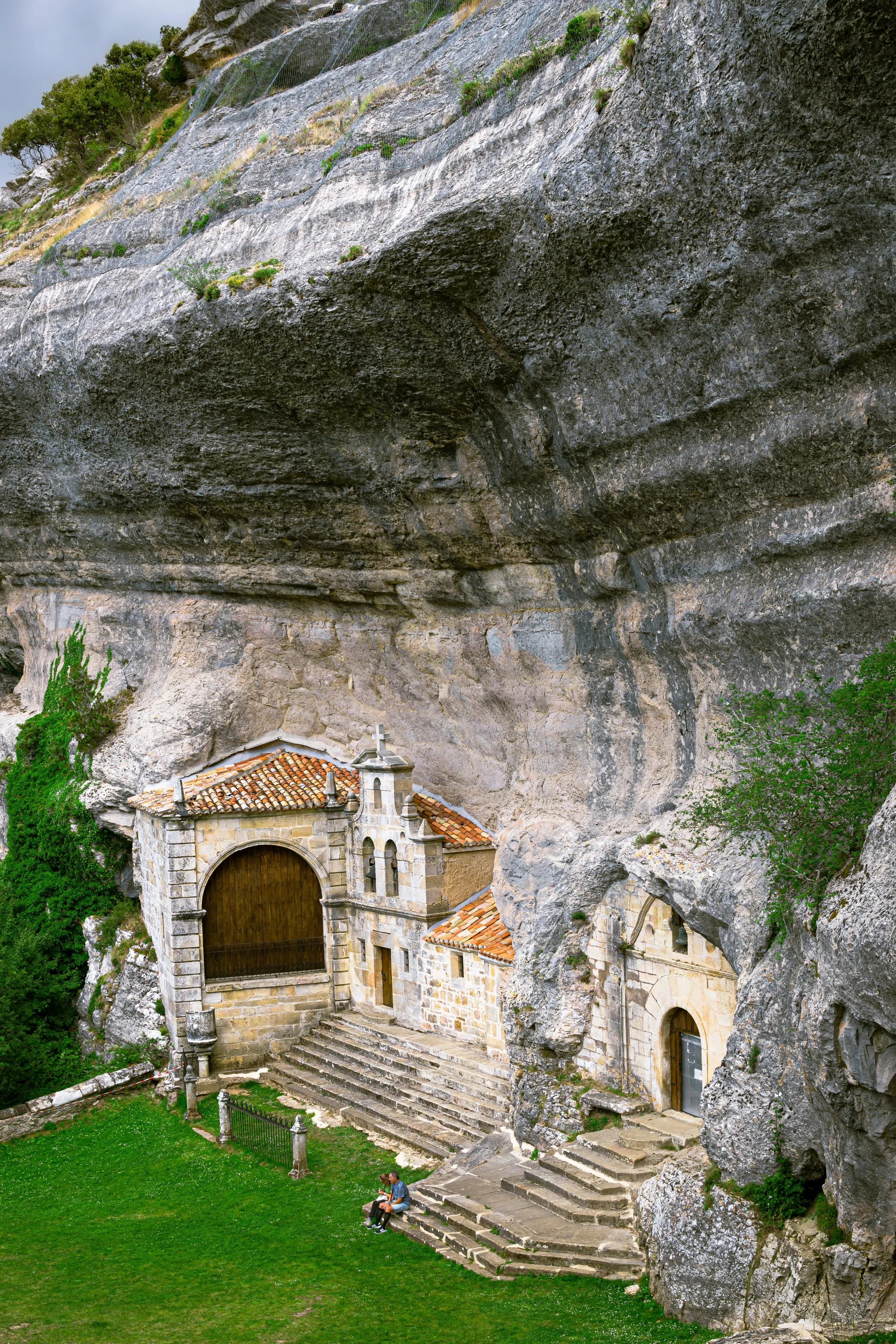
© Dbascones · CC-BY-SA-4.0 4.0 · Dbascones, CC BY-SA 4.0, via Wikimedia Commons · https://commons.wikimedia.org/wiki/File:OjoGuarenyaEntrada.jpg
Description
Morphology
Surveyors divide the network into named sectors: Rizuelos and Dulla (to the west), Dédalo Oeste, Central, Este-Huesos, Este-Trema, Oricedo and Segunda Axial. The Central sector is mostly horizontal. In Dédalo Oeste the galleries interweave at several levels. The Segunda Axial links the sinkhole area with the spring area, to the southeast.
A little more than 110 km of galleries are known, spread over six levels. About 90 km lie beneath some 5 km² of surface, and the entire network covers about 18 km² at the surface. According to the Edelweiss record, the vertical extent runs from +9 m to -230 m relative to the entrance of Palomera, that is, 239 m in total.
Speleothems
The Kaite cave, nearby but not connected to the network, stands out for the abundance of stalagmites, stalactites and flowstone. For Palomera, the sources consulted do not detail the formations.
Hydrology
The springs of La Torcona, El Torcón and others in the Trema channel are aligned with the Villamartín fault. They receive water from the Guareña river, the Trema river and the Villamartín stream. La Torcona only functions as an outlet in major floods, and with heavy rain the upper galleries also flood.
Progression
Visits to some areas are guided speleological excursions booked at the Casa del Parque, and are aimed at people in good physical condition and well prepared. It is not a show cave: it has no paths or lighting, and the interior temperature is around 7–9 °C.
The entrance of Kaite and other nearby caves are closed to the public. Separately, the cave and chapel of San Bernabé can be visited, on a route of about 400 m.
Other details
Cavities of the system. According to the Edelweiss catalogue, besides Palomera, the system includes the Dolencias pit, the San Bernabé cave, the Guareña sinkhole, the sima de los Huesos, the sima Rizuelos, La Torcona, Cueva Cornejo, the sima de Villallana and Cueva la Mina. Cornejo was linked to the main network in 1968. Other nearby cavities, still unconnected to the network, are Kubía, Las Diaclasas, the Último Sumidero, Kaite (585 m), Covanería and the sima de Jaime.
Length. The catalogue gives 111,000 m, a figure also recorded in the list of large cavities of the Federación Española de Espeleología dated May 2023. An article by Edelweiss itself from October 2022 speaks of more than 112 km and the official guides say about 110 km, so the number depends on the date of the survey.
Nearby caves with a similar name. The cueva de los Manojos, at the head of the Engaña valley, is a different network, with 11 entrances of its own, and no source consulted relates it to Ojo Guareña.
History
The Grupo Espeleológico Edelweiss, of Burgos, began systematic exploration in May 1956. The same group continued surveying for decades, and the current record cites surveys up to 2021.
In the FEE (Federación Española de Espeleología) list of 2024, Ojo Guareña ranks fourth in Spain by length. Until 2009 it was considered the largest cave network in the Iberian Peninsula; that year new kilometres were found in the Mortillano system.
The complex includes other archaeological sites, such as Kaite and the Sala de la Fuente. In the galleries of Las Huellas there are bare human footprints from various periods; radiocarbon dating of the footprints gives 15,600 and 3,600 years. The rock art has an attributed age of about 10,000 years.
Bio
187 species of invertebrates had been cited up to 2012 in the whole of Ojo Guareña; several were new to science, among them subterranean aquatic bathynellids. Bats (Los murciélagos) use the caves, among them the cave bat and the greater horseshoe bat. Outside live birds of prey such as the golden eagle and the griffon vulture.
User Comments (0)
No comments yet.
Be the first to share your experience!
Registered Explorations (0)
No explorations registered yet.
Register your visit to this cave!
Nearby caves
Contains information from Grottocenter (Wikicaves), grottocenter.org, made available under the Open Database License (ODbL 1.0, https://opendatacommons.org/licenses/odbl/1-0/), modified. · https://grottocenter.org/ui/entrances/19911 · data as of 2026 · Text written by Espeleoworld from public sources. Please ask us before reusing it. · Text by José Luis Membrado Julián (Grandes Cavidades Españolas 2024), Wikipedia (Ojo Guareña (Wikipedia, es)), Wikipedia (Ojo Guareña (Wikipedia, en)), Grupo Espeleológico Edelweiss (Cueva Palomera (Complejo Kárstico de Ojo Guareña), catastro de cavidades de Burgos), Grupo Espeleológico Edelweiss (Introducción al Complejo Kárstico de Ojo Guareña), Grupo Espeleológico Edelweiss (Cuevas de Ojo Guareña), Casa del Parque Ojo Guareña / Las Merindades (Manual de bienvenida del Monumento Natural de Ojo Guareña 2025), Grupo Espeleológico Edelweiss (Cueva de Kaite (Ojo Guareña)), Grupo Espeleológico Edelweiss (Cuevas de los Manojos, catastro de cavidades de Burgos), Grupo Espeleológico Edelweiss (La Torcona (Complejo Kárstico de Ojo Guareña), catastro), Grupo Espeleológico Edelweiss (Cueva Cornejo (Complejo Kárstico de Ojo Guareña), catastro), Grupo Espeleológico Edelweiss (Sima Rizuelos (Complejo Kárstico de Ojo Guareña), catastro), Grupo Espeleológico Edelweiss (Cueva de San Tirso y de San Bernabé (Complejo Kárstico de Ojo Guareña), catastro), Grupo Espeleológico Edelweiss (Sima Dolencias (Complejo Kárstico de Ojo Guareña), catastro), Grupo Espeleológico Edelweiss (Sumidero del Guareña (Complejo Kárstico de Ojo Guareña), catastro), Grupo Espeleológico Edelweiss (Sima de los Huesos (Complejo Kárstico de Ojo Guareña), catastro), Wikimedia Commons (Category:Ojo Guareña (Wikimedia Commons)), Grupo Espeleológico Edelweiss (Nota informativa sobre el uso de la información (Grupo Espeleológico Edelweiss)) · adapted by Espeleoworld (normalized, translated); the adaptation is licensed Our own text, written from public sources. Please ask us before reusing it. · The derived data is available on request under the ODbL: [email protected]