
Cueva de Chufín
The Cueva de Chufín is a largely undeveloped cave reached by a 2 km trail, entered through a gated rock-shelter and a low passage with about 15 m of crawling, and ending at an artificial lake.
EspeleoWorld
Cueva de Chufín
The Cueva de Chufín is a largely undeveloped cave reached by a 2 km trail, entered through a gated rock-shelter and a low passage with about 15 m of crawling, and ending at an artificial lake.
Rionansa
Updated record
https://espeleoworld.com/en/c/cueva-de-chufin-rionansa
Information can change. Always verify coordinates, access, weather, and cave conditions before setting out.
The Cueva de Chufín is a largely undeveloped cave reached by a 2 km trail, entered through a gated rock-shelter and a low passage with about 15 m of crawling, and ending at an artificial lake.
Description
Morphology
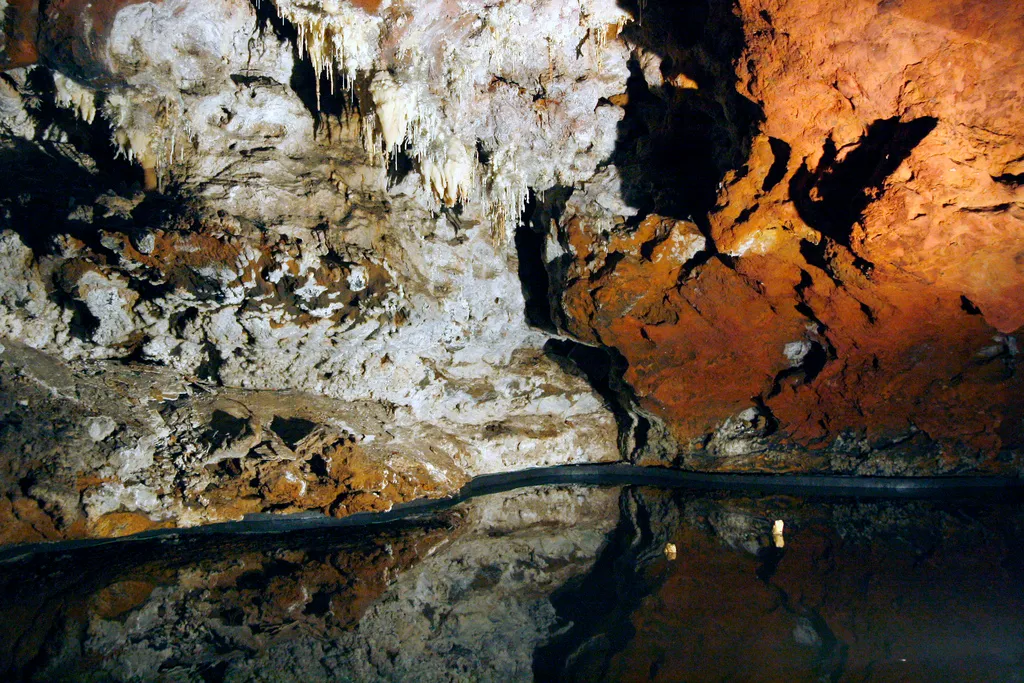
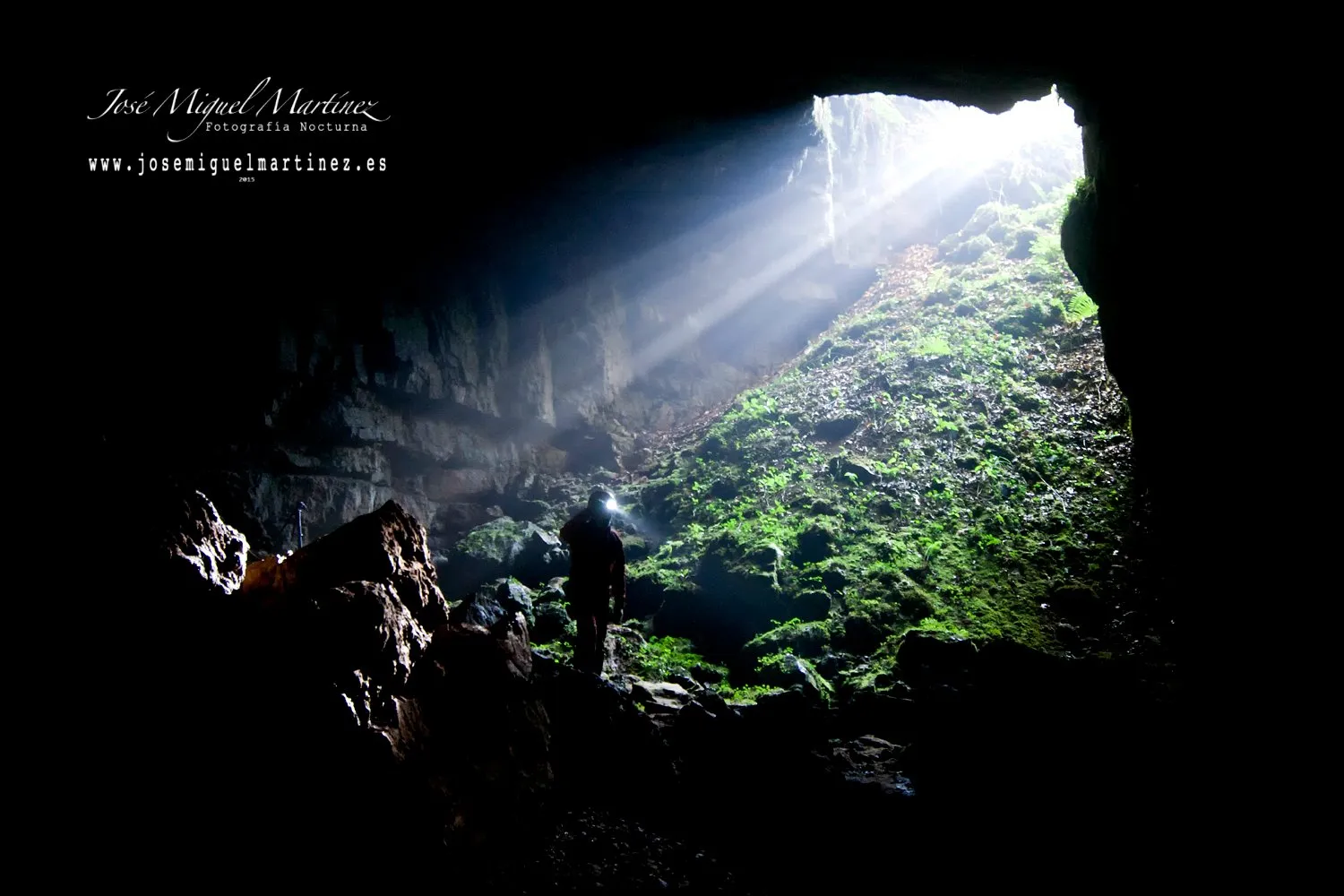
The entrance is gated by a massive iron bar gate. From the wide rock-shelter at the entrance a low passage leads to a large chamber; about 15 m of this passage require crawling, due to the low height. There are no trails, no railings and no electric light; in other words, the cave is not developed in any way. The main chamber is called Sala del Lago, because it ends at an artificial lake, at least that is how they call it.
Hydrology
The creation of the Palombera reservoir raised the ground water level, and so the lower parts of the cave system flooded. The shaft which was the access to the lower level flooded, and the lake is the visible part of the ground water table.
Progression
Today groups have a maximum size of 6 persons, who have to walk 2 km or 30 minutes to the cave. The reservation or purchase must be validated at the box office at least 15 minutes before the start of the visit, otherwise they are sold. It is essential to wear clothes which may get dirty, because of the crawling, and sturdy walking shoes for the trail. Helmets, hand lamps and knee pads are provided.
Other details
The number of visitors to this cave is extremely restricted. During high season it is normally completely booked out; tickets are available at the box office only in cases of no-show, and are sold in the order of arrival. So it is advisable to buy the ticket online, by email or by phone several days in advance. The cave is generally named Cueva de Chufín, but its full name is actually Cueva de Moro Chufín. It was named after a "moor" (moslem occupator) who according to legend has buried a treasure in the cave. This type of legend is extremely common and always untrue, but nevertheless treasure hunters made holes inside the cave in order to locate this treasure. We would have classified this as a wild cave or cave trekking tour but it is officially listed as a show cave. Nevertheless, think hard if your children are up to this before you take them with you, despite the surprisingly moderate restrictions for young children.
History
The shelter at the entrance was occupied by humans around 17,420±200 BP. The view from the cave entrance made this place an excellent hunting base. The shelter has several engravings, which are less fragile than paintings. Most common are 14 hinds, but there is also a bison, other bovines, possibly a fish, and diverse abstract patterns. They were created using the abrasion technique, which creates wide and deep lines. They are thought to be of Gravettian or early Solutrean age. If other engravings or paintings existed, they have been completely destroyed by the weather.
The chamber shows paintings in red and ocher and engravings of animals. The red pigment is quite intensive and was mostly applied in rows of dots, forming a sort of pattern, so those paintings stand out. They show horses, an aurochs, various scores organized in series, a female figure and a deer. Some were interpreted as genital representations. Numerous engravings can also be found, made by both techniques, incision and abrasion. Incision is normally finer and more delicate. The engravings show bison, horses, bovids, deer, capybaras, a possible wading bird, and at least one anthropomorphic figure. The engravings in the shelter, some in the inner part, and the red figures are thought to be older than Magdalenian, more than 16,000 BC, although it is not possible to determine the exact age. The finer engravings and paintings are thought to be younger, around 11,500 BC.
User Comments (0)
No comments yet.
Be the first to share your experience!
Registered Explorations (0)
No explorations registered yet.
Register your visit to this cave!
Nearby caves
Source: Show Caves of the World (Jochen Duckeck) (www.showcaves.com), modified. CC0 1.0, https://www.showcaves.com/english/TermsOfUse.html Show Caves of the World (showcaves.com), Jochen Duckeck · Text by Jochen Duckeck (Cueva de Chufín) · adapted by Espeleoworld (normalized, translated); the adaptation is licensed CC0 1.0, https://www.showcaves.com/english/TermsOfUse.html · data as of 2026