
Cova del Dos
Cova del Dos, with a passage of 253 m, in Benifallet (Baix Ebre), known since ancient times and partially included in the tourist visit to Cova Meravelles.
EspeleoWorld
Cova del Dos
Cova del Dos, with a passage of 253 m, in Benifallet (Baix Ebre), known since ancient times and partially included in the tourist visit to Cova Meravelles.
Benifallet · Baix Ebre
Length: 253 m · Depth: 16 m
Updated record
https://espeleoworld.com/en/c/cova-del-dos
Information can change. Always verify coordinates, access, weather, and cave conditions before setting out.
Cova del Dos, with a passage of 253 m, in Benifallet (Baix Ebre), known since ancient times and partially included in the tourist visit to Cova Meravelles.
Topographic
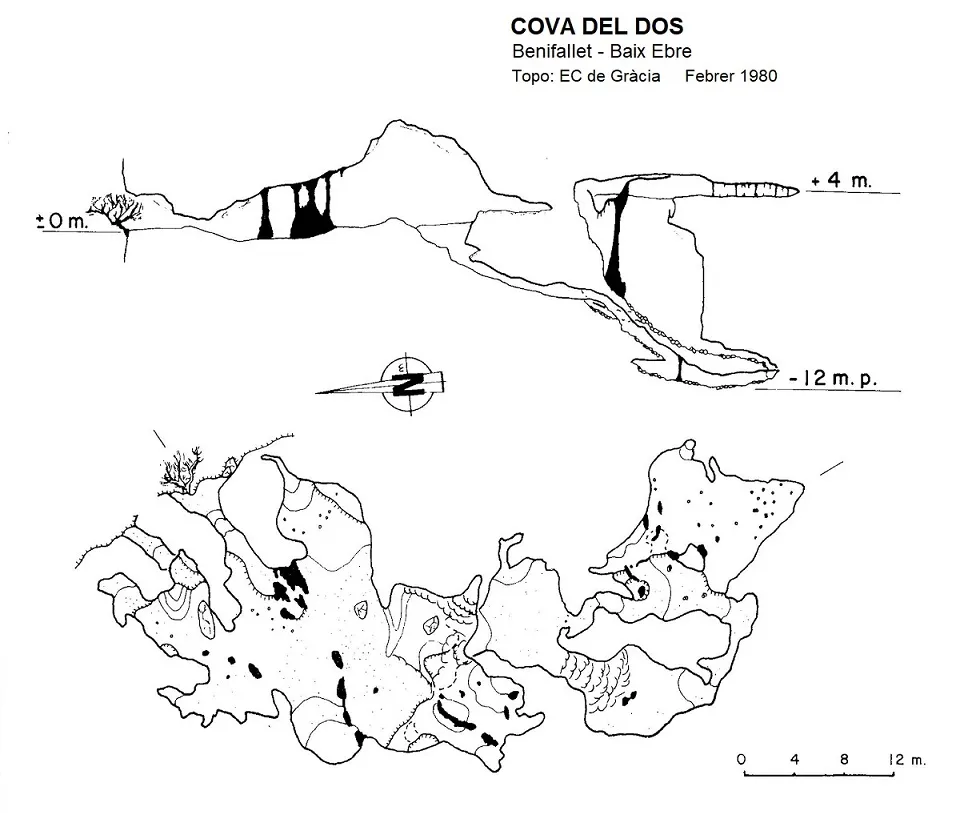
Espeleoindex · CC BY-NC 4.0, https://creativecommons.org/licenses/by-nc/4.0/ · Image © its author.
Photos
Espeleoindex · CC BY-NC 4.0, https://creativecommons.org/licenses/by-nc/4.0/ · Image © its author.
Description
Morphology
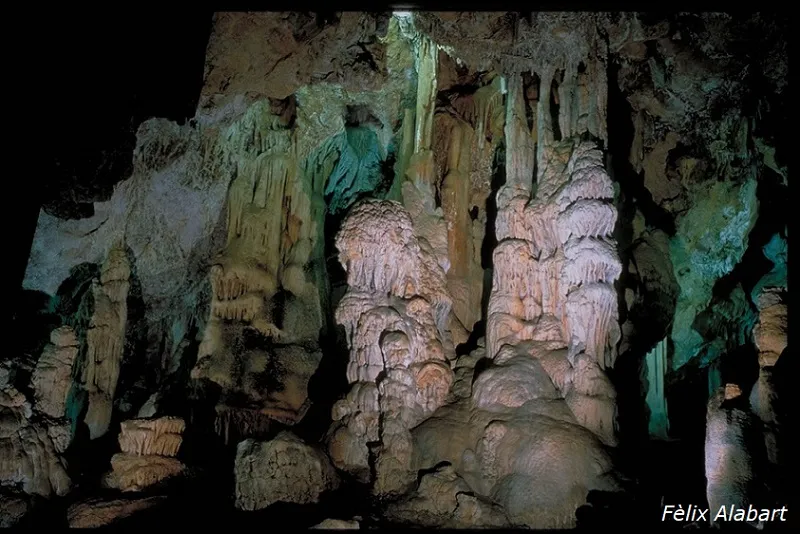
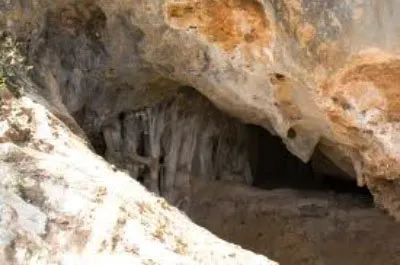
A circular mouth one metre in diameter opens the way to a low gallery, slightly ascending and with a sandy floor. At 7 metres along, and after overcoming a small step, we come out into a large hall. Noteworthy for their size are some columns situated on the left, a place from which a gallery coming from the other mouth emerges, which is triangular in shape and about 3 metres high. At one end of the hall and at its base, overcoming a drop, we come to a low passage and then to a wide hall with a also low ceiling, a place from which two descending galleries emerge. The right-hand gallery descends rapidly, ending in a step that leads us to a horizontal gallery that leads to a narrow passage which is the point of maximum drop in the cavity (elevation – 12 m). Once past this passage and after a sharp turn of the gallery, we reach a hall with a high ceiling. The most noteworthy feature of this hall is the large column there. Ascending behind the column we reach the ceiling of the one that gave way to the low and heavily decorated hall (elevation + 4 m). A crawlway open at the base of the column leads us, after widening, to the hall of the fork.
Speleothems
The large initial hall has an abundance of formations that are totally inactive and in the process of decalcification. Noteworthy for their size are some columns situated on the left. The most noteworthy feature of the hall with a high ceiling is the large column there.
Progression
A circular mouth one metre in diameter opens the way to a low gallery, slightly ascending and with a sandy floor. At 7 metres along, and after overcoming a small step, we come out into a large hall. At one end of the hall and at its base, overcoming a drop, we come to a low passage and then to a wide hall with a also low ceiling, a place from which two descending galleries emerge. The right-hand gallery descends rapidly, ending in a step that leads us to a horizontal gallery that leads to a narrow passage which is the point of maximum drop in the cavity (elevation – 12 m). Once past this passage and after a sharp turn of the gallery, we reach a hall with a high ceiling. Ascending behind the column we reach the ceiling of the one that gave way to the low and heavily decorated hall (elevation + 4 m). A crawlway open at the base of the column leads us, after widening, to the hall of the fork.
Other details
Beautiful and well-known cave with a passage of 253 m in Benifallet (Baix Ebre).
History
Since remote times a cave of l'Aumidiella was known to the people of Benifallet. Faura, in his Recull (1909) mentions: La Aumediella i Avenc prop de la Aumediella (sic), without providing any further data. He also includes a citation of a certain Cambra Blanca, locating it simply at Cardó.
Bayerri (1934) explains how at the end of the 19th century a resident of Benifallet, Juan Vizcarro Salaet, on returning from a visit to la Cova de l'Aumidiella, casually found another cave, until then unknown, which surpassed the former in beauty. Bayerri himself proposes that the more recently discovered one be named Aumidiella la major and that the one known for a very long time become the Aumidiella la menor. He also says that there are people in the village who choose to call it Cambra Blanca (coinciding with Faura's citation). From the data he gives, everything suggests that the new discovery is none other than the one we know today as Cova del Dos.
Around 1934 or 1935, N. Llopis Lladó (CMB) visits the caves of les Aumidielles and makes the survey of one that is undoubtedly Cova del Dos, but... he calls it Cova de l'Aumidiella Gran. This would corroborate the names given by Bayerri. We do not know when it began to be known as del Dos, whether it was before the visit of the GIE (1966) or whether they were the ones who renamed it.
We have news that in August 1962 members of the GES – CMB visit the Coves de l'Aumidiella, but no concrete record of the explorations remains.
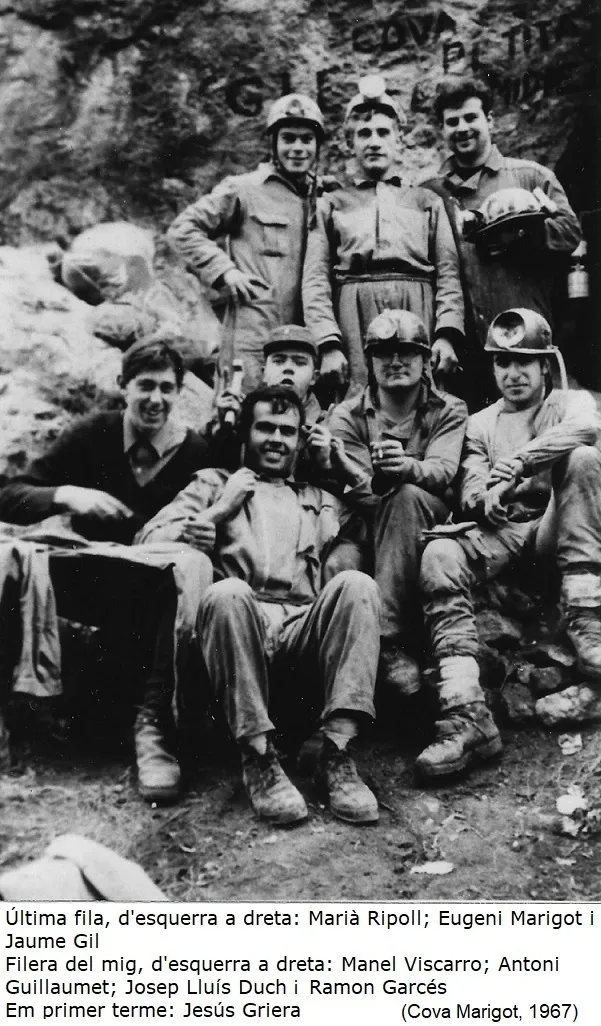
At Easter 1966, members of the GIE of the Club Excursionista de Gràcia decide to go and investigate what these caves they have heard about are. During those days they visit the one they call Aumidiella gran, Aumidiella petita and Cova del Dos, although they greatly magnify the results and go so far as to say: ... las cuevas del Dos y de la Aumidiella Gran contienen salas de gigantescas dimensiones, alzándose como unas de las cuevas más grandes de Cataluña (sic).
In 1974 members of the SIE – CEA visit the area of les Aumidielles and make the survey of a couple of the caves; in that of Cova del Dos not all the galleries appear to be represented.
Years later, in February 1980, members of the Espeleo Club de Gràcia survey the cave again.
User Comments (0)
No comments yet.
Be the first to share your experience!
Registered Explorations (0)
No explorations registered yet.
Register your visit to this cave!
Bibliography
- Bayerri, Enrique (1934).- Historia de Tortosa y su comarca. Vol.II: 702 pp. Capítulo Nono: Espeleología de la Comarca de Tortosa (pàg. 363-416). Imprenta Moderna de Algueró i Baiges. Tortosa.
- Espeleo Club de Gràcia (1984).-”Contribució al Catàleg Espeleològic del Baix Ebre (Tarragona)”. Exploracions (8):47-57. EC Gràcia. Barcelona.
- Faura, Marià. (1909).- “Recull Espeleològic de Catalunya”. Sota Terra (I): 1-26. Club Muntanyenc. Barcelona
- GIE (1969).- “Sierra de Cardó (Resumen de las actividades realizadas hasta el 31 de diciembre de 1968). Butlletí del Club Excursionista de Gràcia (319): 2-5. Barcelona.
- Morales, Ramon (1964).- “Las cuevas y simas de Benifallet”. Geo y Bio Karst (3): 25-26. Editat per JMª Armengou. Barcelona.
- Fotos interiors procedents de l'arxiu Fèlix Alabart.
- Fotografies de Jordi de Cabo procedents del seu blog, post del dia 19-05-2017 (espeleoyfotografia.blogspot.com).
Nearby caves


Source: Espeleoindex (espeleoindex.com), modified. CC BY-NC 4.0, https://creativecommons.org/licenses/by-nc/4.0/