
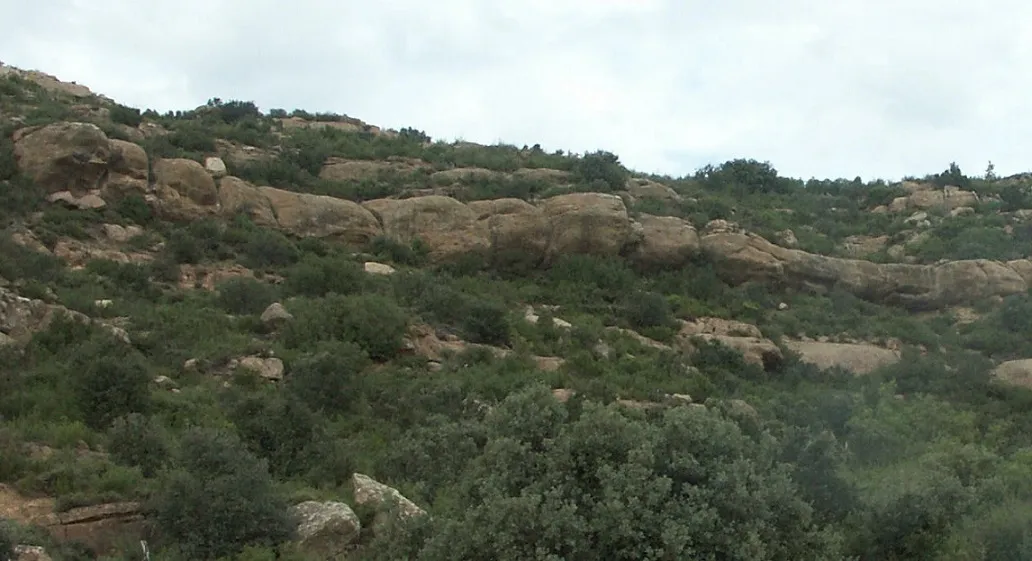
Cova de Puiganseric
Interessant jaciment arqueològic a Vilanova de l'Aguda
EspeleoWorld
Cova de Puiganseric
Interessant jaciment arqueològic a Vilanova de l'Aguda
Vilanova de l'Aguda · Noguera
Length: 15 m
Updated record
https://espeleoworld.com/en/c/cova-de-puiganseric
Information can change. Always verify coordinates, access, weather, and cave conditions before setting out.
Archaeological site at Vilanova de l'Aguda, cova de Puiganseric, excavated in 1927 by Serra Vilaró. Funerary use from the late Neolithic-Chalcolithic-early Bronze Age.
Photos
Espeleoindex · CC BY-NC 4.0, https://creativecommons.org/licenses/by-nc/4.0/ · Image © its author.
Description
Morphology
The cave opening, 10 m long x 2 m high, was closed with a series of slabs, the measurements of which are 1 m high x 65 cm wide x 10 cm thick. The dimensions of the cave would be 15.5 m in its interior x 5 m wide. According to Serra Vilaró, the funerary space was in the centre, occupying a surface of 8 m long by 1.5 m wide. We have no record of the existence of any topography.
History
The cave was first excavated in 1927. The central part and the eastern area of the funerary space were found destroyed, since the cave was used to keep livestock. The cavity, excavated by Serra Vilaró, preserves some of the slabs that would have formed part of the sepulchral structure, although they are not in their original position. About 15 individuals represented by skulls and numerous long bones were documented. Most of these individuals appeared in a secondary position except for one skeleton that preserved anatomical connection. These remains were on a layer of ashes. Likewise, scarce bone remains are observed at the E end of the cave.
The pottery collected allowed the reconstruction of a truncated-cone vessel of hand-made pottery, with a rough exterior surface and a fine interior, with knobs and with esparto impression on the base. It measured 14.7 cm in mouth diameter, 9 cm in base diameter, 14.7 cm in height and 5 cm in thickness. Fragments of lithic and bone industry, and remains of fauna and botany also appeared. Due to the architectural type, the archaeological materials and the funerary ritual, the sepulchral level of the cova de Puiganseric is placed chronologically in the late Neolithic-Chalcolithic-early Bronze Age.
User Comments (0)
No comments yet.
Be the first to share your experience!
Registered Explorations (0)
No explorations registered yet.
Register your visit to this cave!
Bibliography
- Pericot, Ll.(1950).-Los sepulcros megalíticos catalanes y la cultura pirenaica (91-107).
- Rovira i Port, Jordi.(2006).-”Las producciones cerámicas con impronta basal de estera vegetal del calcolítico final-bronce antiguo/medio de la península ibérica. Acerca de la alternancia de influjos y el orígen del protourbanismo en la depresión central catalana como modelo de territorio basculanta”. Quad. Preh. Arq. Cast. (25):109-137.
- Serra Vilaró, J.(1927).-Civilització megalítica a Catalunya.
- Dades i fotos extretes de www.invarque.cultura.gencat.cat
Nearby caves
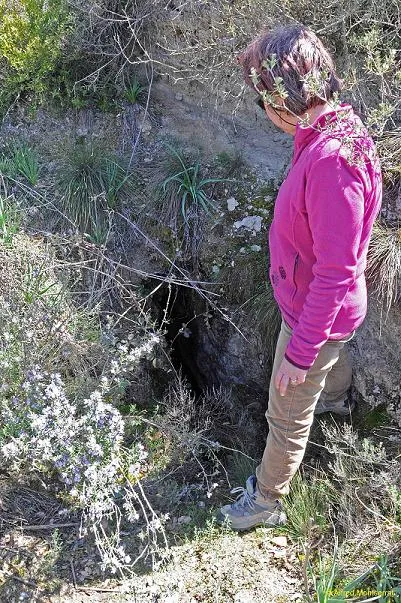
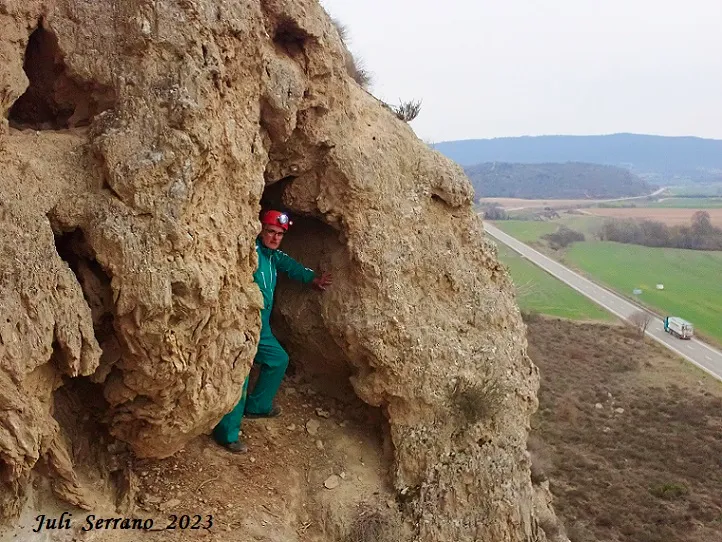
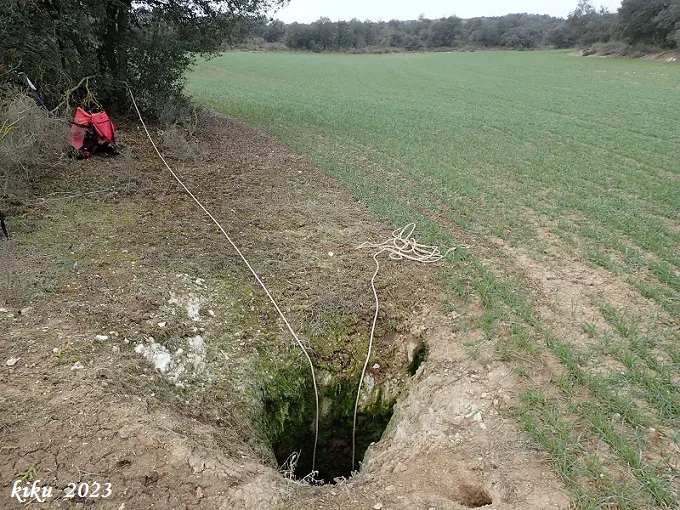

Source: Espeleoindex (espeleoindex.com), modified. CC BY-NC 4.0, https://creativecommons.org/licenses/by-nc/4.0/