
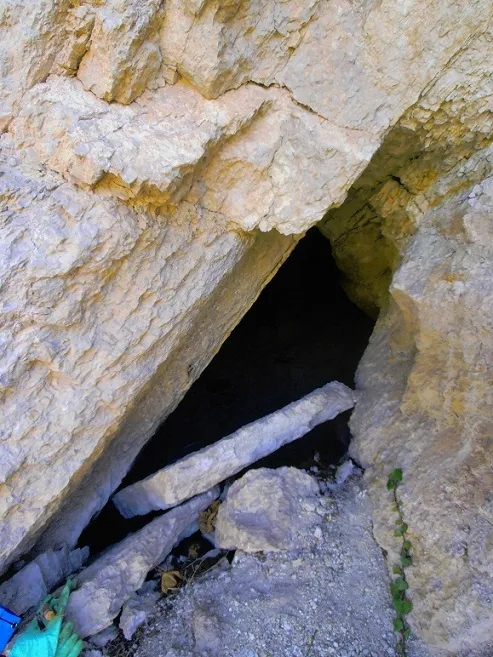
Cova de la Riba
A 70-metre-long cave in La Riba, with a single straight gallery oriented NW-SE, excavated in limestones and gypsum, which has been the subject of speleological explorations and fauna studies.
EspeleoWorld
Cova de la Riba
A 70-metre-long cave in La Riba, with a single straight gallery oriented NW-SE, excavated in limestones and gypsum, which has been the subject of speleological explorations and fauna studies.
Riba, La · Alt Camp
Length: 70 m
Updated record
https://espeleoworld.com/en/c/cova-de-la-riba
Information can change. Always verify coordinates, access, weather, and cave conditions before setting out.
A 70-metre-long cave in La Riba, with a single straight gallery oriented NW-SE, excavated in limestones and gypsum, which has been the subject of speleological explorations and fauna studies.
Topographic
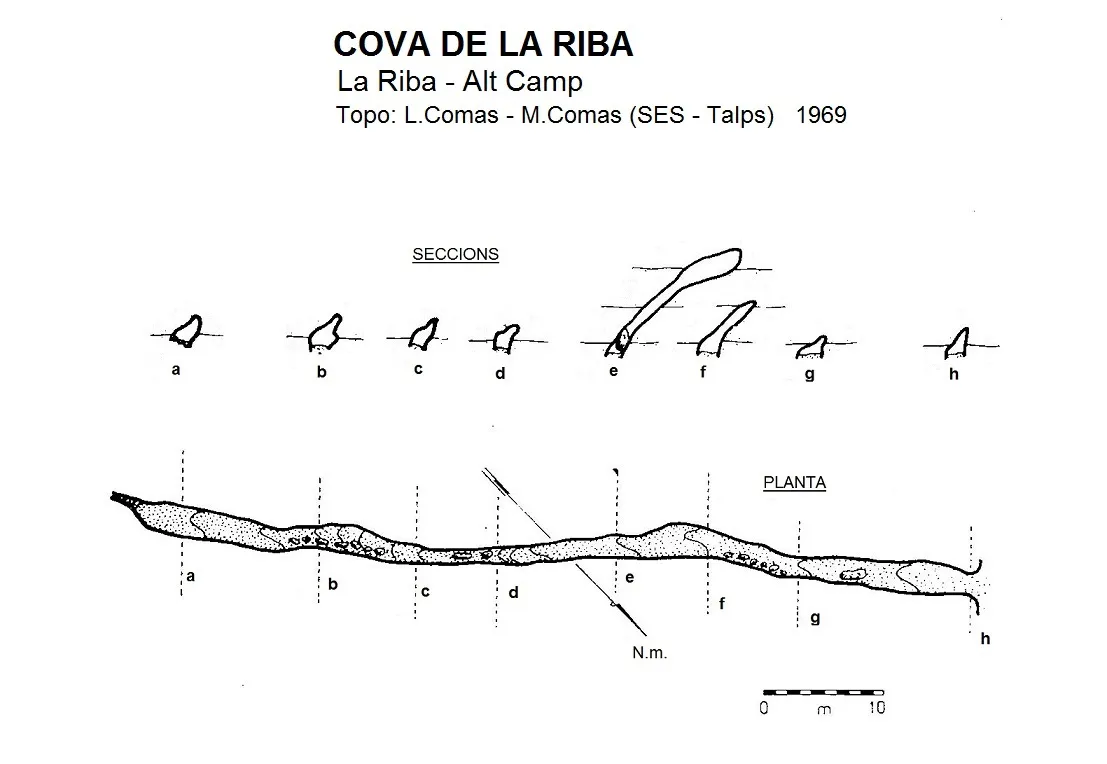
Espeleoindex · CC BY-NC 4.0, https://creativecommons.org/licenses/by-nc/4.0/ · Image © its author.
Photos
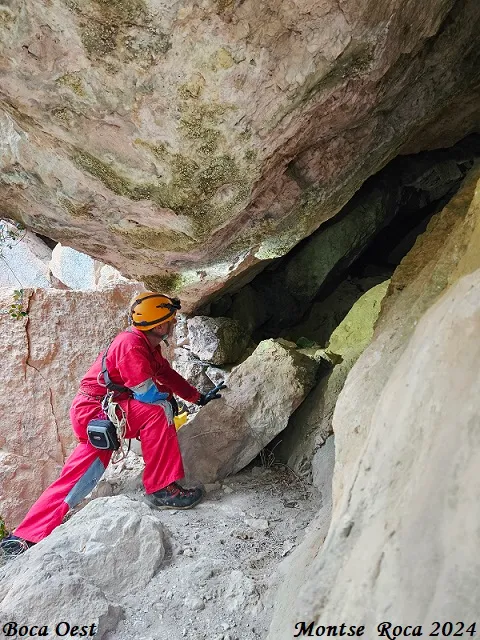
Espeleoindex · CC BY-NC 4.0, https://creativecommons.org/licenses/by-nc/4.0/ · Image © its author.
Description
Morphology
The cave consists of a single straight gallery oriented NW-SE, presenting an inclined section of the strata at about 45º towards the SE; between two limestone slabs there is a gypsum stratum a few centimetres thick, not as indicated on the old survey where it seems the cavity is excavated exclusively in gypsum. After a narrow crawlway one must follow a fairly narrow stretch with some blocks, up to a passage between two strata joined at the ceiling and less than half a metre at its base with small blocks on the floor. After passing a large block, about 30 metres from the entrance, there is a widening always between very inclined strata. It should be mentioned that almost along the entire gallery there is a small bank of stones that reaches all the way to the bottom. In its final stretch the gallery is somewhat wider and higher. It should be mentioned that after the narrow part there is a small extension that rises between strata and allows access to an upper zone, only partially represented on the survey.
Hydrology
Due to the material in which it is excavated and its plasticity, towards the interior, where there is more humidity, a pasty mass forms that, sliding down the inclined walls, comes to plug the gallery at certain times. For this reason, the 1969 survey reached 70 metres of length and on the 1973 one only about 35 metres could be penetrated. Currently, and if we look at the old survey, one can observe that the whole route can be done again up to the final crawlway.
History
It seems the cavity was formerly used to extract talc by the inhabitants of La Riba. The first speleological news is given by members of the SES – Talps (Sabadell) who explored and surveyed it in 1969. We have evidence of different visits in subsequent years (GELL; SIE; GIEM, ERE-CEC). In 1973 the ERE-CEC made a visit and already found the cave plugged halfway along its length, making a survey (unpublished until now) of the first 35 metres of gallery. Members of the GIEM, who had been collecting fauna in 1971, took 42 years to return (March 2012) and found that the cave is plugged 10 metres from the entrance by gypsum marls, devoting two days to clearing the passage and finally managing to reach the end that was known in 1969 and making an interesting fauna collection (see the biospeleology section).
Record update (May 2017): A few days ago we rediscovered a survey (plan) made by members of the SIE – CEA on 26 November 1966, which until now had remained unpublished and which we add to the surveys section. It is a visit prior to the one we had documented until now from 1969. The people of the SIE were the ones who named it Cova del Talc.
NOTE ON THE AVENC DEL LLUÇ:
This small pit about 8 metres deep explored in 1969 by the SES-Talps (Sabadell), was located just below the cova de la Riba; according to the information we have, it seems that when the new C-14 road was built, which at this point passes elevated, one of the pillars supporting it was set on the place where the pit was, therefore it has disappeared.
Bio
On the only exploration we remember (GIEM, 1971) from the 1970's, we collected several specimens of what we believed was the endemic beetle of our mountains (Prades) and which was then called Antrocharidius orcinus, currently renamed as Troglocharinus orcinus.
During the March 2012 exploration, in the final stretch several specimens were captured again.
We soon learned from our colleague Jordi Comas that, once studied, they presented notable differences with respect to the other species of Troglocharinus of the Muntanyes de Prades and that it could be a new species. We returned on 2 June 2013, finding the cavity very humid due to the spring rains, but the narrow passage of pasty gypsum had to be cleared again, managing to get a few specimens but leaving a trap at the end, which proved very successful when we returned on 28 July 2013.
When our colleagues Valeria Rizzo and Jordi Comas confirmed that it was a new species, which could be placed between T. espanoli and T. orcinus, and which they named Troglocharinus pallisei, publishing their study in April 2015 in the journal Zootaxa 3946.
User Comments (0)
No comments yet.
Be the first to share your experience!
Registered Explorations (0)
No explorations registered yet.
Register your visit to this cave!
Bibliography
- Borràs, J.; Miñarro, JM; Talavera, F: (1978).-”l'Alt Camp, la Conca de Barberà, el Baix Penedès i el Tarragonès”. Catàleg espeleològic de Catalunya. Vol 2: 246 pp. Ed. Políglota. Barcelona.
- Rizzo, Valeria; Comas, Jordi (2015).- A new species of Troglocharinus Reitter, 1908 (Coleoptera, Leiodidade, Cholevinae, Leptodirini) from southern Catalonia, with a molecular phylogeny of the related species group”. Zootaxa 3946. Magnolia Press
- SES – Talps (1969).- “Operació Serra de Prades”. Talps (1): 1-12. SES – Talps. Centre Excursionista del Vallès. Sabadell.
- Actualització de dades, fotografies i dades biospeleològiques facilitades per Joan Pallisé.
- Actualitzat per Espeleo Índex l'agost de 2024.
Nearby caves
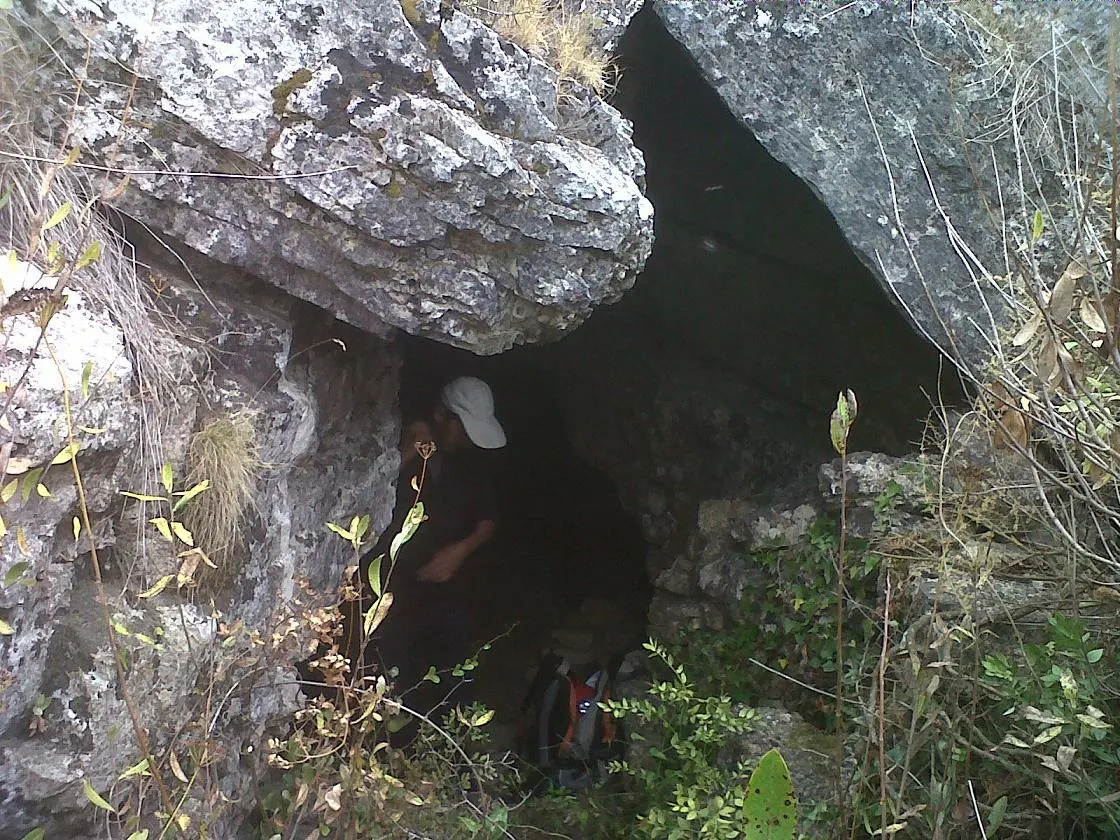
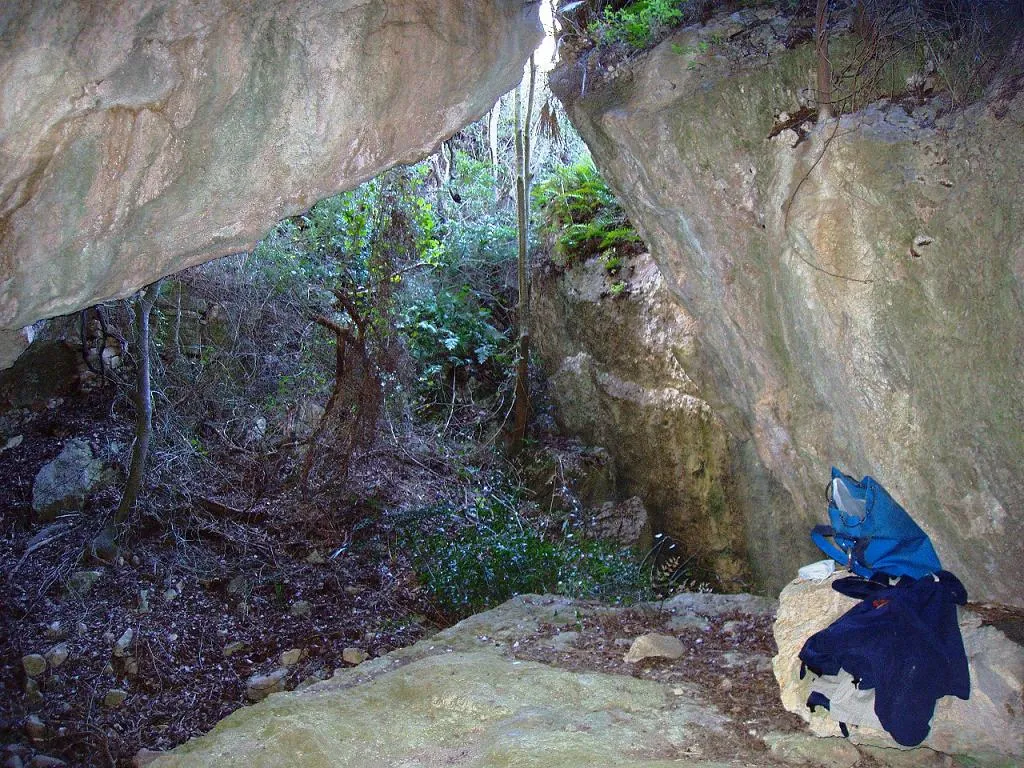


Source: Espeleoindex (espeleoindex.com), modified. CC BY-NC 4.0, https://creativecommons.org/licenses/by-nc/4.0/