
Cova de la Guineu
Archaeological site in Font-rubí, at Cova de la Guineu, with materials from the Paleolithic to the Roman period.
EspeleoWorld
Cova de la Guineu
Archaeological site in Font-rubí, at Cova de la Guineu, with materials from the Paleolithic to the Roman period.
Font-rubí · Alt Penedès
Length: 20 m · Depth: 4 m
Updated record
https://espeleoworld.com/en/c/cova-de-la-guineu
Information can change. Always verify coordinates, access, weather, and cave conditions before setting out.
Archaeological site in Font-rubí, at Cova de la Guineu, with materials from the Paleolithic to the Roman period.
Topographic
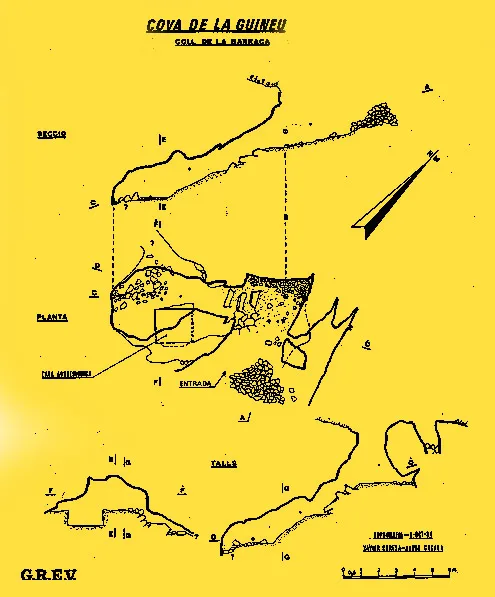
Espeleoindex · CC BY-NC 4.0, https://creativecommons.org/licenses/by-nc/4.0/ · Image © its author.
Photos
Espeleoindex · CC BY-NC 4.0, https://creativecommons.org/licenses/by-nc/4.0/ · Image © its author.
Description
Morphology
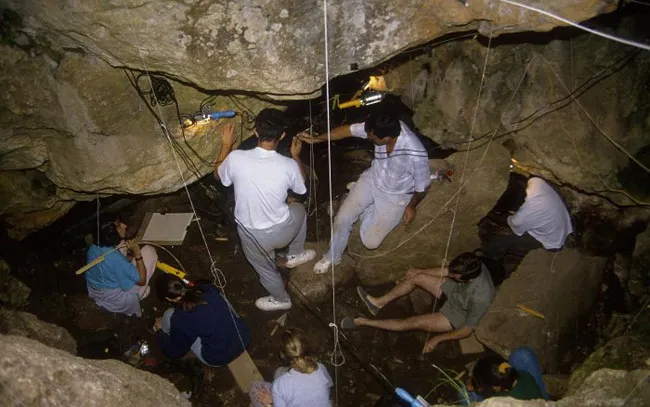
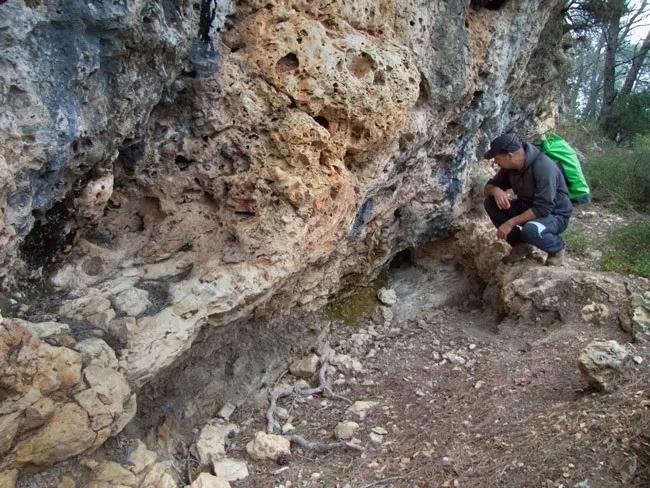
In a doline-like depression, a collapse entrance gives way, via a drop of about 3 metres, to a single chamber about 10 metres long and about 5 wide; very irregular and largely occupied by clastic deposits. The archaeological work has noticeably disfigured the original morphology of the cavity.
Progression
In a doline-like depression, a collapse entrance gives way, via a drop of about 3 metres, to a single chamber.
History
In some documents the discovery of the cave is attributed to Pere Giró in 1961, but everything seems to indicate that it is not this cave but the nearby Cova de la Font de Llinars, de la Plana de la Pineda and possibly also the one cited as Cova de Pere Giró (see Ampurias nº 22-23, 1961, where a sketch appears that has nothing to do with the Cova de la Guineu). Even Joan Virella, in his collection of Penedès cavities (1979), mentions the former, but at no point does he cite the Cova de la Guineu.
It seems, then, that the discovery of the cave took place around 1979 when a farmer from les Llambardes, who considered it a fox den, gave notice to members of the Associació d'Estudis Científics i Culturals de Mediona who until 1982 carried out the first interventions in the cavity, especially emptying.
From 1983, the archaeologist Josep Mestres began to plan the first test pits and in 1988 a work team was structured which to the present day has carried out all the work.
It is a sepulchral-type cave where materials from the Paleolithic to the Roman period have been found, as well as some possibly medieval 'graffiti'.
User Comments (0)
No comments yet.
Be the first to share your experience!
Registered Explorations (0)
No explorations registered yet.
Register your visit to this cave!
Bibliography
- Aymamí, G. (1996).- “Contribució al coneixement espeleològic de l'Alt Penedès (17ena nota)”. Excursionisme (250): 272-275. Unió Excursionista de Catalunya. Barcelona.
- Bartrolí, R.; Bergadà, MªM.; Cebrià, A. et al. (1991).-La Cova de la Guineu: ocupacions i usos d'una cavitat de la Serra de Font-rubí (Alt Penedès) del 9850 BP fins a l'actualitat. 263 pp. Direcció General del Patrimoni Cultural. Generalitat de Catalunya.
- Mestres, J.; Cebrià, A. (1988).-Cova de la Guineu. Memòria de la campanya de l'any 1983. 190 pp. Direcció General del Patrimoni Cultural. Generalitat de Catalunya.
- Altres dades i imatges extretes del blog (espeleoblog.blogspot.com.es) Apunt del 4 d'agost de 2013.
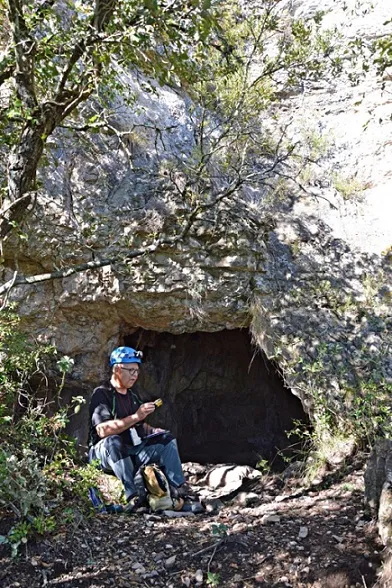
- Imatge tanca exterior extreta de wikiloc. Autor: Ambotes. Font-rubí, Alt Penedès: Roques de Salomó, Coll de la Barraca, Font de Llinars i Coves del Toixó, la Guineu i del Pastor.
- Actualització de dades març de 2018, coordenades dades i fotos (kiku) facilitades per Francesc Rubinat.
Nearby caves
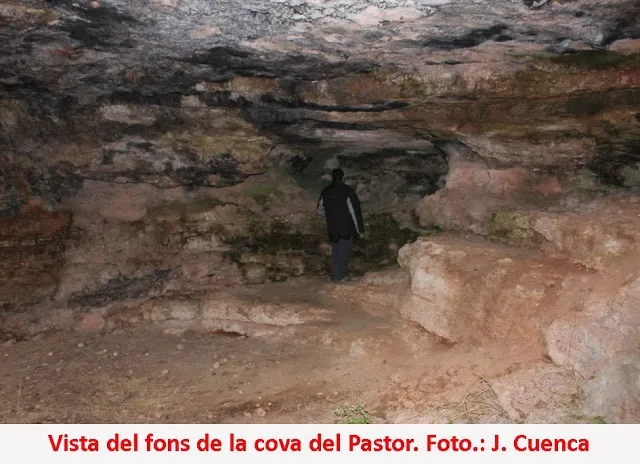



Source: Espeleoindex (espeleoindex.com), modified. CC BY-NC 4.0, https://creativecommons.org/licenses/by-nc/4.0/