
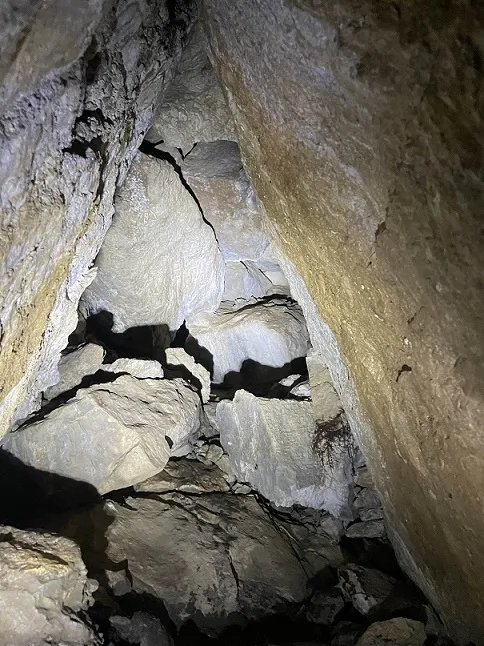
Cova de l'Eina Perduda
A 17 m-long cave in Montblanc, formed in a chaos of blocks, with two entrances and a lower level with archaeological remains.
EspeleoWorld
Cova de l'Eina Perduda
A 17 m-long cave in Montblanc, formed in a chaos of blocks, with two entrances and a lower level with archaeological remains.
Montblanc · Conca de Barberà
Length: 17 m · Depth: 6 m
Updated record
https://espeleoworld.com/en/c/cova-de-l-eina-perduda
Information can change. Always verify coordinates, access, weather, and cave conditions before setting out.
A 17 m-long cave in Montblanc, formed in a chaos of blocks, with two entrances and a lower level with archaeological remains.
Topographic
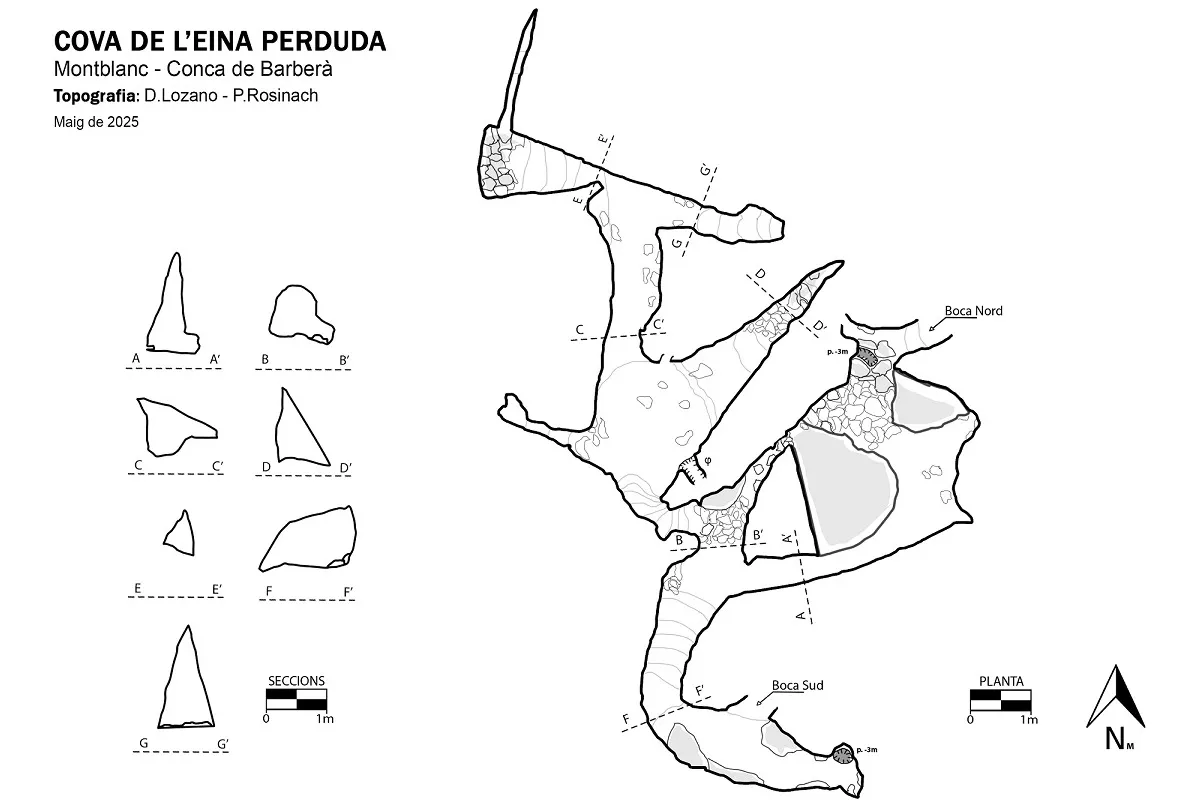

Espeleoindex · CC BY-NC 4.0, https://creativecommons.org/licenses/by-nc/4.0/ · Image © its author.
Photos

Espeleoindex · CC BY-NC 4.0, https://creativecommons.org/licenses/by-nc/4.0/ · Image © its author.
Description
Morphology
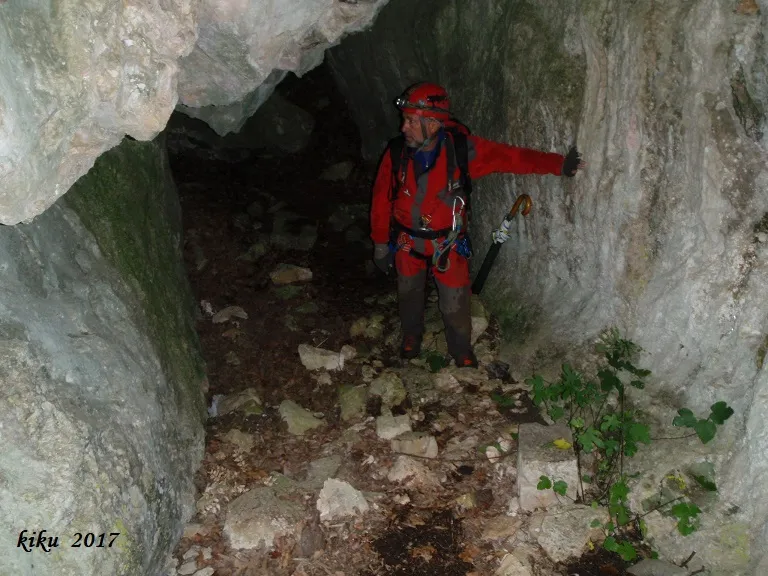
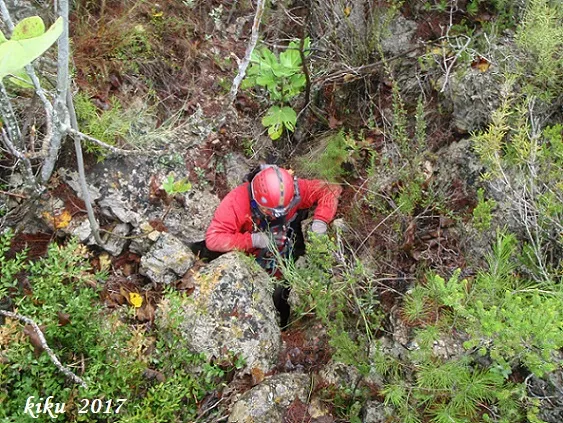
Formed in a chaos of blocks. The cavity has two entrances: one at the foot of the path (north entrance) and the other, hidden a few metres above the first, inside a rock formation (south entrance). If we enter through the north entrance, we find a chamber with a shaft just below the entrance, which descends three metres before widening at the base. The height and morphology of the initial chamber limit movement to crawling and horizontal manoeuvres. At the end of the chamber, a narrow passage connects with the intersection leading to the south entrance and gives access to the lower level, which is reached by descending among unstable rocks.
The lower level consists of a main chamber with side passages. On the right, just on entering it, there is a small room with a narrow access (classical Greek symbol: lowercase phi on the survey). In some places, natural light penetrates through small holes that connect with the outside. The main chamber of the lower level has enough height and space to allow several adults to stand upright. In the final room (section E), there is a very narrow and uniform fissure that narrows until it closes completely.
Other details
Descending the shaft located at the north entrance, a ceramic pot is found. Of ancient appearance, it is preserved in generally good condition. On the lower level of the cave, there are remains of a pick and a shovel, presumably used in some archaeological excavation or in the clearing of one of the nearby conduits where the tools are found.
History
A cavity quite close to the well-known la Cova del Racó de l'Hospital. Although no information has been found that refers directly to this cavity, in the public document 'Les primeres exploracions i descobertes del GIEM (La Ginesta i el Racó d'Hospital)' mention is made of the existence of several cavities near la Cova del Racó de l'Hospital, some of them with archaeological ceramic remains, as is the case here. This could be one of the cavities mentioned and could also be related to the remains of tools found on the lower level.
Bio
Arachnids
Meta bourneti
User Comments (0)
No comments yet.
Be the first to share your experience!
Registered Explorations (0)
No explorations registered yet.
Register your visit to this cave!
Bibliography
Totes les dades, topografia i fotografies han estat facilitades per P.R.A i D. Lozano
Nearby caves
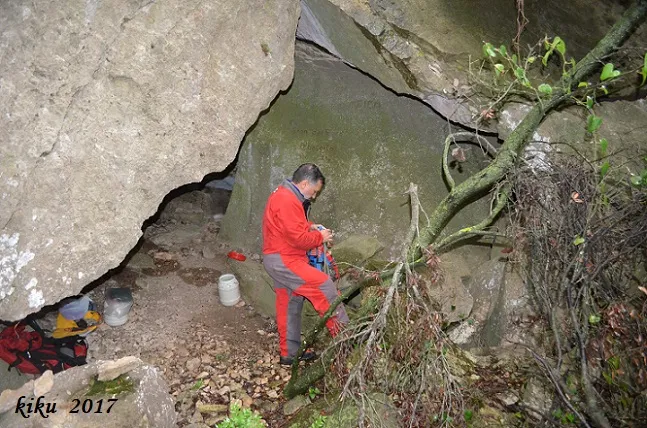
Cova del Racó de l'hospital
0.0 km · SW
Montblanc (Conca de Barberà)
2 topo.10 photos
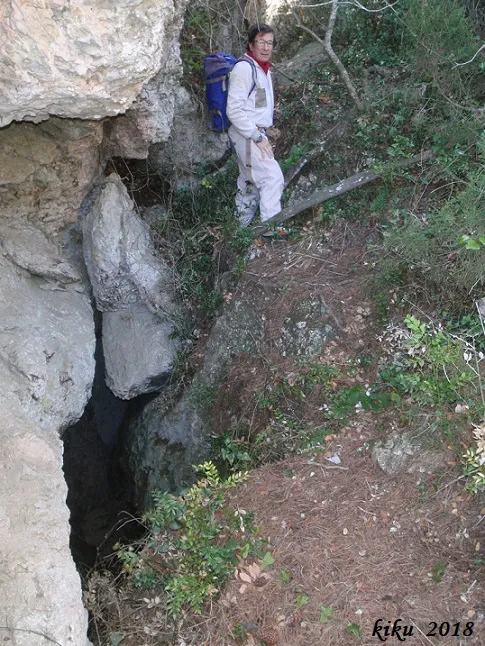
Avencs Arrel-estret
0.2 km · E
Montblanc (Conca de Barberà)
1 topo.5 photos
Cova del Siroll
0.2 km · E
Montblanc (Conca de Barberà)
1 topo.4 photos
Avenc de la Figuera
0.2 km · E
Montblanc (Conca de Barberà)
1 topo.6 photos
Source: Espeleoindex (espeleoindex.com), modified. CC BY-NC 4.0, https://creativecommons.org/licenses/by-nc/4.0/