
Avenc del Po
Spectacular 50-metre-deep fissure at Santa Perpètua de Gaià (Pontils), with a total length of 192 metres.
EspeleoWorld
Avenc del Po
Spectacular 50-metre-deep fissure at Santa Perpètua de Gaià (Pontils), with a total length of 192 metres.
Pontils · Conca de Barberà
Length: 192 m · Depth: 50 m
Updated record
https://espeleoworld.com/en/c/avenc-del-po
Information can change. Always verify coordinates, access, weather, and cave conditions before setting out.
Spectacular 50-metre-deep fissure at Santa Perpètua de Gaià (Pontils), with a total length of 192 metres.
Topographic
Espeleoindex · CC BY-NC 4.0, https://creativecommons.org/licenses/by-nc/4.0/ · Image © its author.
Photos
Espeleoindex · CC BY-NC 4.0, https://creativecommons.org/licenses/by-nc/4.0/ · Image © its author.
Description
Morphology
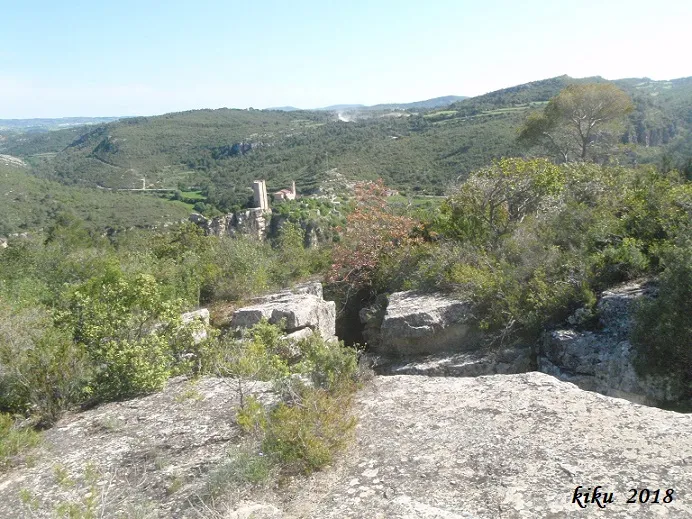
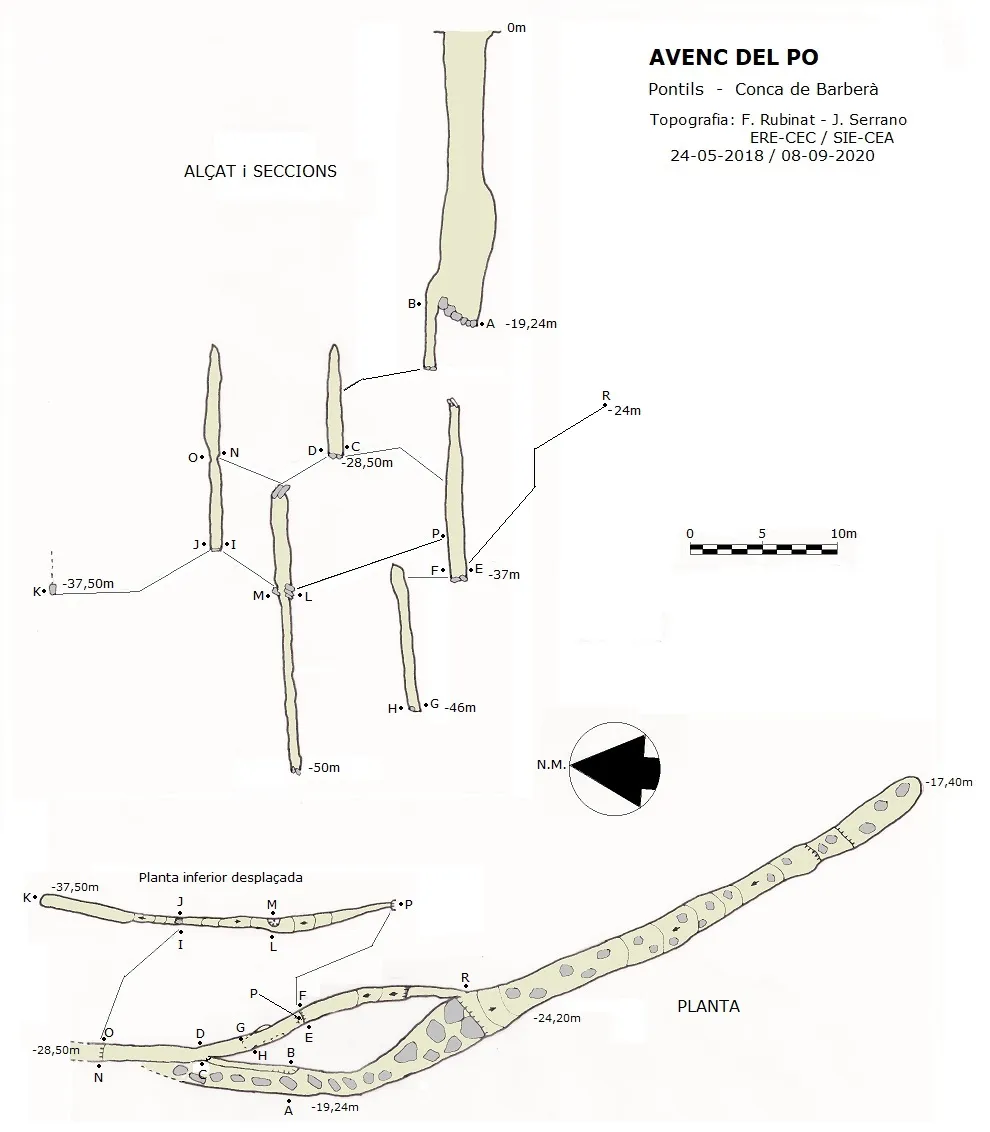
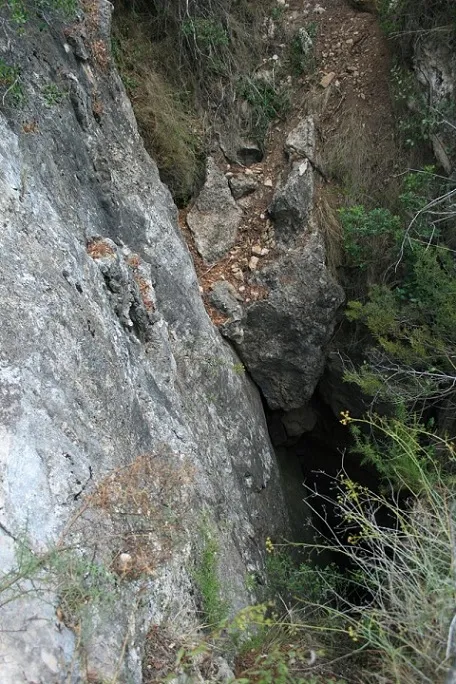
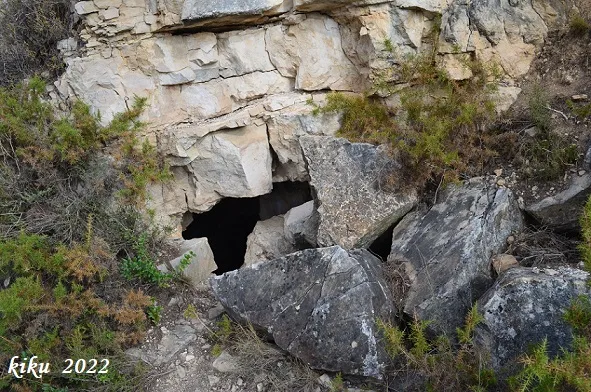
It is a spectacular open-air fissure that runs parallel to the cliff face over some sixty metres. The most suitable place to enter it is from the rocky platform that we find on arriving along the path. The width of the mouth along its outer course remains between 2 and 4.5 metres; at some points large blocks wedged in the fissure form a false roof. The first vertical drop of -19.24 metres places us on a floor full of blocks of all sizes. The fissure descends on a slight slope where we find a fairly narrow passage; just past this we find a pit of -4.5 metres, which introduces us into a fissure almost parallel to the previous one. From this point we have two continuations. If we climb a few metres up the gallery in a N direction, we soon find a pit of a little more than 6 metres, at the head of which we find 3 M-10 bolts with hangers. Once at the base, if we follow the low gallery in a N direction and at the end the floor becomes flat, ending at -37.50 metres depth, while in the roof at 15 metres height light from outside can be seen, which would coincide with the base of the main fissure, in a rather precarious block accumulation zone. Situated again at the base of the pit, we descend in a S direction to the lowest point; here a fairly narrow passage gives us access to a pit divided into two parts that place us at the lowest point of the cavity at -50 metres. From the head of this pit, if we follow towards the S, the gallery climbs slightly until reaching a very narrow passage that gives access to the very middle of a pit which is reached by another access. Situated again at the base of the 4.5-metre pit that there is after the narrow fissure, we follow the gallery in a S direction, where a short ramp leads us to a pit of -7.50 metres; before reaching the bottom we find the narrow passage through which the gallery mentioned above is accessed and which leads to the head of the pit that leads to the final level. At the base of the pit we find another inclined and narrow pit of -9 metres, which is divided at the end by a block; at this point we are at -46 metres depth. Situated again at the base of the previous pit and in a S direction, the gallery climbs with some step where material is needed, and ends up coming out to the outside at the base of the great fissure just at the foot of some enormous blocks situated in the deepest part of the fissure. Entering by this passage saves the narrow passage at the beginning of the fissure; there is also an M-10 bolt with hanger to install. From the base of the entrance pit, the main fissure can be traversed over some sixty metres where some drops caused by the large blocks that we find on the route must be overcome. On this stretch, both in winter and in spring, care must be taken as the dampness makes everything very slippery. The total length is 192 metres and the drop is -50 metres.
Progression
Situated at the base of the first vertical drop, on the opposite wall we find a narrow fissure where there is a fixed installation, made with home-made steel hangers and welded rings, these are completely rusted, as are the screws that hold them. The rope, of the disappeared brand TSA, is considerably swollen from its original diameter, which makes us suspect that these installations have been here for more than twenty years. We also find M-10 bolts with hanger in good condition.
History
Although it must have been known since remote times, the first mention that we have found is the one corresponding to Iglésies i Santasusagna (1934) in which they say: És també digne d'esment la llarga escletxa de l'avenc del Po, d'uns trenta metres de profunditat, situat damunt del Gaià, en el veïnatge de Santa Perpètua. Although there is no record, we have oral reports that towards the end of the 1950's it was explored by the people of the SES – CE Puigmal (Barcelona). In 1971 Àngel Nicolás (currently a member of the EGAN) together with a group of friends without speleological knowledge partially explored it using esparto ropes and lots tied with string. We also know that in January 1975 members of the GES – CMB were at Santa Perpètua, exploring the avenc del Po and la Cova de la Garganta. Shortly afterwards, in February 1978, members of the SIE-CEA made a quick and partial visit to the pit, writing a brief note that would be included in the Catàleg Espeleològic de Catalunya. Vol. 2 (1978), attributing to it 45 metres of depth and 150 of length. Many years later, between the decade of the 1990's and 2000, again Àngel Nicolás equipped the cavity with home-made stainless steel hangers and ropes that are still there today. In May 2020 he returned and installed the head of the new access to the dark part of the pit.
User Comments (0)
No comments yet.
Be the first to share your experience!
Registered Explorations (0)
No explorations registered yet.
Register your visit to this cave!
Bibliography
- Borràs, J.; Miñarro, JM; Talavera, F. (1978).- Catàleg Espeleològic de Catalunya. Vol. 2: 246 pp. Ed. Políglota. Barcelona.
- Iglésies, J.; Santasusagna, J. (1934).- Les valls del Gaià, del Foix i de Miralles. 572 pp. Guia excursionista. Centre de Lectura de Reus.
- Dades actualitzades el setembre de 2020, topografia i fotografies facilitades per Juli Serrano (SIE-CEA) i Francesc Rubinat (ERE-CEC).
Nearby caves


Source: Espeleoindex (espeleoindex.com), modified. CC BY-NC 4.0, https://creativecommons.org/licenses/by-nc/4.0/