
Avenc de Cal Sant
Avenc de 6 m. de fondària a la Llacuna.
EspeleoWorld
Avenc de Cal Sant
Avenc de 6 m. de fondària a la Llacuna.
Llacuna, La · Anoia
Length: 31 m · Depth: 6 m
Updated record
https://espeleoworld.com/en/c/avenc-de-cal-sant
Information can change. Always verify coordinates, access, weather, and cave conditions before setting out.
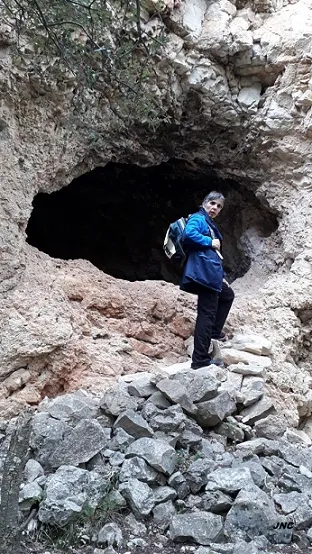
A 6 m deep pit in la Llacuna, near the Cova de Cal Sant, with a narrow gallery and a small shaft of about 3 metres.
Topographic
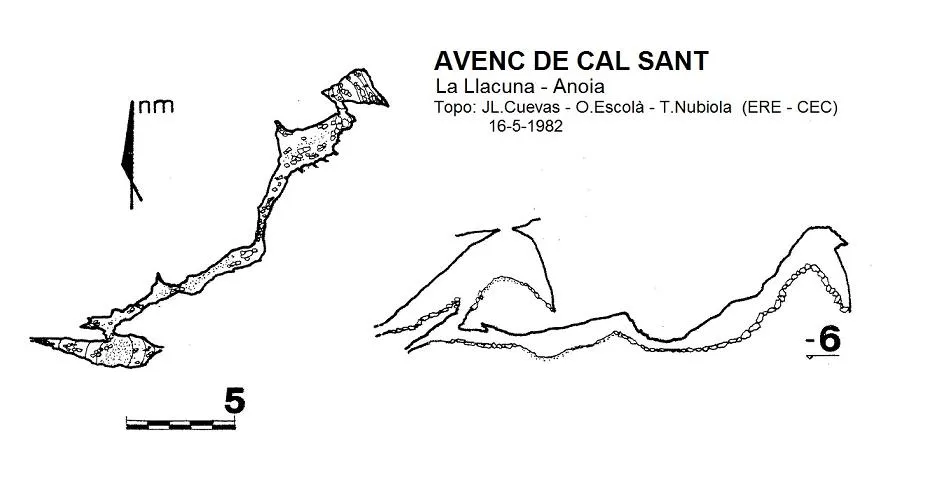
Espeleoindex · CC BY-NC 4.0, https://creativecommons.org/licenses/by-nc/4.0/ · Image © its author.
Description
Morphology
A pit 6 m deep. Of morphology and origin the same as its neighbour Cova de Cal Sant, set in a highly tectonised zone that gives rise to a whole series of very localised fissures.
Progression
Through a small shaft of about 3 metres one enters a narrow gallery, with some narrow passages and slightly descending, then in a final wider stretch one ascends almost to the level of the surface.
History
In 1971, during a visit by the ERE – CEC to the avenc de la Plana d'Ancosa, a tenant farmer of the area indicated to them a series of holes in the Cal Sant area. D. Schibi and T. Nubiola locate and explore them on 8-8-1971. These are the Cova de Cal Sant and the Avenc de Cal Sant; in the latter they collect fauna and find a beetle that arouses the interest of Dr. Francesc Español. Two months later, on 12-10-1971, they accompany Dr. Español to the cavities and again in the pit (not in the cave), they are able to capture some specimens of the beetle which, once studied, will turn out to be a new species (Speophilus schibii, in honour of its discoverer Daniel Schibi). On publishing the note about this new species, Español decides, basing himself on the cartography of the time and without knowing the name that those of the ERE had given the cavity, to name it Avenc de la Solana, although it is a farmhouse quite far from the cavity and in reality the place name is Solanes.
In May 1972 members of the ERE – CEC visit and survey the two cavities, surveys that had remained unpublished until now.
Despite the short distance between the cave and the pit, the latter had never been known and it seems that it went unnoticed by the other groups that visited the cave.
In August 2017, Joan Pallisé collects 9 specimens of Troglocharinus in the nearby cave, which until then was only known from this pit.
Bio
Coleoptera
- Troglocharinus schibii (Español, 1972)
Made known as Speophilus schibii, before the reunification within the genus Troglocharinus of all the Speophilus.
User Comments (0)
No comments yet.
Be the first to share your experience!
Registered Explorations (0)
No explorations registered yet.
Register your visit to this cave!
Bibliography
- Español, F. (1972).- “Un nuevo Speophilus del grupo kiesenwetteri (Col. Catopidae)”. Miscelánea zoológica III (2): 55-59. Museu de Zoologia. Barcelona.
- Dades i topografia inèdites de l'arxiu ERE – CEC. Ampliades per l'Oleguer Escolà
- Revisió de coordenades facilitades per Joan Pallisé Coflent (gener 2021)
Nearby caves
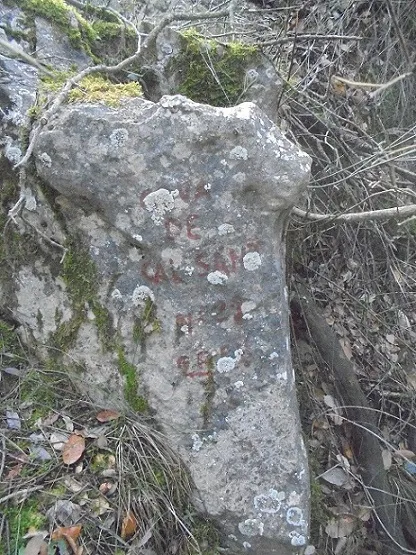
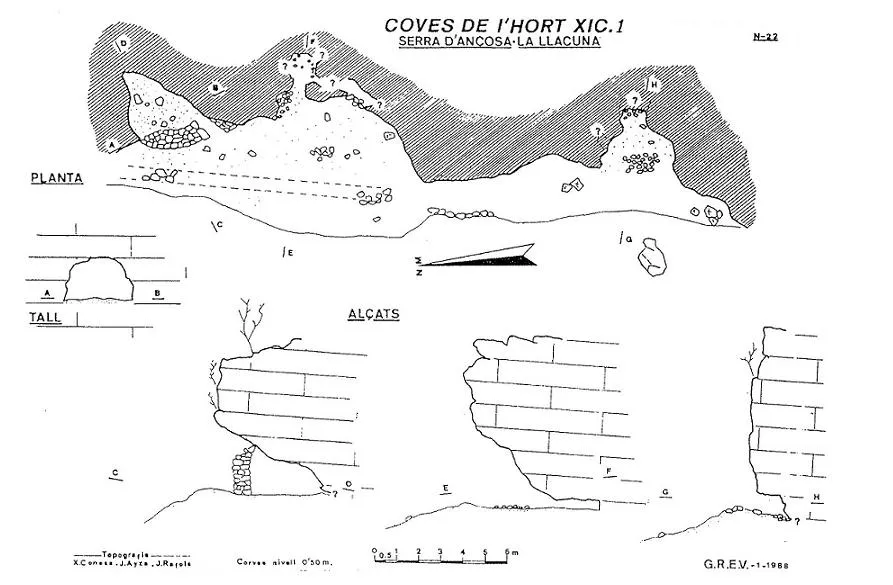
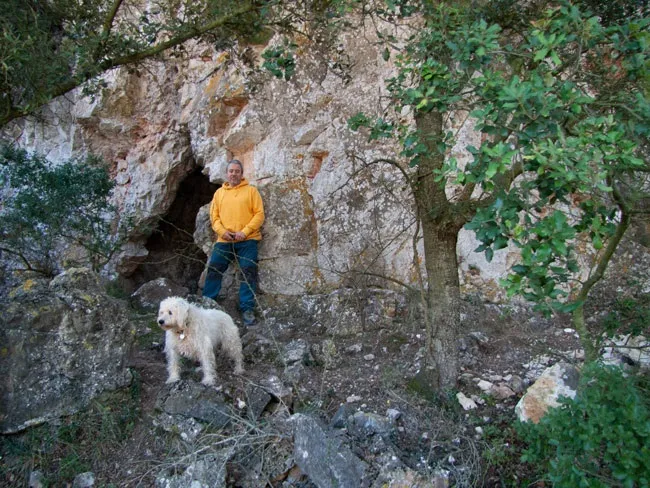

Source: Espeleoindex (espeleoindex.com), modified. CC BY-NC 4.0, https://creativecommons.org/licenses/by-nc/4.0/