
EspeleoWorld
Arrikrutz
Arrikrutz is a swallow-hole cave in Oñati (Gipuzkoa), connected to the Gesaltza cave in a complex of 14 km of galleries. Part of it has been open to the public since 2007.
Oñati
Length: 14000 m · Depth: 149 m
Updated record
https://espeleoworld.com/en/c/arrikrutz-onati
Information can change. Always verify coordinates, access, weather, and cave conditions before setting out.
Arrikrutz is a swallow-hole cave in Oñati (Gipuzkoa), connected to the Gesaltza cave in a complex of 14 km of galleries. Part of it has been open to the public since 2007.
Photos

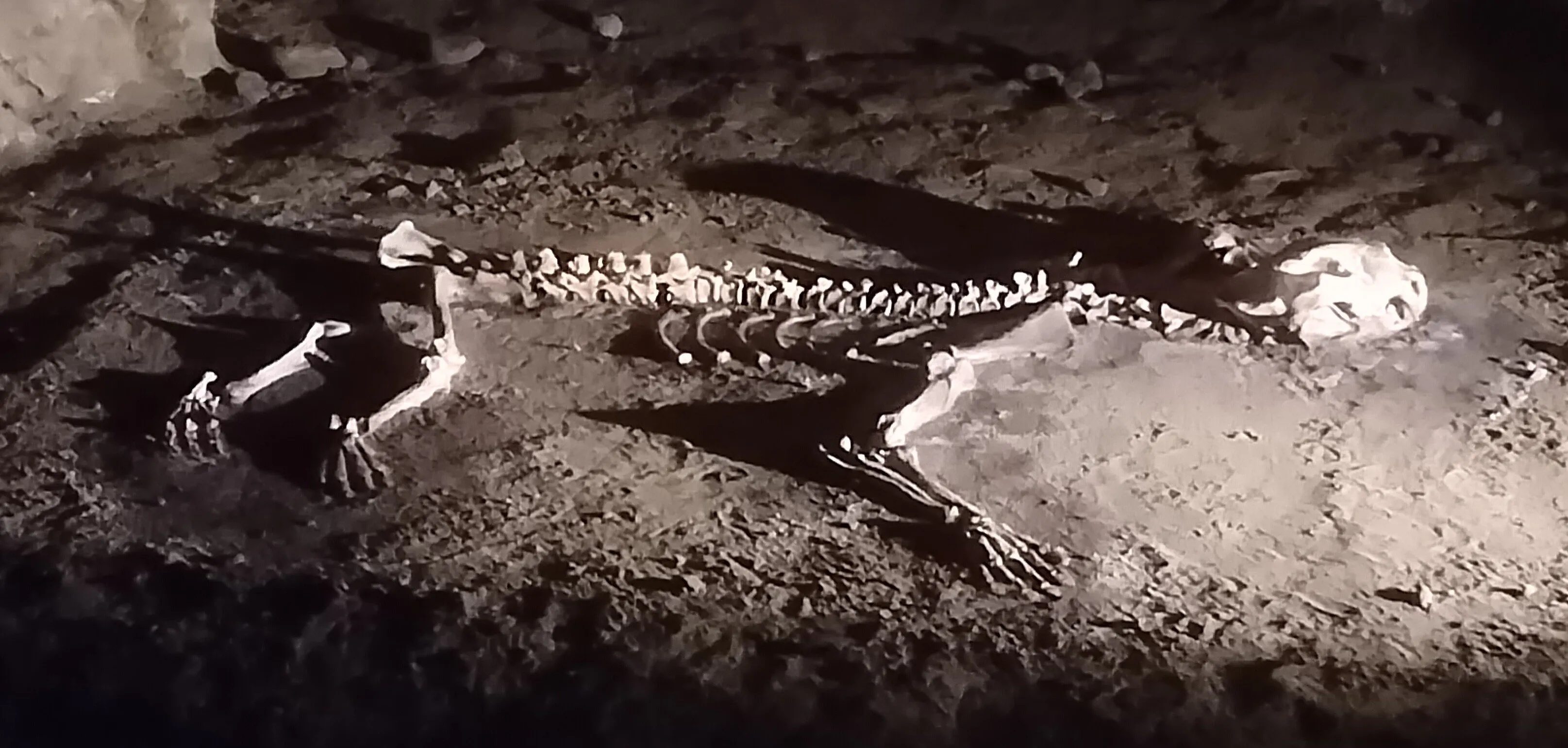
© Carlos Alustiza Martinez · CC-BY-SA-4.0 4.0 · Carlos Alustiza Martinez / Wikimedia Commons, CC BY-SA 4.0 · https://commons.wikimedia.org/wiki/File:R%C3%A9plica_de_un_le%C3%B3n_cavernario_hallado_en_Arrikrutz..jpg
Description
Morphology
The complex has 14 km of interconnected galleries and a vertical extent of 149 m. The connection between Arrikrutz and Gesaltza doubled the known length, which was previously 7 km. The rock is limestone and dolomite, with an age of between 154 and 96 million years. Six superimposed karst levels are distinguished, with active and fossil galleries.
In Arrikrutz, the swallow hole descends at a slope of about 45 degrees. Some 50 m further down the Gran Galería continues, almost horizontal and 1 km long, where the Echeverría and Corcóstegui chambers are located. The Galería del Hambre is a fossil conduit 800 m long. Galería 53 measures 390 m horizontally and has a chimney and an air current. The Marcel Loubens Cave brings together several galleries that converge in the Sala Corcóstegui.
The Gesaltza entrance is 50 m high and 18 m wide. In 1957 four active and four fossil levels were counted in Gesaltza.
Speleothems
In the Galería del Hambre there is a stalagmite 5.5 m high and only 7 cm in diameter. The Sala de las Estalagmitas contains large stalagmites; one of them exceeds 8 m in circumference. In the Bosque de las Maravillas, excentrics and stalactites can be seen.
Hydrology
Gesaltza collects the water of the Arantzazu river, which in flood contributes several m³/s. Today the river is diverted upstream for a hydroelectric plant, so that it only enters the cave when it rains heavily or there is a flood.
Arrikrutz absorbs the Aitzkorbe stream. The water reappears at the surgencia de Jaturabe, located 1500 m in a straight line from Gesaltza. Jaturabe marks the base level. In 1957 the hydrological communication between the two caves had not yet been verified. That same year a temperature of 12 degrees was recorded.
Progression
The 1957 survey measured 5010 m in the system as a whole, of which 2740 m corresponded to Arrikrutz. Ruiz de Arcaute's plan is from 1955 and was made by the Aranzadi section. In 1974 the Aloña-Mendi group produced another survey, with about 7000 m.
Students from Aránzazu opened an exit towards Jaturabe, which was reported in 1967. The climate of Galería 53 was studied in a work published in Karaitza 11.
Other details
The tourist visit follows Galería 53, an ancient swallow hole of the Aldaola river, now fossil, of about 500 m. It lasts about 60 minutes and has a multilingual computer system. The fitting-out works began in 2003 and the cave opened to the public on 8 June 2007.
History
The best-known find at Arrikrutz is a complete skeleton of a cave lion, of a large male. Jesús Altuna studied it and published it in 1967. It was found more than 1.5 km from the current entrance, and it is likely that the animal entered through Jaturabe.
The discoverers were Iñaki Zubeldia Otegi and Jesús Manuel Maroto, students at the Arantzazu seminary, in 1966. The original skeleton is kept in Gordailua (Irún). A replica is exhibited in the cave.
The fitting-out works began in 2003 and the cave opened to the public on 8 June 2007. The guided visit lasts about 60 minutes and uses a multilingual computer system.
Bio
In the Galería del Hambre and in the Galería de los Osos there are remains of cave bear. Remains of panthers, woolly rhinoceros, cave hyena, giant deer and mammoth are also cited.
In 1951 a blind crustacean of the genus Niphargus was found in Gesaltza. Protected species also live inside Gesaltza.
User Comments (0)
No comments yet.
Be the first to share your experience!
Registered Explorations (0)
No explorations registered yet.
Register your visit to this cave!
Nearby caves
Source: Diputación Foral de Gipuzkoa – b5m (Catálogo espeleológico, Sociedad de Ciencias Aranzadi) (b5m.gipuzkoa.eus), modified. CC BY 4.0, https://creativecommons.org/licenses/by/4.0/ Sociedad de Ciencias Aranzadi / Diputación Foral de Gipuzkoa (b5m) · data as of 2014 · Text written by Espeleoworld from public sources. Please ask us before reusing it. · Text by Sociedad de Ciencias Aranzadi (ARRIKRUTZ (ficha 652)), Wikipedia (es) (Cuevas de Arrikrutz), Wikipedia (eu) (Arrikruzko kobak), Gobierno Vasco (Inventario de Lugares de Interés Geológico de la CAPV, LIG 81 Sumidero de Gesaltza), Parque Natural Aizkorri-Aratz (Geología (Aratz)), Félix Ruiz de Arcaute, Juan San Martín (Conjunto de los fenómenos espeleológicos de Gesaltza, Arrikrutz, Jaturabe y Cueva de los Osos (Munibe 1957)), Jesús Altuna (Hallazgo de un esqueleto de león de las cavernas en la cueva de Arrikrutz (Oñate-Guipúzcoa) (Munibe 1967)), showcaves.com (Show Caves of Spain: Cueva de Oñati-Arrikrutz), Lurpea (Las cuevas de Oñati-Arrikrutz), Nekatur (Cuevas de Oñati - Arrikrutz) · adapted by Espeleoworld (normalized, translated); the adaptation is licensed Our own text, written from public sources. Please ask us before reusing it. · Source: Show Caves of the World (Jochen Duckeck) (www.showcaves.com), modified. CC0 1.0, https://www.showcaves.com/english/TermsOfUse.html Show Caves of the World (showcaves.com), Jochen Duckeck · names · obtained 2026-11-21 · data as of 2026