
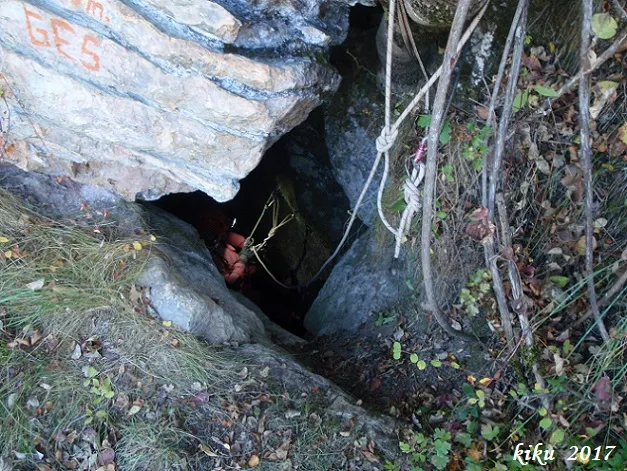
Avenc del Tinc-ca-tinc
A 43 m deep pit in the Vall d'Àssua (Pallars Sobirà), explored in 1962 and surveyed in 1974, with a 22 m entrance shaft and stalactitic formations.
EspeleoWorld
Avenc del Tinc-ca-tinc
A 43 m deep pit in the Vall d'Àssua (Pallars Sobirà), explored in 1962 and surveyed in 1974, with a 22 m entrance shaft and stalactitic formations.
Sort · Pallars Sobirà
Sviluppo: 98 m · Profondità: 43 m
Scheda aggiornata
https://espeleoworld.com/it/c/avenc-del-tinc-ca-tinc
Le informazioni possono cambiare. Verifica sempre coordinate, accesso, meteo e condizioni della cavità prima di partire.
A 43 m deep pit in the Vall d'Àssua (Pallars Sobirà), explored in 1962 and surveyed in 1974, with a 22 m entrance shaft and stalactitic formations.
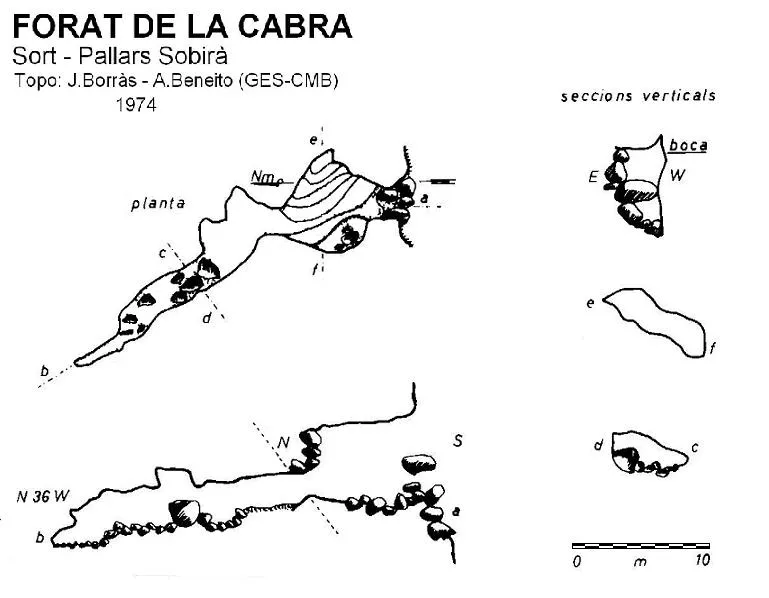
Topografia
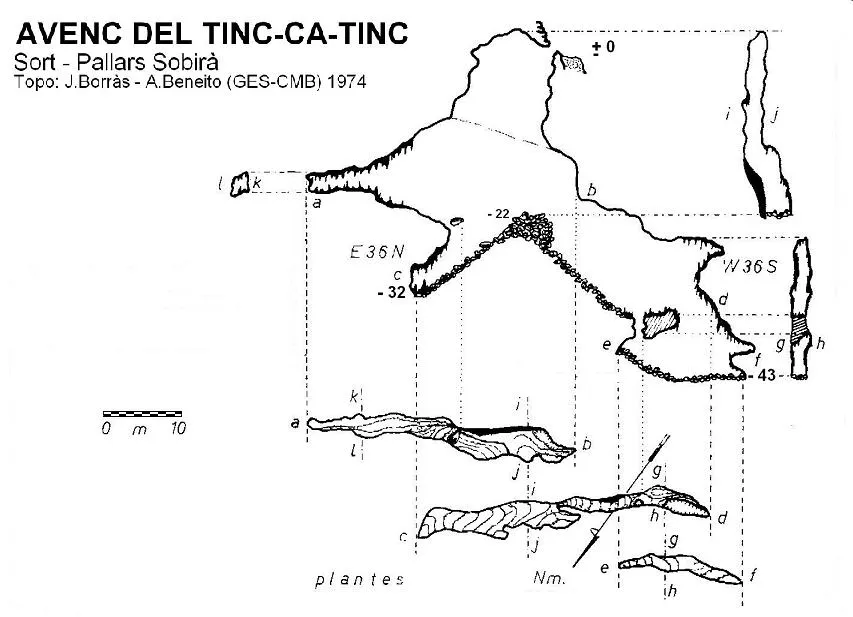
Espeleoindex · CC BY-NC 4.0, https://creativecommons.org/licenses/by-nc/4.0/ · Immagine © del suo autore.
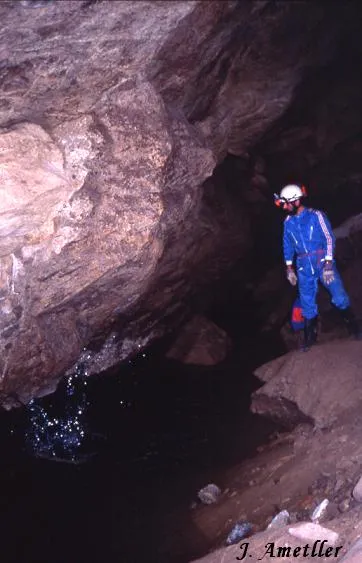
Foto
Espeleoindex · CC BY-NC 4.0, https://creativecommons.org/licenses/by-nc/4.0/ · Immagine © del suo autore.
Descrizione
Morfologia
The quadrangular mouth gives way to a shaft with an average width of 2 metres and a length of 8 metres, which increases as it deepens. This shaft has a vertical drop of 22 metres and its base is considerably elongated, following the main joint of direction E36N – 036S. From the foot of the vertical, occupied by a large debris cone, two steep slopes of clastic material emerge; towards the NE it is 15 metres long and has its ceiling and walls beautifully decorated by stalactitic formations. The SW gallery, after a vertical drop of 4 metres, descends at a slope of 40º to the mouth of a new shaft, of 5 vertical metres, which leads onto a new chamber of elongated section practically in the same direction as the rest of the pit. This new chamber is nothing more than the lower part of the single cavity, which is divided into multiple parts by the clastic accumulations.
Its origin seems to be due to the erosion or dissolution of a stretch of limestone, practically disappeared, within the package of schists predominant in the area.
In a later survey (SIS – CET, 1978), a small side chamber appears, reached by means of a narrow passage located at the foot of the entrance shaft and which does not seem to be reflected in the first survey.
Concrezioni
The reconstructive process is represented by a large parietal flowstone in the central part of the base of the entrance shaft, and a considerable quantity of white stalactites and stalagmites of regular sizes, among which are some eccentric and isotubular ones, as well as beautiful needle crystallizations.
Storia
The cavity had always been known to the people of the area, but it was not explored until August 1962 by members of the GES-CMB, although this first exploration remained almost unpublished. It was not until the summer of 1974 that other members of the GES-CMB explored and surveyed it, subsequently making it known.
Toponymy: We keep the word avenc that the first explorers gave it, but it should be noted that it is a toponym totally non-existent in this area of the Pallars. Possibly one should use the word forat.
As for the curious name of Tinc-ca-tinc, we have not been able to ascertain its etymology although it makes us think of an onomatopoeic origin. Would Tinc a tinc not be more correct?
Note biospeleologiche
Collembola:
Tomocerus catalanus Denis, 1924 (O. Escolà; 12-10-1978)
Coleoptera:
Coleoptera, Leiodidae, Speonomites tincatincensis (Escolà-Bellés-Comas)
(O. Escolà, 12-10-1978)
(X. Bellés; T. Cuñé; O. Escolà; 17-12-1978)
(26-X-2017 Serrano-Roca leg.) 6 indiv.
Speonomus akarsticus n. sp. (O. Escolà; 12-10-1978)
Commenti degli utenti (0)
Nessun commento ancora.
Sii il primo a condividere la tua esperienza!
Esplorazioni registrate (0)
Nessuna esplorazione registrata.
Registra la tua visita a questa grotta!
Bibliografia
- Borràs, J.; Beneito, A. (1975).- “Contribució al coneixement espeleològic de la vall d'Àssua (Pallars Sobirà)”. Vèrtex (46): 412-414. Federació Catalana de Muntanyisme. Barcelona.
- Escolà, O. (1980).- “Speonomus akarsticus n. sp. (Col. Catopidae) del Pirineo del Pallars (Catalunya)”. Speleon (25): 27-29. Centre Excursionista de Catalunya. Barcelona.
- Gama, M.M. da (1984).- “Collemboles cavernicoles de l'Espagne” Miscel·lània Zoològica (8): 81-87. Museu de Zoologia. Barcelona.
- Actualització de la fitxa novembre de 2017, dades i fotos facilitades per Montse Roca i Juli Serrano (SIE.CEA), amb Francesc Rubinat (ERE-CEC).
Grotte vicine
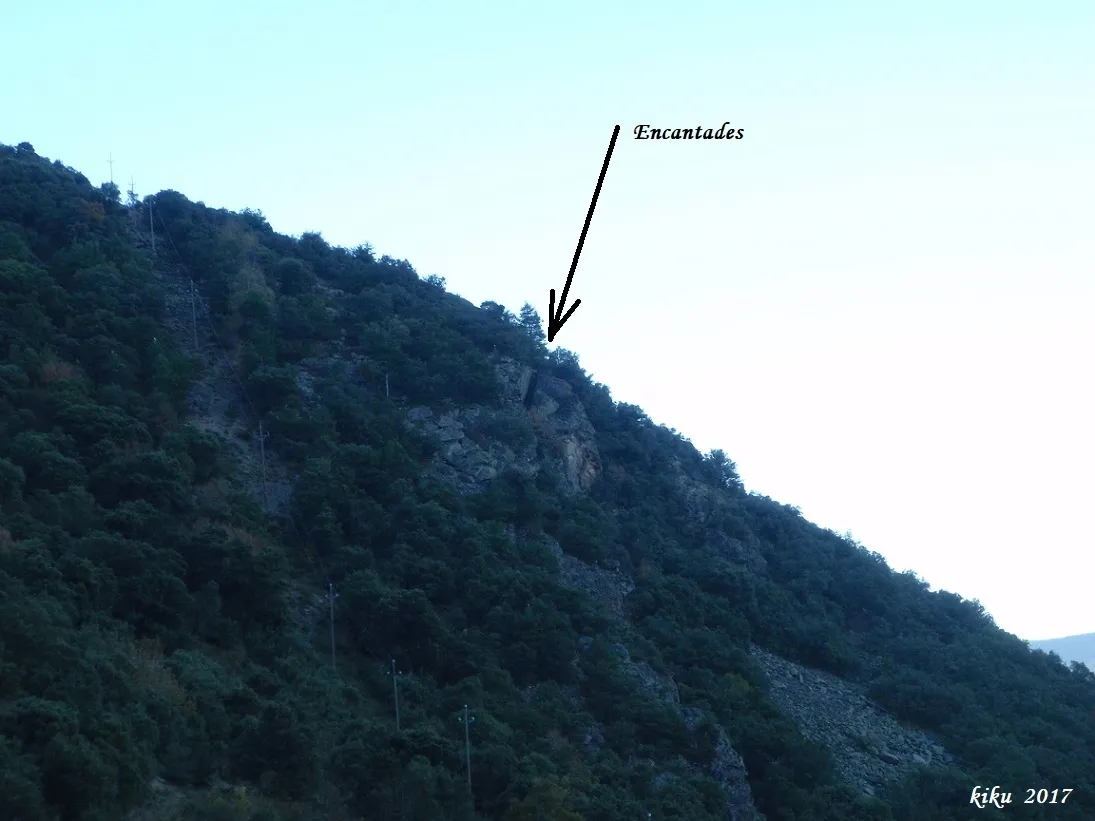
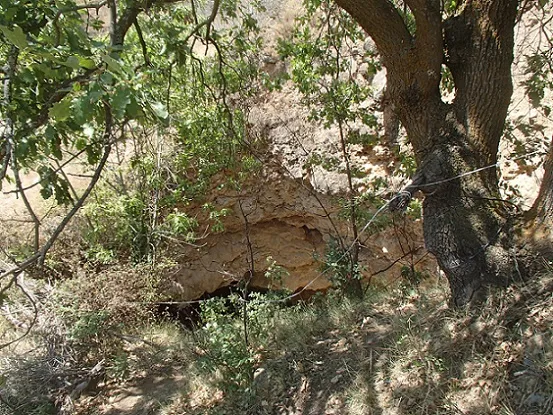


Fonte: Espeleoindex (espeleoindex.com), modificato. CC BY-NC 4.0, https://creativecommons.org/licenses/by-nc/4.0/