
Pozzicola
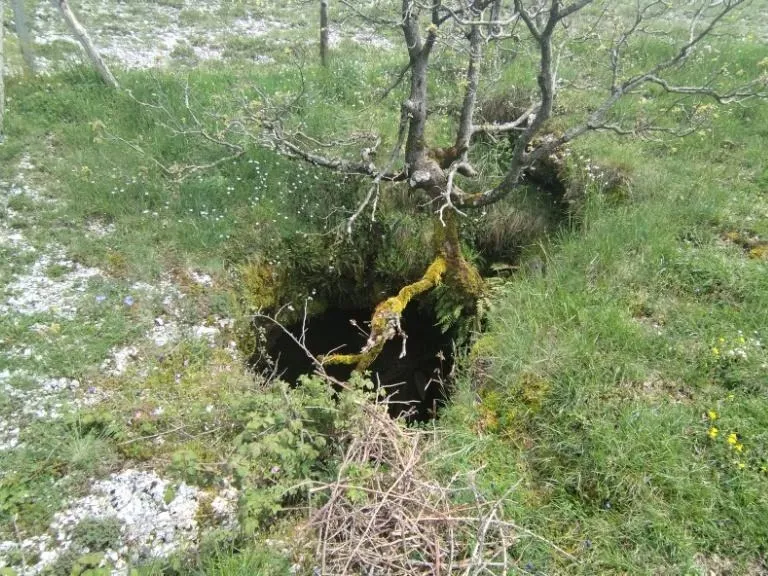
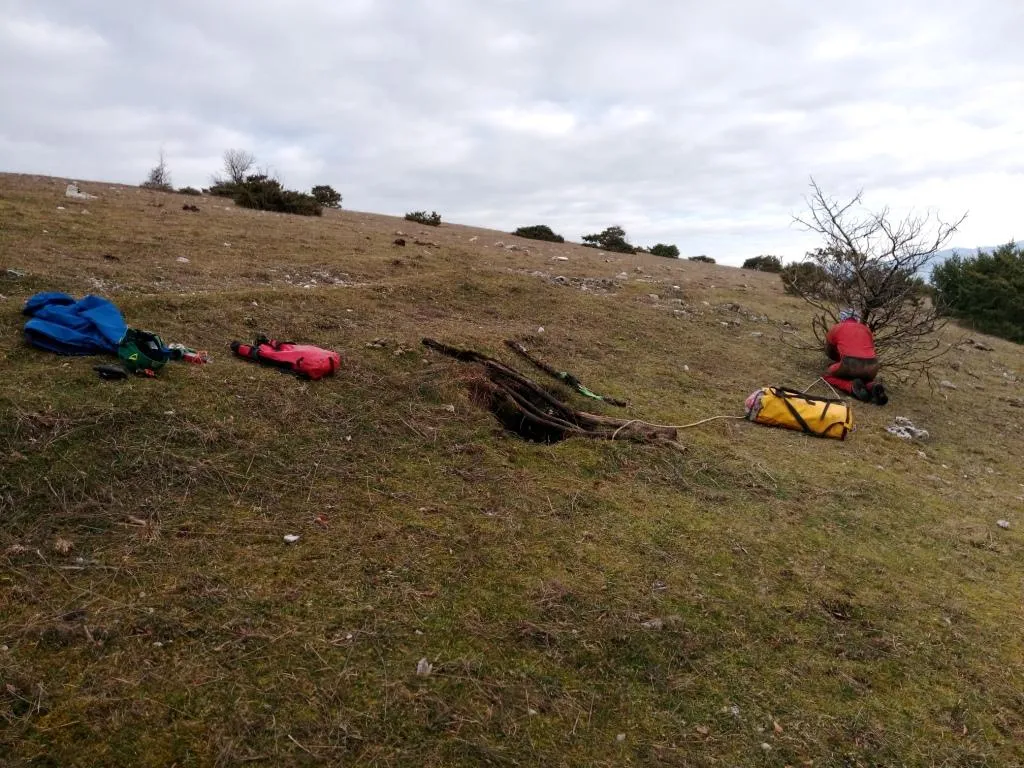
Bell-shaped pit about 8 m deep, with a predominantly vertical trend, bounded by a fence at its entrance.
EspeleoWorld
Pozzicola
Bell-shaped pit about 8 m deep, with a predominantly vertical trend, bounded by a fence at its entrance.
Spoleto
Longueur: 11 m · Profondeur: 8 m
Fiche actualisée
https://espeleoworld.com/fr/c/pozzicola-spoleto-perugia
Les informations peuvent changer. Vérifiez toujours les coordonnées, l'accès, la météo et l'état de la cavité avant de partir.
Bell-shaped pit about 8 m deep, with a predominantly vertical trend, bounded by a fence at its entrance.
Photos
© Mauro Barbieri · LicenseRef-FUGS-media-per-item · Federazione Umbra Gruppi Speleologici (FUGS), Catasto Speleologico dell'Umbria · https://catasto.fugs.it/index.php?mod=caves&op=view&id=4
Description
Morphologie
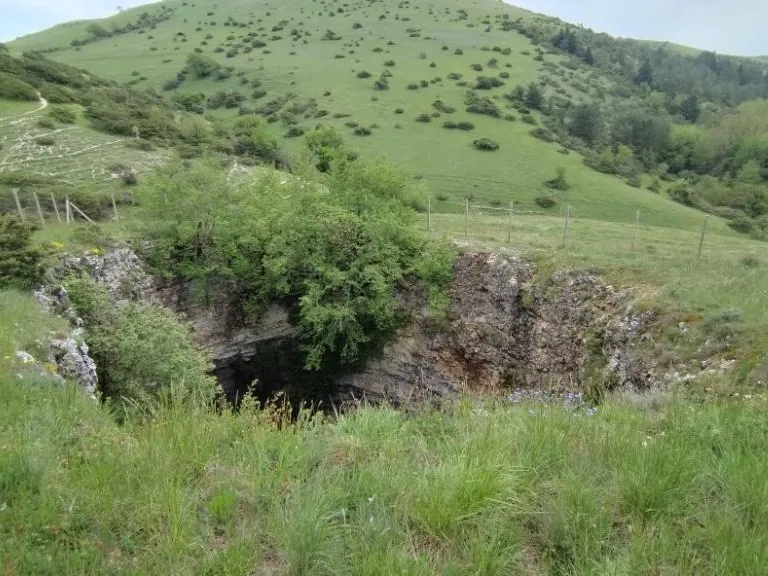
Bell-shaped pit about 8 m deep. Trend: predominantly vertical. Entrance: cavity bounded by a fence at its entrance, about 2 metres in diameter, with a tree usable for the descent.
Hydrologie
Hydrology and meteorology: no circulation; no airflow was detected at the entrance - 2018.
Progression
Traversability: demanding; recommended period all year round. Rigging: temporary. Progression difficulty: shafts. Hazards: dangerous access.
Autres détails
Geology: MAI Maiolica - Upper Jurassic-Lower Cretaceous (Tithonian-Aptian); stratified micritic limestones; stratified; see report by Famiani & Cardinali - 2018. The cavity formed through the combined effect of the tectonic system that guided the displacements and primary fractures in the limestone formation on which the karst action was established, followed by a gravitational collapse of the vaults with the related accumulation of debris on the bottom.
Histoire
Notes on the name: referred to by Lippi Boncambi as Voragine Pozzicula in the 1950 Cadastral List.
Bio
Other hypogean fauna: troglobitic Carabid beetle: Duvalius consortii Magrini & Degiovanni, 2006; troglobitic Carabid beetle: Duvalius andreuccii Magrini & Vanni, 1984. Bait trapping revealed the presence of two specialized troglobitic species. Studies and monitoring: entomological.
Commentaires des utilisateurs (0)
Aucun commentaire pour le moment.
Soyez le premier à partager votre expérience !
Explorations enregistrées (0)
Aucune exploration enregistrée pour le moment.
Enregistrez votre visite dans cette cavité !
Bibliographie
LOTTI B. (1902) Sulla costituzione geologica del gruppo montuoso di Amelia VINASSA DE REGNY P. (1906) Appunti di geologia Umbra PRINCIPI P. (1913) Secondo contributo allo studio dei fenomeni carsici dell'Umbria (Catena dei Monti Martani) LOTTI B. (1917) Il gruppo montuoso del Monte Martano LOTTI B. (1926) Descrizione geologica dell'Umbria MONTANARI R. (1940) I Monti Martani LIPPI BONCAMBI C. (1941) La pedologia della Catena Martana (Umbria) con alcune osservazioni sul fenomeno carsico di essa LIPPI BONCAMBI C. (1950) Sullo stato attuale del Catasto Speleologico dell'Umbria LEMMI G. (1958) Note di aggiornamento del Catasto Speleologico dell'Umbria LEMMI G. & COLETTI G. (1961) Elenco catastale delle grotte dell'Umbria FAMIANI F. & CARDINALI R. (2018) Esplorazioni Monti Martani Gennaio-Febbraio 2018
Grottes à proximité

Source : Catasto Cavità Umbria (Federazione Umbra Gruppi Speleologici, FUGS) (catasto.fugs.it), avec modifications. LicenseRef-FUGS-no-licence-stated Federazione Umbra Gruppi Speleologici (FUGS), Catasto Speleologico dell'Umbria · https://catasto.fugs.it/index.php?mod=caves&op=view&id=4 · données de 2025 · Source : Catasto Cavità Umbria (Federazione Umbra Gruppi Speleologici, FUGS) (catasto.fugs.it), avec modifications. LicenseRef-FUGS-media-per-item Federazione Umbra Gruppi Speleologici (FUGS), Catasto Speleologico dell'Umbria · données de 2025