
EspeleoWorld
Cueva de Maltravieso
A karst cave in Cáceres famous for its prehistoric art, now closed to the public and protected by an interpretation center inaugurated in 1999.
Cáceres
Longueur: 77 m
Fiche actualisée
https://espeleoworld.com/fr/c/cueva-de-maltravieso-caceres
Les informations peuvent changer. Vérifiez toujours les coordonnées, l'accès, la météo et l'état de la cavité avant de partir.
A karst cave in Cáceres famous for its prehistoric art, now closed to the public and protected by an interpretation center inaugurated in 1999.
Photos

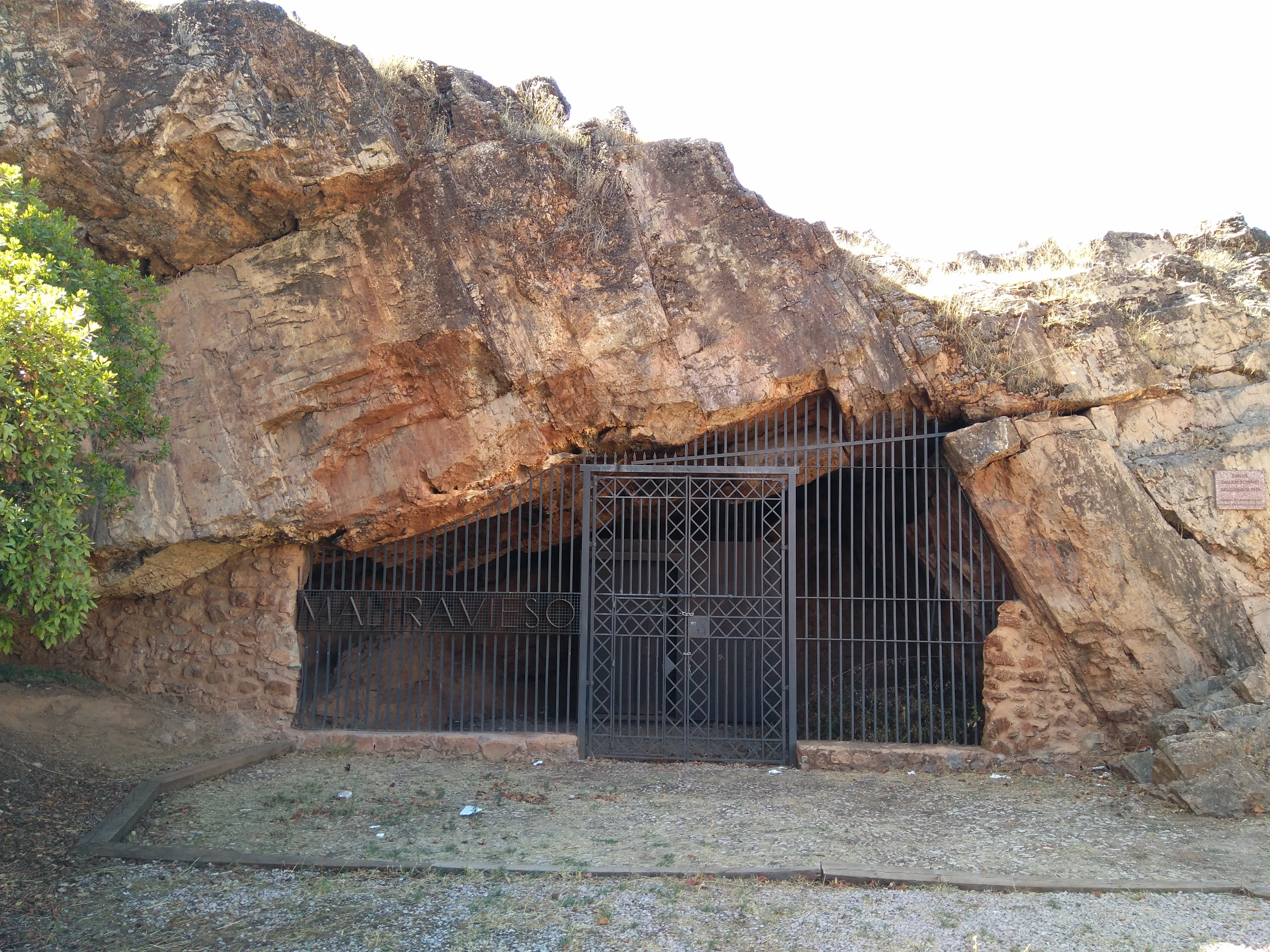
© Edurne Castillo Prieto · CC BY-SA 4.0, https://creativecommons.org/licenses/by-sa/4.0/ · Wikimedia Commons · https://commons.wikimedia.org/wiki/File:Cueva_de_Maltravieso_02.jpg
Description
Morphologie
The cave has a length of 77 m today, but is estimated to have been more than 130 m long. The first 30 m of the cave were destroyed in the years following its discovery.
Autres détails
To protect the cave and its paintings, the Centro de Interpretación de la Cueva de Maltravieso (Interpretation Center of the Cave of Maltravieso) was inaugurated in 1999. It is a subdivision of the Archeology Section of the Cáceres Museum. As the cave paintings are fragile, the cave is closed to the public. The Interpretation Center shows maps and pictures of the cave and the paintings, and gives detailed information about the scientific exploration and the involved researchers.
Histoire
The cave was a shelter for hunter-gatherers for the last 350,000 years. Most remains are from the Upper Paleolithic, Neolithic, and Bronze Age. The early remains are from Homo neanderthalensis, the younger from Homo sapiens. There are Upper Paleolithic reddish paintings and thirty hand negatives, triangular geometric patterns, serpent-like lines and dots with parallel lines. Also, there are engravings, the most impressive of a deer in profile.
The cave was discovered in 1952 during quarry works in a limestone quarry in the city of Cáceres. Despite some initial discoveries of human remains and ceramics, the quarrying went on. The quarry was finally closed in 1956 after Carlos Callejo Serano discovered cave paintings, and the cave was finally set under protection.
Commentaires des utilisateurs (0)
Aucun commentaire pour le moment.
Soyez le premier à partager votre expérience !
Explorations enregistrées (0)
Aucune exploration enregistrée pour le moment.
Enregistrez votre visite dans cette cavité !
Grottes à proximité
Contient des informations de Grottocenter (Wikicaves), grottocenter.org, mises à disposition sous la licence Open Database License (ODbL 1.0, https://opendatacommons.org/licenses/odbl/1-0/), avec modifications. · https://grottocenter.org/ui/entrances/20316 · données de 2026 · Source : Show Caves of the World (Jochen Duckeck) (www.showcaves.com), avec modifications. CC0 1.0, https://www.showcaves.com/english/TermsOfUse.html Show Caves of the World (showcaves.com), Jochen Duckeck · Texte de Jochen Duckeck (Cueva de Maltravieso) · adapté par Espeleoworld (normalisé, traduit) ; l'adaptation est sous licence CC0 1.0, https://www.showcaves.com/english/TermsOfUse.html · longueur, noms, description · obtenu le 2026-11-19 · données de 2026 · Les données dérivées sont disponibles sur demande sous l'ODbL : [email protected]