
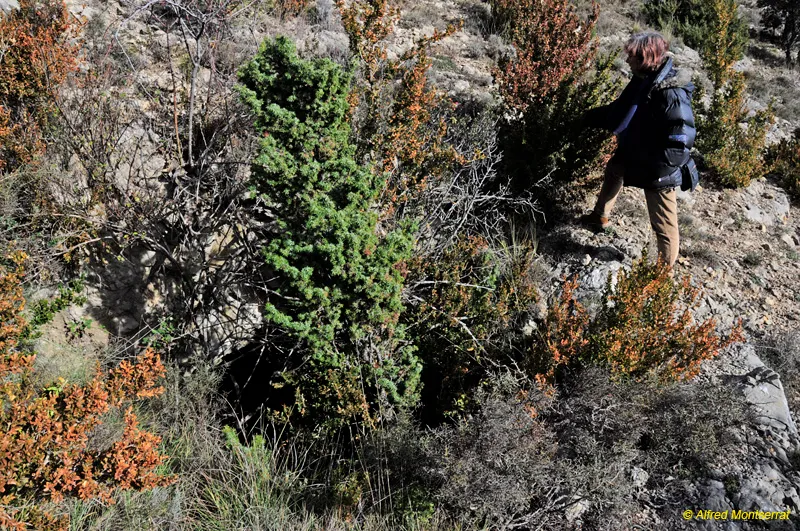
Pou de la Serreta
Avenc de 23 metres de fondària a Montanissell (Coll de Nargó).
EspeleoWorld
Pou de la Serreta
Avenc de 23 metres de fondària a Montanissell (Coll de Nargó).
Coll de Nargó · Alt Urgell
Length: 37 m · Depth: 23 m
Updated record
https://espeleoworld.com/en/c/pou-de-la-serreta
Information can change. Always verify coordinates, access, weather, and cave conditions before setting out.
A 23-metre-deep pit in Montanissell (Coll de Nargó), with a single 15-metre shaft and a sloping gallery down to the bottom.
Topographic
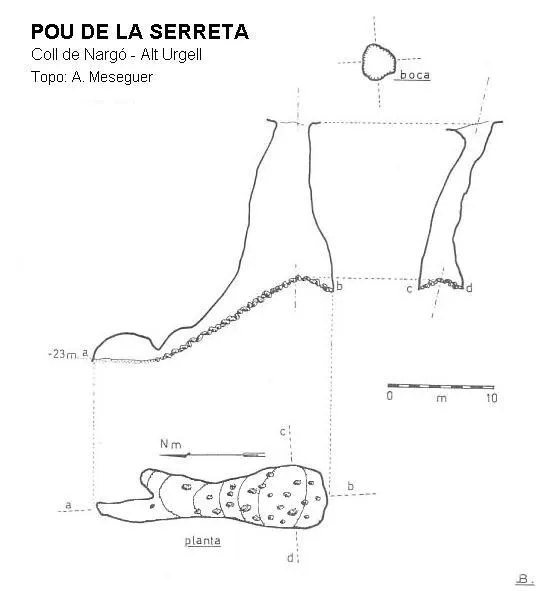
Espeleoindex · CC BY-NC 4.0, https://creativecommons.org/licenses/by-nc/4.0/ · Image © its author.
Photos
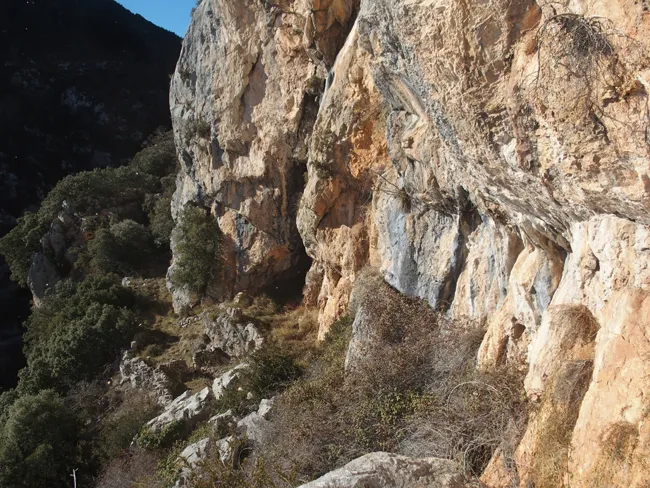
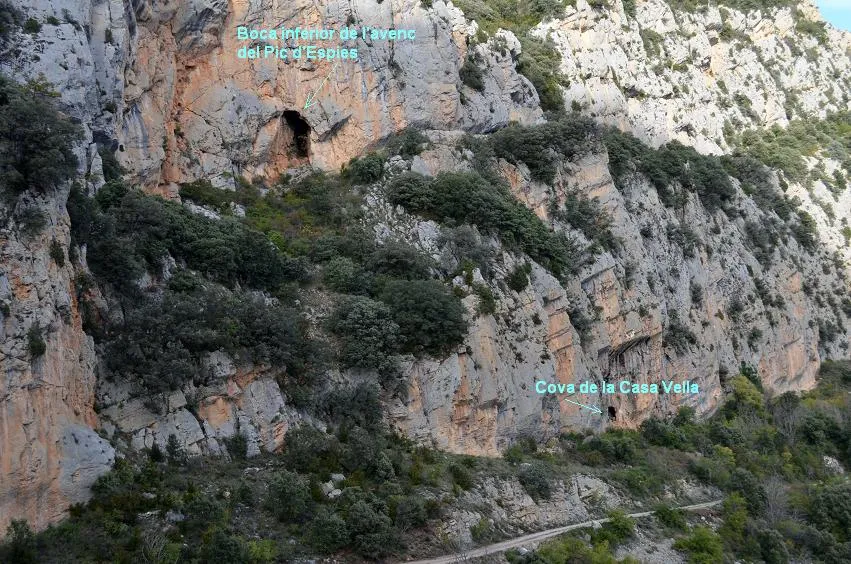
Espeleoindex · CC BY-NC 4.0, https://creativecommons.org/licenses/by-nc/4.0/ · Image © its author.
Description
Morphology
A single 15-metre-deep shaft, with a constant section of 6X4 metres. At its bottom, we find a sloping gallery that leads us to the bottom of the cavity at -23 metres depth.
History
The first record we have of an exploration of the cavity is the one carried out by members of the GES – CMB in the month of May 1964, although it went completely unnoticed and only remains recorded in the GES activity book, where they already call it Pou de la Serreta.
A few months later, towards the end of 1964 or the beginning of 1965, people from the GIE of the Club Excursionista de Gràcia explored the cavity again and, for lack of information, renamed it Avenc dels 25 Anys de Pau. As Eugeni Marigot explained to us many years ago, they gave it this name because, on finding inside it all the projectiles and bombs abandoned in a retreat of the civil war, they ironically thought of the propaganda of the Francoist regime, which in those times was celebrating the 25 years since the end of the war with the slogan “ 25 Años de Paz”.
In those years the Boumort massif was in fashion among Catalan speleologists, and during the campaigns that the SAS of the Centre Gimnàstic Barcelonès had already been carrying out for some time, they went to the pit in mid-July 1966 (curiously during the three days of holiday for the celebration of the “18 de julio”) and in Montanissell they were told that they did not know that anyone had ever gone down. On finding all the war material again, they decided to name it Avenc de les Bombes. Lluís Auroux, one of the explorers, gives an amusing account of the exploration: Trepitjant bombes, in the entry of 14 January 2008 on Espeleobloc.
But there is still a mystery to solve: The first bibliographic mention of the pit appears in a monograph on Boumort in the magazine MONTAÑA no. 100 of the Centre Excursionista de Catalunya and is based on a contribution by Lluís Auroux himself to the authors (Senent and Victoria) of the article on speleology in the massif. This issue of the magazine was the first number that was given free to all members of the Centre and bears the date of November-December 1965. We know from the CEC monthly circular that, due to editing problems, it was not distributed until the month of April 1966; so then... how is the avenc de les Bombes cited, when it would not be explored until three months later? We have no record of any later exploration and we must ask ourselves a question: Are the bombs still in there?
We update the record (February 2017) with the answer to this last question: On 29 December 2016, the colleagues of the espeleodijous group visited the cavity and found not even a trace of the bombs (except for a rusty tin – they say – but judging by the photo they take, it looks more like the shell casing of an artillery piece. Where is the rest of the material? Could it be that over the 50 years in which we have no record of any exploration there was some intervention by specialist army or civil guard units to clean the pit? There is also the possibility that during this period of time some scrap dealers entered to collect the material to sell as iron or as pieces for collectors.
Bio
Speonomus (Jeann.) ssp. Mercedesi Zar.
User Comments (0)
No comments yet.
Be the first to share your experience!
Registered Explorations (0)
No explorations registered yet.
Register your visit to this cave!
Bibliography
- Auroux, Ll.(1968).-”Presencia del género Speonomus en el macizo del Boumort”. Espeleòleg (7):285-288. ERE-CEC. Barcelona.
- Borràs, J. ;Miñarro, J.M.;Talavera, F.(1978).-”l'alt urgell i la cerdanya”. Catàleg Espeleològic de Catalunya (vol.1):76-77. Ed. Políglota. Barcelona.
- Senent,J.; Victoria, J.M.(1965).-”Datos para el conocimiento espeleològico del macizo del Boumort”. Montaña (100):269-281. CE Catalunya. Barcelona.
- Dades de situació, coordenades i fotografia boca facilitades per Alfred Montserrat (ERE – CEC) (novembre 2015).
- Actualització de dades i fotografies extretes del blog: espeleobloc.blogspot. Apunt del 12-1-2017
Nearby caves
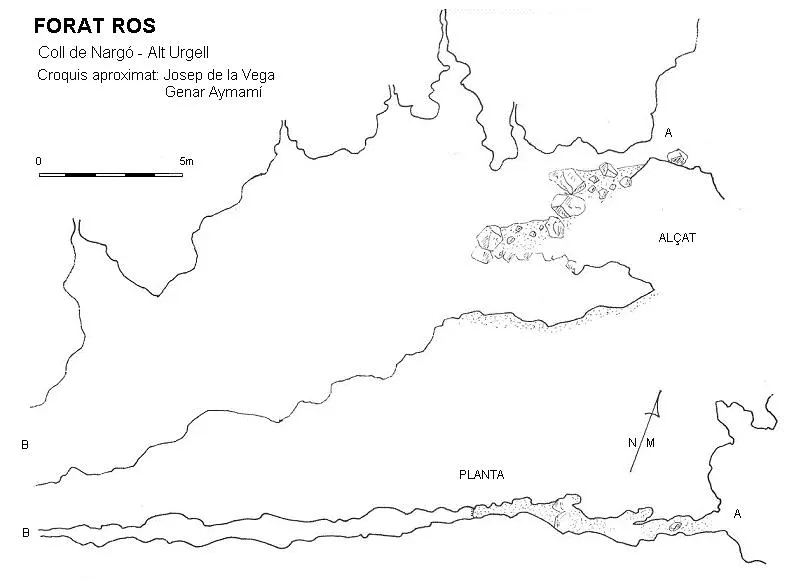
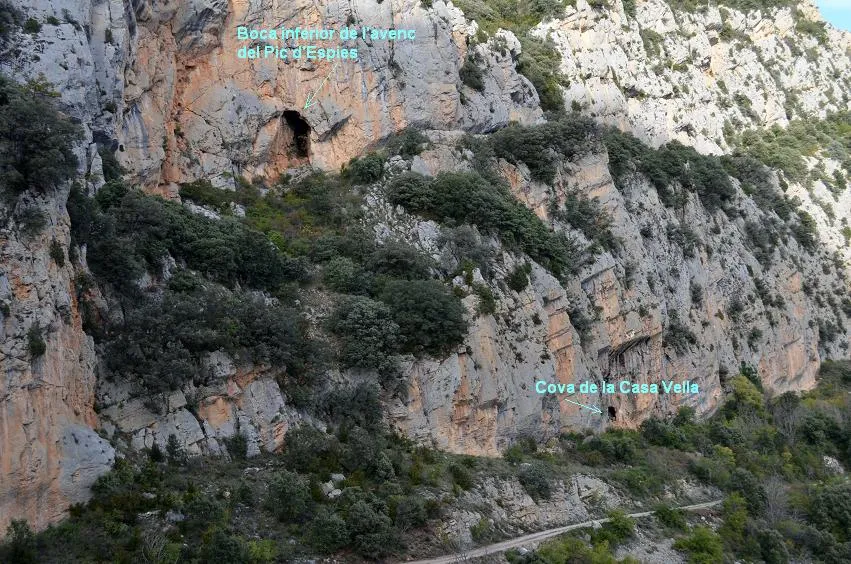


Source: Espeleoindex (espeleoindex.com), modified. CC BY-NC 4.0, https://creativecommons.org/licenses/by-nc/4.0/