
Neanderthal Museum
A former 50 m deep gorge with nine caves and two waterfalls, now completely destroyed by limestone quarrying, whose largest cave was the through-cave later called Neanderhöhle.
EspeleoWorld
Neanderthal Museum
A former 50 m deep gorge with nine caves and two waterfalls, now completely destroyed by limestone quarrying, whose largest cave was the through-cave later called Neanderhöhle.
Mettmann
Updated record
https://espeleoworld.com/en/c/neanderthal-museum-mettmann
Information can change. Always verify coordinates, access, weather, and cave conditions before setting out.
A former 50 m deep gorge with nine caves and two waterfalls, now completely destroyed by limestone quarrying, whose largest cave was the through-cave later called Neanderhöhle.
Description
Morphology
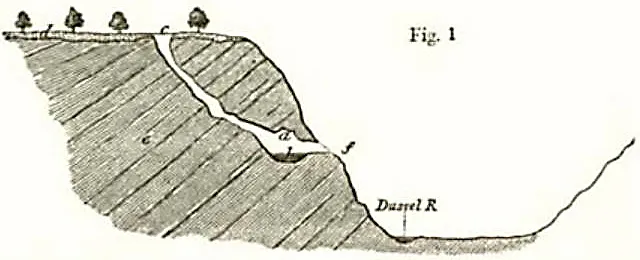
The Neanderthal (Neander Valley) near Düsseldorf was once a 50 m deep narrow gorge with nine caves and two waterfalls. Its largest cave at that time was the Leuchtenburg (light castle), a through-cave with a 30 m long, 8 m wide and 5 m high curved cave passage, later renamed Neanders Höhle or Neanderhöhle (Neander’s cave). The valley itself no longer exists today; it was completely destroyed by limestone quarrying in the second half of the 19th century, just like the cave.
Other details
The romantic gorge was a famous sight and a popular excursion destination sung about by the poets of the time. Artists from the Düsseldorf School of Art used it for practice, and more than 150 works of art still exist depicting the valley. Originally the gorge was called the Gesteins, but in fact it is part of the valley of the Düssel, after which Düsseldorf is named. The Reformed clergyman, hymn writer and composer Joachim Neander (*1650-✝1680) was a teacher at the Latin School in Düsseldorf from 1674; he visited the romantic valley frequently, also to hold church service meetings there, and made so-called edification lessons for his pupils, for which he was admonished. Two places in the valley were soon named after him. The Leuchtenburg was famous for the light effects through its two portals as well as the impressive acoustics during thunderstorms. The first written mention of the name was in 1823. The lookout points on the rocks were also given names: the Kanzlei (Chancellery), Neanders Stuhl, and the Predigtstuhl. The name Neanders Stuhl was first documented in 1835, after which the name Neanderthal became common for the entire section of the valley. In today’s Neandertal, about 10 metres below the famous site, is the modern Neanderthal Museum. The site of the discovery is marked by a work of art, a sculpture that refers to the cave that no longer exists; the monument consists of four couches built of the local limestone, where visitors can lay down and look up to the immaterial cave above. Only a few years ago, the term Lost Cave was coined for such caves.
History
In 1856, workers of the limestone quarry discovered some bones in the Feldhofer Grotte. During the quarrying of the limestone, caves were repeatedly discovered or known caves were destroyed, so it probably happened that they cleared out the cave to remove the clay. The workers thought it was the remains of a bear and gave the bones to the amateur naturalist Johann Karl Fuhlrott. The bones were a partial skeleton of a human, but it had a peculiar shape, especially the skull. It was examined by the Irish geologist William King, who interpreted it as another human species. In 1863, in a lecture to the geological section of the British Association for the Advancement of Sciences, he discussed the deviations from the skull shape of modern humans and introduced the scientific name Homo Neanderthalensis King. The doyen of German anthropology and prehistoric research, Rudolf Virchow, examined the bones in 1872. He considered the find to be a pathologically deformed skull of a modern human and rejected the thesis of a prehistoric man. It must be admitted that a single find is a little weak, yet his authority prevented any research in this direction in the German-speaking world until his death in 1902. In general, it was debated until the 1990s whether it was a separate species or a subspecies of Homo sapiens. This question was only clarified with genetic analyses, according to which Homo erectus, which is documented in Africa, is the last common ancestor of the two. In the 19th century, the valley was still called Neanderthal with th; accordingly, the newly discovered man was called Homo neanderthalensis, i.e. man from the Neanderthal. In addition, the spelling reform of 1901 removed the h from many words, so that the valley was now called Neandertal. So a valley that no longer exists today, just like the cave, became world-famous.
User Comments (0)
No comments yet.
Be the first to share your experience!
Registered Explorations (0)
No explorations registered yet.
Register your visit to this cave!
Nearby caves
Source: Show Caves of the World (Jochen Duckeck) (www.showcaves.com), modified. CC0 1.0, https://www.showcaves.com/english/TermsOfUse.html Show Caves of the World (showcaves.com), Jochen Duckeck · Text by Jochen Duckeck (Neanderthal Museum) · adapted by Espeleoworld (normalized, translated); the adaptation is licensed CC0 1.0, https://www.showcaves.com/english/TermsOfUse.html · data as of 2026