
Malluetako kobea
EspeleoWorld
Malluetako kobea
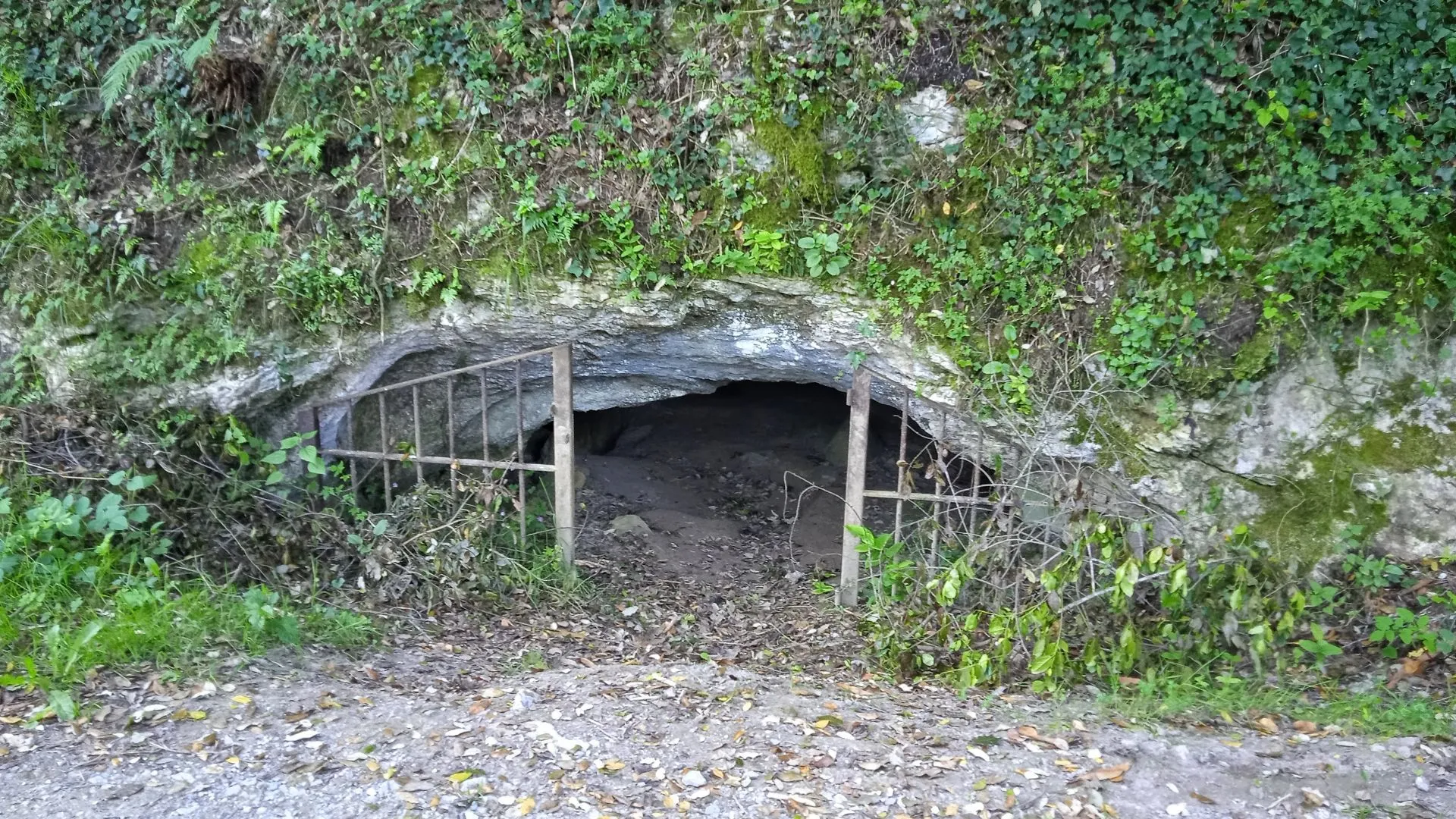
Malluetako kobea cave, in the Izarraitz massif (Deba, Gipuzkoa), with a network of fossil galleries whose extent and depth vary according to the sources consulted.
Deba
Length: 2000 m · Depth: 30 m
Updated record
https://espeleoworld.com/en/c/malluetako-kobea-deba
Information can change. Always verify coordinates, access, weather, and cave conditions before setting out.
Malluetako kobea cave, in the Izarraitz massif (Deba, Gipuzkoa), with a network of fossil galleries whose extent and depth vary according to the sources consulted.
Description
Morphology
The cavity develops in Urgonian limestone of Aptian-Albian age on the northern flank of the Izarraitz anticline. Massive limestone alternates with thinly bedded marly limestone, and the network occupies six differentiated levels. Most of the network consists of phreatic galleries that became fossil after the water table dropped. The mapped network spans about 100 m vertically, from -45 m to +60 m inside the cave. The collapse that created the Parthenon chamber is attributed to a gallery that reached the ceiling of marly limestone. The evolution of the cavity is related to an incision of the Deba valley of about 60 m and to repeated drops in the water table.
The Parthenon chamber is a collapse chamber about 50 m wide, with large blocks and a group of columns. The Gran Cañón is the widest gallery, about 200 m long, with heights close to 20 m and widths of 10 m. The lower network contains abundant phreatic domes and inversion morphologies carved under flooded conditions. A narrow descending passage at the entrance leads to the main gallery of the network.
Speleothems
The Galería Escondida has numerous gours and speleothems along its route. In the Parthenon chamber a group of columns is documented.
Hydrology
No active watercourse flows through the cave; only small trickles of water appear during heavy rain. The cavity lies in the Aixa hydrogeological unit, which discharges at the Erribera goikoa spring, next to the Deba river.
History
The cave has been known since the 1950s, although its narrow and obstructed passages meant it received little attention. In the 1990s, the Leizarpe Group of Mendaro explored extensions of several kilometres according to the available data, without a general survey confirming them. In 2004, after clearing narrow passages near the entrance and at 200 m and 400 m, the surveyed length reached 2 km. Aranzadi teams resurveyed known and new galleries under the direction of José Ignacio Del Cura and Koldo Sánchez, with 8.5 km mapped. In 2007, Aranzadi published a geological study that reported more than 11 km of galleries, including 3 km explored but not yet surveyed. In 2017, the Basque speleological journal Karaitza cited the cave with 3,840 m of length and 104 m of depth.
User Comments (0)
No comments yet.
Be the first to share your experience!
Registered Explorations (0)
No explorations registered yet.
Register your visit to this cave!
Nearby caves
Source: Diputación Foral de Gipuzkoa – b5m (Catálogo espeleológico, Sociedad de Ciencias Aranzadi) (b5m.gipuzkoa.eus), modified. CC BY 4.0, https://creativecommons.org/licenses/by/4.0/ Sociedad de Ciencias Aranzadi / Diputación Foral de Gipuzkoa (b5m) · data as of 2014 · Text written by Espeleoworld from public sources. Please ask us before reusing it. · adapted by Espeleoworld (normalized, translated); the adaptation is licensed Our own text, written from public sources. Please ask us before reusing it. · data as of 2026