
Cueva de Llamazares
EspeleoWorld
Cueva de Llamazares
The Cueva de Llamazares is a cave entered through a small triangular entrance 2 m wide and 2 m high, with a main passage shown on tours and a second, smaller, undeveloped parallel passage.
Valdelugueros
Updated record
https://espeleoworld.com/en/c/cueva-de-llamazares-valdelugueros
Information can change. Always verify coordinates, access, weather, and cave conditions before setting out.
The Cueva de Llamazares is a cave entered through a small triangular entrance 2 m wide and 2 m high, with a main passage shown on tours and a second, smaller, undeveloped parallel passage.
Description
Morphology
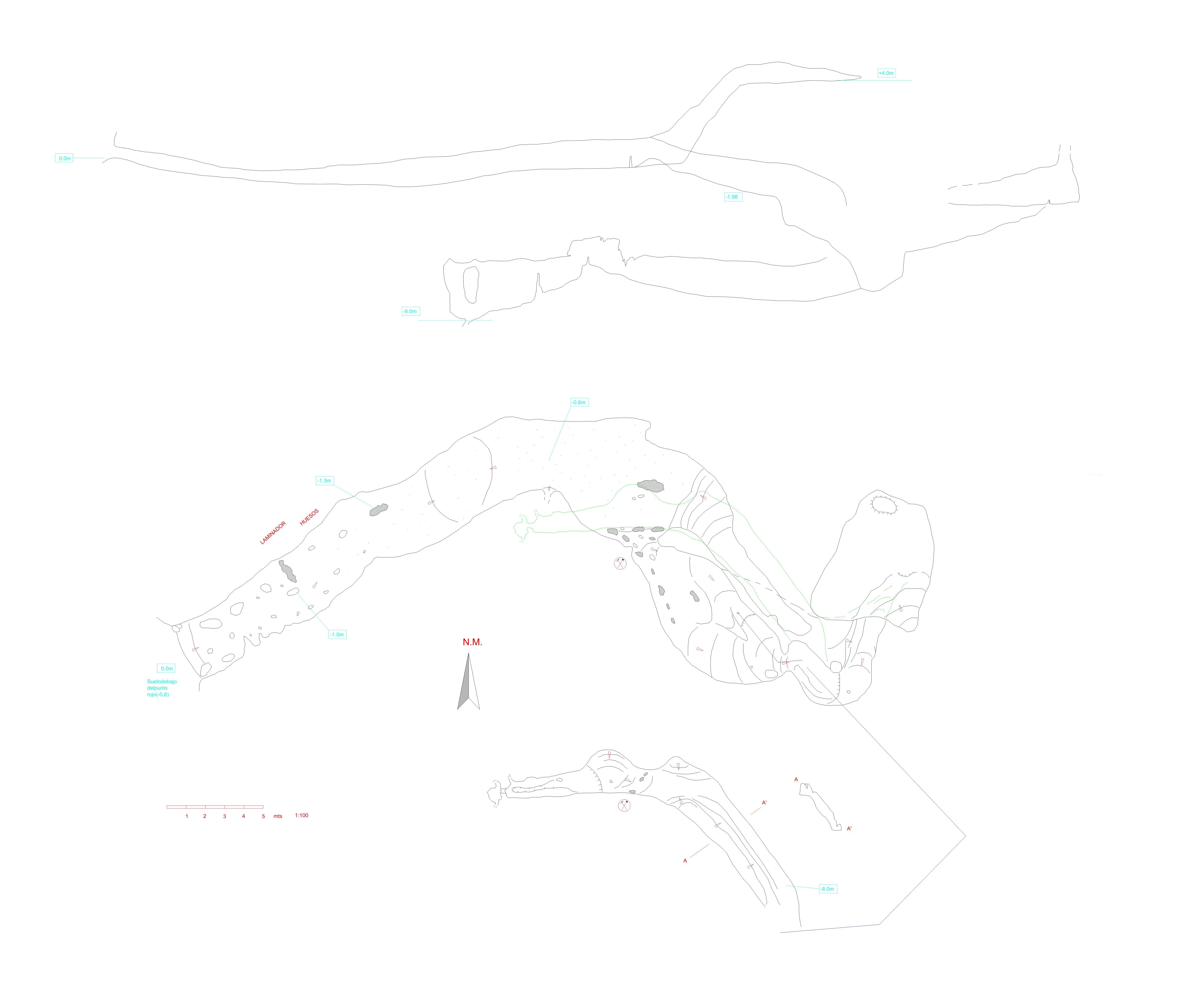
The Cueva de Llamazares is entered through a small triangular entrance, only 2 m wide and 2 m high. The tour shows the main passage of the cave, but there is also a second, parallel passage which is smaller and not developed.
Speleothems
The Cueva de Llamazares is famous for an abundance of cave corals. Cave corals are speleothems which form under certain conditions and look like normal corals, hence the name. But they are not real corals, formed by living animals, which build calcite shells and thus form the reef. They are formed by calcium-rich water in the cave depositing limestone in a chemical process.
This cave has numerous fossil corals in the limestone, and depending on the language and the author, both are dubbed "cave coral". So the cave has two types of cave corals, speleothems of that name and fossils of that name.
Progression
The full tours involve walking to the cave, visiting the cave, and walking back with some pauses, and some geology along the trail, and take 3 hours. As a result, it is visited by only 4,000 people per year. The cave is closed during rain; the hiking trail to the cave is guessed to be too dangerous during rain.
Other details
The Cueva de Llamazares was named after the nearby village. It is also called Cueva de Coribios or Cueva de Coribos.
There is also an abundance of fossils in the 200 Ma old Jurassic limestones, which were formed as a sediment in an oxygen-rich shallow sea which was full of life. Many fossilized remains can be found in the limestones, but several were freed from the surrounding rock by the formation of the cave. The fossils are presented in the Museo Paleontológico (Paleontological Museum), which was created in the old school house of Llamazares. They have a great collection of over 250 spectacular items, including a 300 Ma old Lepidodendron or giant fern. Most of the local fossils are from the Triassic and Jurassic periods.
User Comments (0)
No comments yet.
Be the first to share your experience!
Registered Explorations (0)
No explorations registered yet.
Register your visit to this cave!
Nearby caves
Source: Show Caves of the World (Jochen Duckeck) (www.showcaves.com), modified. CC0 1.0, https://www.showcaves.com/english/TermsOfUse.html Show Caves of the World (showcaves.com), Jochen Duckeck · Text by Jochen Duckeck (Cueva de Llamazares) · adapted by Espeleoworld (normalized, translated); the adaptation is licensed CC0 1.0, https://www.showcaves.com/english/TermsOfUse.html · data as of 2026