
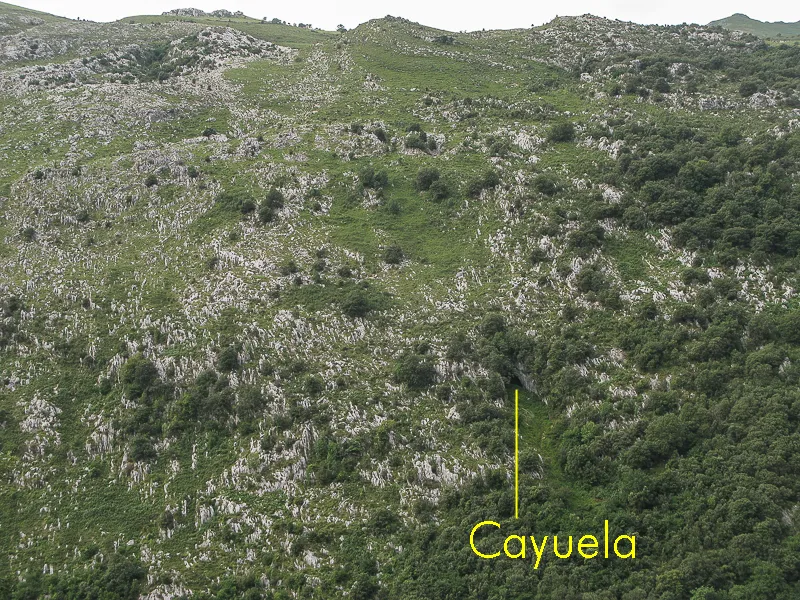
Cueva Cayuela
Large cave in the municipality of Arredondo (Cantabria), also known as Cañuela, with an exceptionally large chamber, an active river and at least 16 km of galleries.
EspeleoWorld
Cueva Cayuela
Large cave in the municipality of Arredondo (Cantabria), also known as Cañuela, with an exceptionally large chamber, an active river and at least 16 km of galleries.
Arredondo
Length: 13500 m · Depth: 527 m
Updated record
https://espeleoworld.com/en/c/cueva-cayuela-arredondo-cantabria
Information can change. Always verify coordinates, access, weather, and cave conditions before setting out.
Approximate location: no map or coordinates are printed for this cave. The source marks this entrance position as unverified.
Large cave in the municipality of Arredondo (Cantabria), also known as Cañuela, with an exceptionally large chamber, an active river and at least 16 km of galleries.
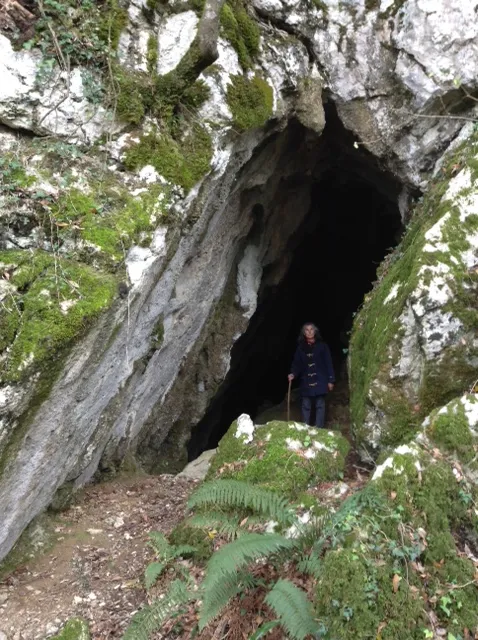
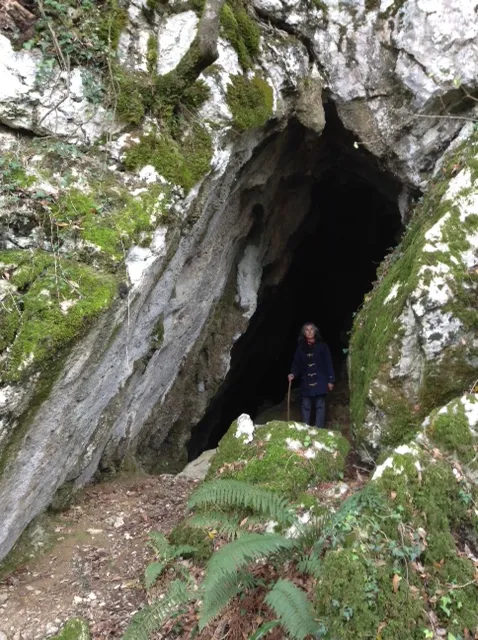
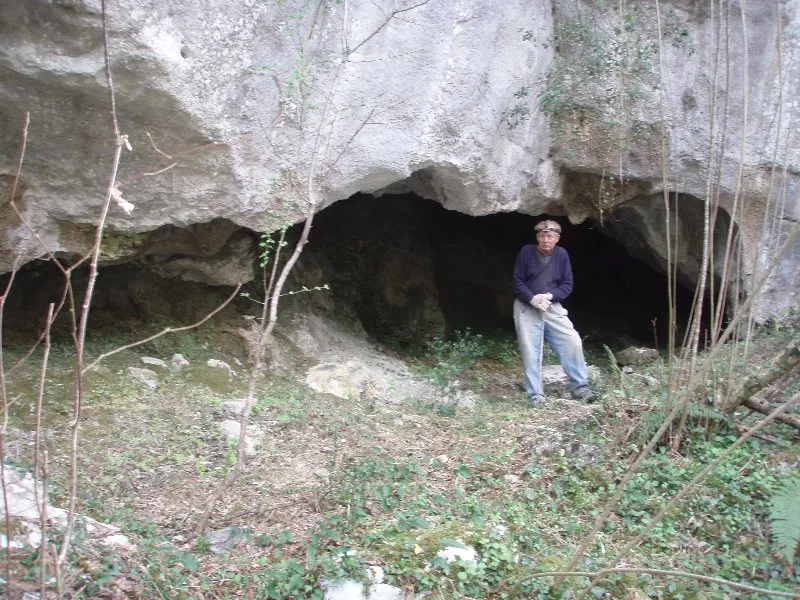
Photos
© S.C. Dijon · CC BY-NC-SA (version not stated by the source), https://www.karsteau.org/karsteau/index.php · Karsteau: Entrée de la cavité n°84 (numérotation SCD) · https://www.karsteau.org/karsteau/recherche/entree/recherche_entree.php?entree=20938
Description
Morphology
It is a cavity of large dimensions with a very different appearance in its various sections. After the entrance, which is of large proportions, wide galleries, canyons and boulder-covered chambers alternate. Its most famous space is the Olivier Guillaume chamber, which a 2025 guide describes as about 350 m long by 120 m wide and with more than one hundred metres of internal vertical extent, while the FEE large-chamber cadastre records 302 m by between 65 and 115 m wide and 60 m maximum height (2010 data). The difference between the two figures is not explained. The most recent plan survey located is from 2013, by the Spéléo-Club de Dijon and the Groupe Spéléo Haut Pyrénéen de Tarbes, published in a 2015 edition.
Speleothems
The galleries near the chamber preserve large stalactites, some with a serrated appearance, and there are areas with accumulations of thick formations. We have not found a detailed inventory of speleothems.
Hydrology
The cavity has an active network, with a river flowing along the floor of the galleries. According to the 2014 bulletin of the Alto del Tejuelo group, this active network feeds one of the most important springs of the massif. The same bulletin presents it as a separate system, very close to but independent of the Sistema Alto del Tejuelo.
Progression
Because of the sensitivity of the cavity, no itineraries, through-trips, times or equipment indications are provided.
Other details
The published figures do not agree with one another because exploration has continued to advance. Our data list 13,500 m of development and 527 m of vertical extent. The 2016 report of the Spéléo-Club de Dijon speaks of 16,200 m for the cave. The FEE list of large cavities, updated to 31 December 2024, records a figure of about 21,000 m with a date of June 2023, and -527 m of vertical extent, but under a composite name that includes other entrances, so it is not a measurement exclusive to this entrance. The FEE already recorded those -527 m in 2003. Therefore the vertical extent is stable and development is the figure that grows; the 13,500 m figure appears outdated, but we do not consider it an error of origin. No source integrates it as an entry of another of the large systems of the area.
History
The cave has been known for decades under the names Cayuela, Cañuela and Canuela. French bibliography cites it from 1954, and the Spéléo-Club de Dijon campaigns from 1959 appear in the inventory of cavities of the Alto Asón, which refers to articles published in Sous le Plancher and to a 1975 work in Spelunca. Groups from several countries have continued exploring it since then, and the 2013 survey is the most recent reference in our sources.
Bio
We have not found published data on the fauna of this cave.
User Comments (0)
No comments yet.
Be the first to share your experience!
Registered Explorations (0)
No explorations registered yet.
Register your visit to this cave!
Nearby caves

Source: Karsteau (Fédération Française de Spéléologie et Canyon) (www.karsteau.org), modified. CC BY-NC-SA (version not stated by the source), https://www.karsteau.org/karsteau/index.php Karsteau (Fédération Française de Spéléologie et Canyon) · Text by Karsteau (FFS) contributors · https://www.karsteau.org/karsteau/recherche/entree/recherche_entree.php?entree=20938 · data as of 2026 · Text written by Espeleoworld from public sources. Please ask us before reusing it. · Text by José Luis Membrado Julián (Grandes Cavidades Españolas 2024 (actualizado a 31 de diciembre de 2024)), Spéléo-Club de Dijon / Groupe Spéléo Haut Pyrénéen de Tarbes / FFS (Spéléo-Club de Dijon - GSHP 2016), Mercedes Sosa Bravo, David García González, Javier González-Gallego, Miguel Ángel González-Gallego (Sistema Alto del Tejuelo (Boletín nº 10 SEDECK, 2014)), Wessex Cave Club (Cañuela (guía de 2025 con topografías)), Spéléo-Club de Dijon (Cuevas del Alto Asón, tome 5: Inventaire des cavités nº 50 à 99 (mise à jour 01/08/2020)) · adapted by Espeleoworld (normalized, translated); the adaptation is licensed Our own text, written from public sources. Please ask us before reusing it.