
Coves del Llorito
A group of ancient underground quarries in Tarragona, known as the Coves del Llorito, with large halls and galleries, cited since the 19th century and used as an air-raid shelter.
EspeleoWorld
Coves del Llorito
A group of ancient underground quarries in Tarragona, known as the Coves del Llorito, with large halls and galleries, cited since the 19th century and used as an air-raid shelter.
Tarragona · Tarragonès
Length: 35 m
Updated record
https://espeleoworld.com/en/c/coves-del-llorito
Information can change. Always verify coordinates, access, weather, and cave conditions before setting out.
A group of ancient underground quarries in Tarragona, known as the Coves del Llorito, with large halls and galleries, cited since the 19th century and used as an air-raid shelter.
Topographic
Espeleoindex · CC BY-NC 4.0, https://creativecommons.org/licenses/by-nc/4.0/ · Image © its author.
Photos
Espeleoindex · CC BY-NC 4.0, https://creativecommons.org/licenses/by-nc/4.0/ · Image © its author.
Description
Morphology
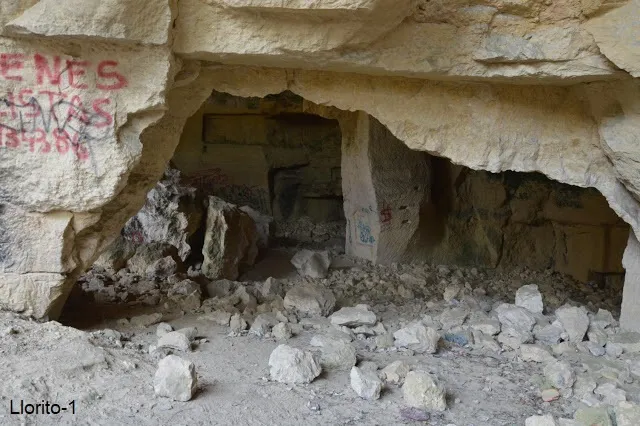
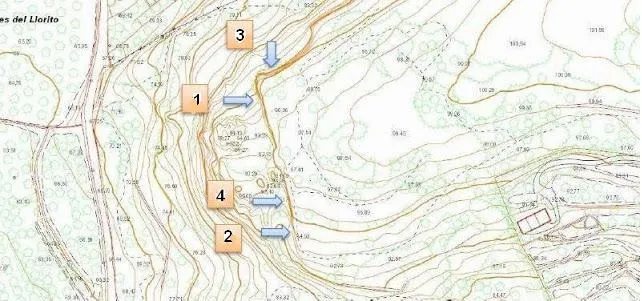
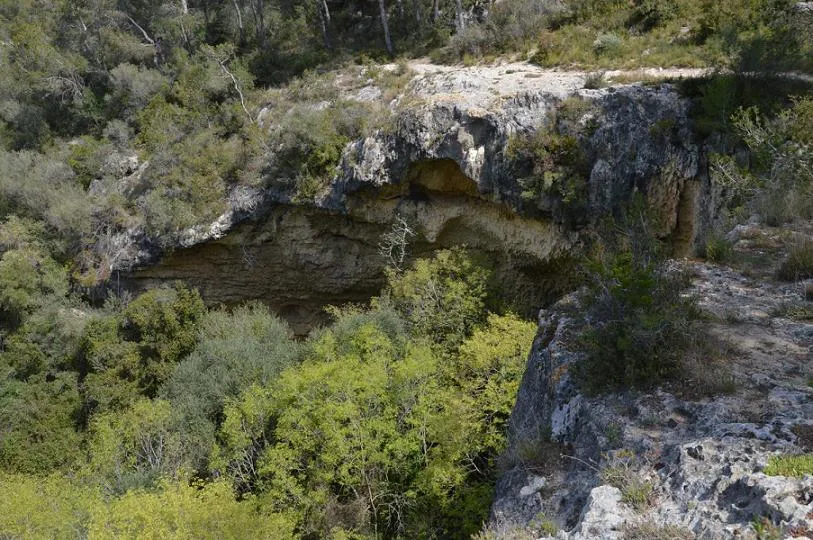
Cova Gran del Llorito: The excavations have formed a hall 25m wide by 35m deep and 12m high, with columns of the same rock acting as a propping system.
Cova 2 del Llorito: It forms a hall 35m wide by 28m deep and 8m high.
Cova 3 del Llorito: A hall 20m wide by 28m deep and 6m high.
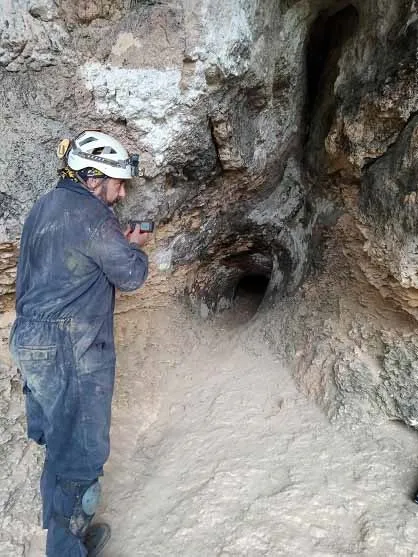
Cova 4 del Llorito: This cavity differs from the others. It forms a small sloping room 6m wide by 9m deep and 7m high; here we find a hanging gallery 1.5m high and about 12m long.
Other details
In the Inventory of Archaeological Sites, the quarries and caves of the Llorito appear under order number 1.17.4, and their condition is described as poor.
The Tarragona press has also reported on the lamentable state in which the Coves del Llorito find themselves.
History
Although no major archaeological intervention has been carried out in this group of cavities and their surroundings, it is thought that the Romans were the first to carry out underground extraction at the quarry. These continued in the Middle Ages and up to more recent times.
Marcus Vitruvius Pollio, a Roman architect, engineer and writer of the 1st century BC, already writes about the underground quarries of calcareous tuff limestone that were easier to work. The system of underground excavation, although much more costly, was frequent in antiquity. Sufficient examples of this type of extraction (fossae) are found during the Roman era in various places, which in many cases continued with the same techniques in later periods.
Speleologically they are cited by Puig y Larraz in his catalogue of Cuevas y Simas de España (1896), where he already says that they are underground quarries. In the Catàleg Espeleològic de Catalunya (1897), Font i Sagué takes up Puig's citation without expanding this reference.
In addition to the different uses that have been given to the caves over time, they were a shelter for the people of Tarragona during the civil war, being used as an air-raid shelter.
User Comments (0)
No comments yet.
Be the first to share your experience!
Registered Explorations (0)
No explorations registered yet.
Register your visit to this cave!
Bibliography
- Totes les dades, topografies i fotografies han estat extretes del blog: espeleobloc.blogspot. Apunt del 21-10-2015. Text: Josep Cuenca (GEB). Fotografies: F. Xavier Samarra (GEB). Topografies: Ferran Cardona (ECG).
Nearby caves


Source: Espeleoindex (espeleoindex.com), modified. CC BY-NC 4.0, https://creativecommons.org/licenses/by-nc/4.0/