
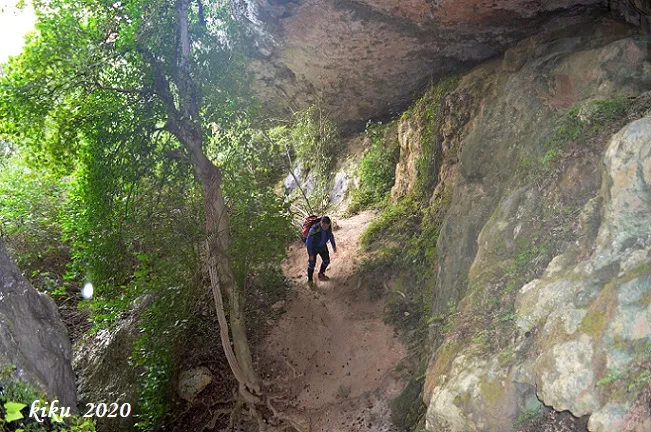
Cova del Miracle
Large rock shelter of the Montsant in Margalef, about 50 metres wide, with a large central column, a travertine waterfall and an upper level with stalactites, columns and gours.
EspeleoWorld
Cova del Miracle
Large rock shelter of the Montsant in Margalef, about 50 metres wide, with a large central column, a travertine waterfall and an upper level with stalactites, columns and gours.
Margalef · Priorat
Length: 12 m · Depth: 5 m
Updated record
https://espeleoworld.com/en/c/cova-del-miracle
Information can change. Always verify coordinates, access, weather, and cave conditions before setting out.
Large rock shelter of the Montsant in Margalef, about 50 metres wide, with a large central column, a travertine waterfall and an upper level with stalactites, columns and gours.
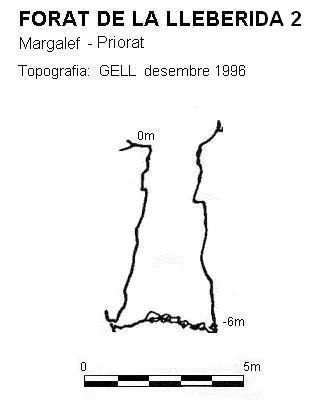
Topographic
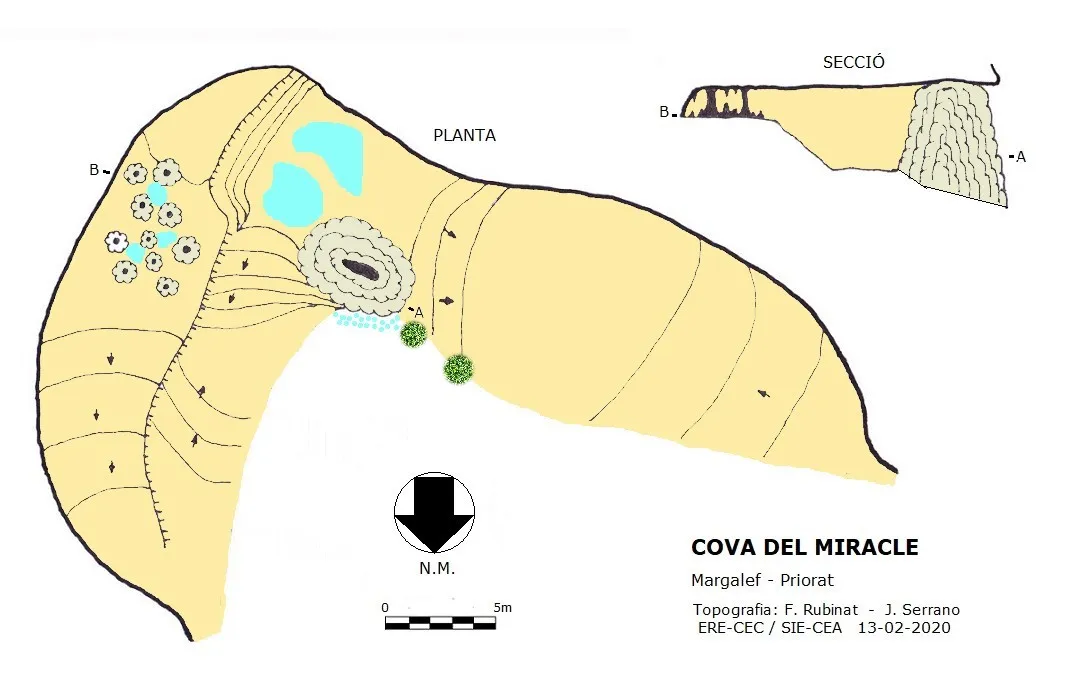
Espeleoindex · CC BY-NC 4.0, https://creativecommons.org/licenses/by-nc/4.0/ · Image © its author.
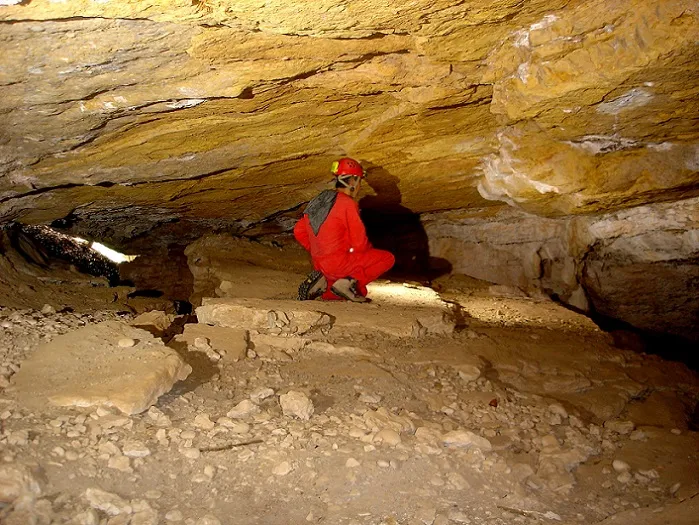
Photos
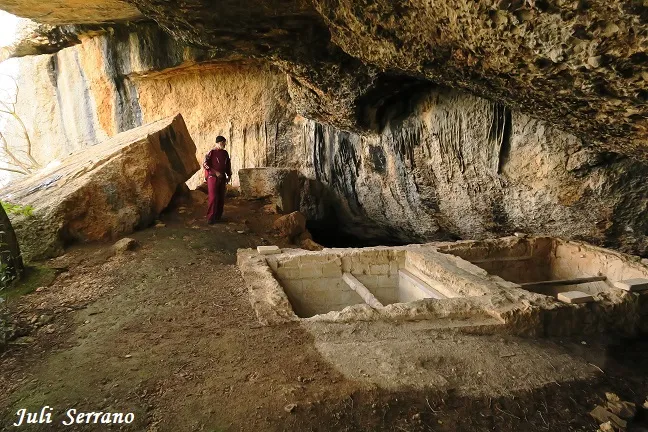
Espeleoindex · CC BY-NC 4.0, https://creativecommons.org/licenses/by-nc/4.0/ · Image © its author.
Description
Morphology
Large rock shelter about 50 metres wide in the shape of a half moon. In the central part we find a large column that closes off the space. On the outer part of the column it is possible to access the upper part of the shelter, where we find a small rock shelter about 6 metres deep.
Speleothems
On the outer part of the large column, due to the abundant and constant dripping, a travertine waterfall has formed. Inside the shelter we find an upper level filled with stalactites, columns and gours.
History
Known in the area since time immemorial. Puig y Larraz in his Cavernas y simas de España (1896) mentions the cave with the names: Cova del Oli, Cueva del Aceite, Cova de la Pudó, Cueva del Betún, Cueva del Petróleo and Cueva de Margalef (sic). He takes the data from the Boletín del Museo de las familias (1848), where it is explained that from the roof of the cave flows an oily substance, blackish in colour and with a strong smell which, in the country they say is petroleum and which some have used to light themselves.
Font i Sagué, in his Catàlech (1897), includes the same data provided by Puig y Larraz the previous year. A few years later Faura i Sans makes the same citations and comments that the blackish substance could be some hydrocarbon distillation of the ground, coming from filtrations of carbonaceous sedimentary layers or of Oligocene lignites.
Joan Ferraté, in his work Espeleologia de les comarques tarragonines (1918), cites the Cova dels Miracles and says that it seems to be the one that had been mentioned as la Cova de l'Oli, de la Pudor, del Betum and del Petroli. He speaks of the large column existing inside it and that it serves to climb to an upper gallery where about a hundred metres can be covered until it becomes impassable due to the narrowness (?) and about the petroleum he indicates that it must be a popular fantasy, since from lo que havem averiguat (sic) in the cave no oily substance is found. From the wording we think that Ferraté was never in the cave and all the information came to him from references of others.
For many years the cave has been very well known by hikers and appears many times in the mountain itineraries of the Montsant. Its name always appears in the singular (Miracle), not in the plural as Ferraté mentions it.
Recently (January 2020), Montserrat Ubach and Dr. Mata-Perelló (Sarawak) became interested in the cavity and more specifically in the questioned oily and black matter. While making a series of enquiries, Enric Aragonès informs them that a colleague of his, Albert Permanyer, an expert in petroleum geology, for professional reasons visited the cave some years ago, taking samples of the incrustations of organic matter on the walls similar to jet, but whose forms indicated that it had dripped. On breaking it with the hammer it gave off that stench that the excrement of the livestock makes. He deduced that it was a product of the burning of this matter, which probably the shepherds who sheltered there used in order to warm themselves.
User Comments (0)
No comments yet.
Be the first to share your experience!
Registered Explorations (0)
No explorations registered yet.
Register your visit to this cave!
Bibliography
- Borrás, J.; Miñarro, J.M.; Talavera, F.(1984).-”el Baix Camp, el Priorat i la Ribera d'Ebre”. Catàleg Espeleològic de Catalunya (vol.7). Ed. Políglota. Barcelona.
- Ferraté, J.(1918).-Espeleologia de les comarques tarragonines. 133 pp. Agrupació Excursionista de Reus.
- Font i Sagué, N. (1897).- Catàlech Espeleològich de Catalunya. 74 pp. Centre Excursionista de Catalunya. Barcelona.
- Puig y Larraz, G. (1896).- Cavernas y simas de España. 376 pp. Madrid.
- SAS-CGB (1967).- II Campamento Regional de Espeleólogos – Margalef, Montsant 29-30 abril y 1 mayo 1967. Patrocinat pel Comitè Regional d'Espeleologia (FCM)
- Dades actuals, topografia i fotografies aportades per F. Rubinat (ERE-CEC) i J. Serrano (SIE-CEA) (febrer 2020)
Nearby caves
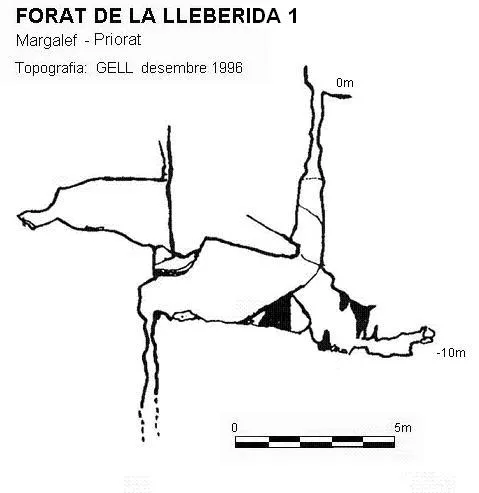


Source: Espeleoindex (espeleoindex.com), modified. CC BY-NC 4.0, https://creativecommons.org/licenses/by-nc/4.0/