
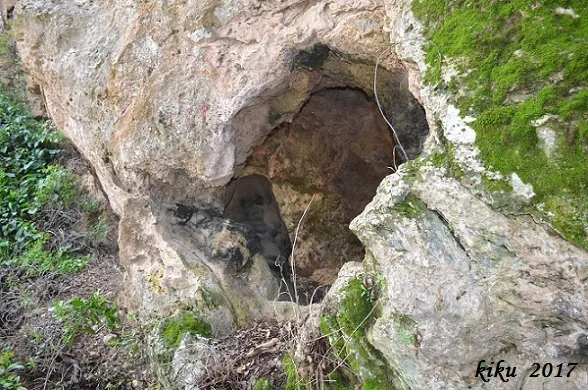
Cova de les Tres Creus
Petita cova en travertins a les Escaules.
EspeleoWorld
Cova de les Tres Creus
Petita cova en travertins a les Escaules.
Boadella i les Escaules · Alt Empordà
Length: 6 m
Updated record
https://espeleoworld.com/en/c/cova-de-les-tres-creus
Information can change. Always verify coordinates, access, weather, and cave conditions before setting out.
Small cave in travertines at les Escaules, with Middle Palaeolithic and medieval occupation.
Topographic


Espeleoindex · CC BY-NC 4.0, https://creativecommons.org/licenses/by-nc/4.0/ · Image © its author.
Photos

Espeleoindex · CC BY-NC 4.0, https://creativecommons.org/licenses/by-nc/4.0/ · Image © its author.
Description
Morphology
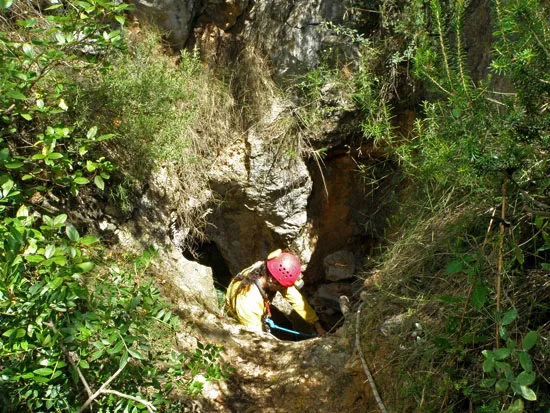
It is a cavity 6 metres long that has two entrance openings at a right angle. At one of the entrances there are three engraved crosses. The other entrance of the cave was cut into the rock and preserves the sockets made by the closing of this opening.
Speleothems
The archaeological levels are found beneath a stalagmitic layer between 20 and 40 cm.
Other details
It is a cave with a Middle Palaeolithic and medieval occupation.
History
It was located by Enric Jiménez and Narcís Sitjes, in the month of June of the year 1978, together with other cavities in the area. Later, with members of the Associació Arqueològica de Girona, an archaeological intervention was carried out that made it possible to document archaeological levels beneath a stalagmitic layer between 20 and 40 cm. Among the materials unearthed, a bifacial discoid on a slate pebble, some quartz flakes and a large burin stand out. The evidence provided by the excavation allows us to deduce that it is a place of occupation during the Middle Palaeolithic, without it being possible to determine whether it is a habitat space or a working station. Although parallels and the distribution of the internal space suggest that it is the first possibility. According to Joan Badia, there was a hermitic use of this cave in medieval times.
User Comments (0)
No comments yet.
Be the first to share your experience!
Registered Explorations (0)
No explorations registered yet.
Register your visit to this cave!
Bibliography
- Jimenez Carbonell, Enric.(1980).-Butlletí de l'Associació Arqueològica de Girona.
- Verdaguer i Lloveras, Esteve.(1981).-Revista Presència.
- invarque.cultura.gencat.cat
Nearby caves
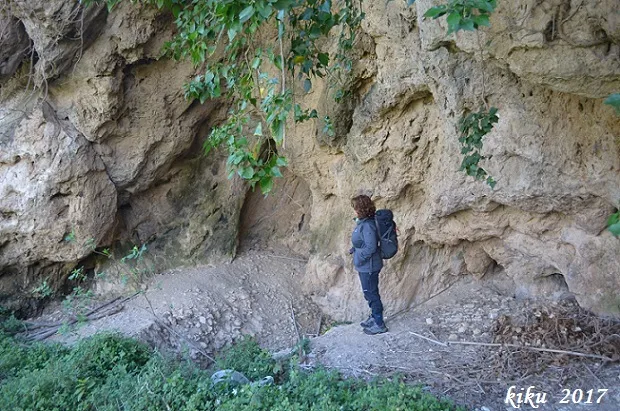
Cavorca Cristina
0.1 km · W
Boadella i les Escaules (Alt Empordà)
1 topo.3 photos
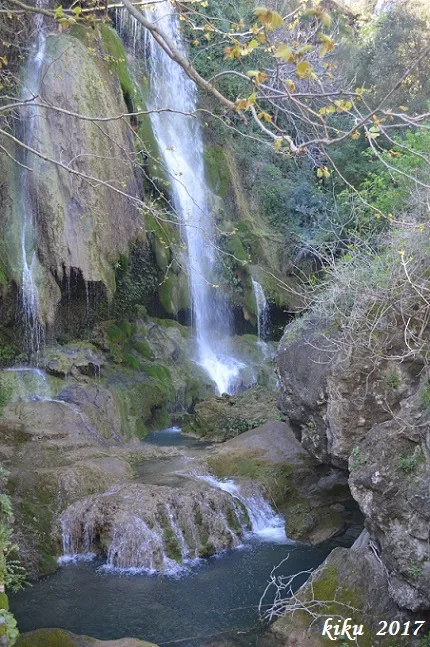
Cova de la Caula
0.1 km · E
Boadella i les Escaules (Alt Empordà)
1 topo.5 photos
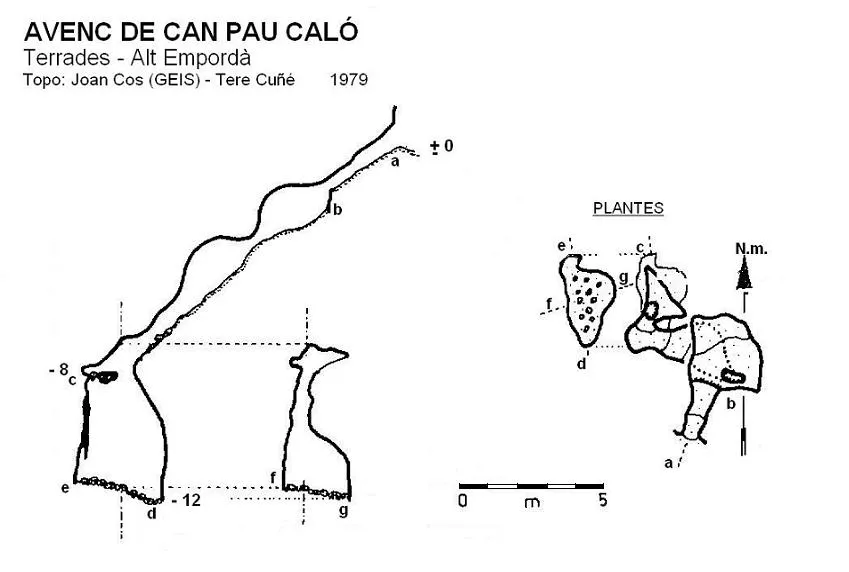
Avenc de Can Pau Caló
3.0 km · W
Terrades (Alt Empordà)
1 topo.
Bauma de Taleixà
3.0 km · W
Terrades (Alt Empordà)
4 topo.5 photos
Source: Espeleoindex (espeleoindex.com), modified. CC BY-NC 4.0, https://creativecommons.org/licenses/by-nc/4.0/