
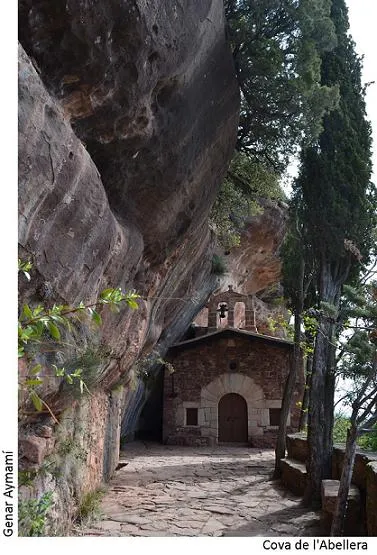
Cova de l'Abellera
Balma amb ermita al municipi de Prades.
EspeleoWorld
Cova de l'Abellera
Balma amb ermita al municipi de Prades.
Prades · Baix Camp
Length: 10 m
Updated record
https://espeleoworld.com/en/c/cova-de-l-abellera
Information can change. Always verify coordinates, access, weather, and cave conditions before setting out.
A rock shelter with a hermitage in the municipality of Prades, dedicated to the Mare de Déu de l'Abellera, excavated in red granite.
Topographic
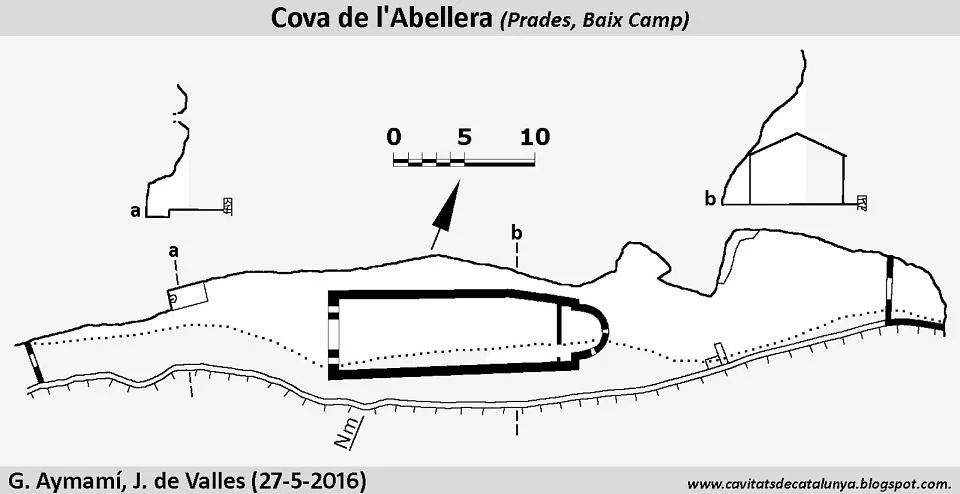
Espeleoindex · CC BY-NC 4.0, https://creativecommons.org/licenses/by-nc/4.0/ · Image © its author.
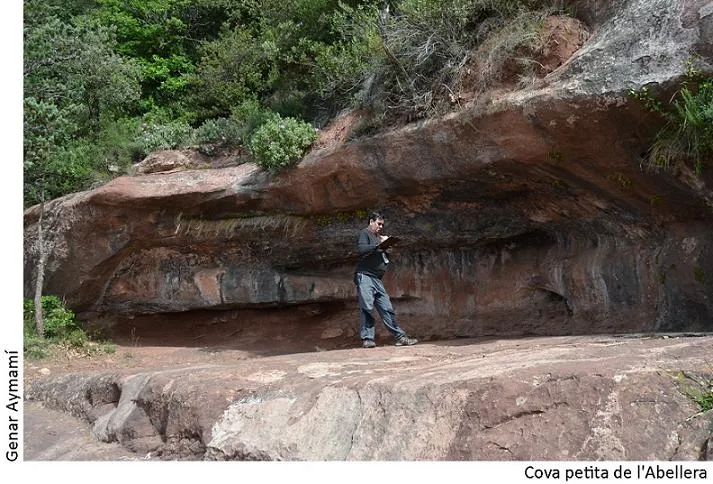
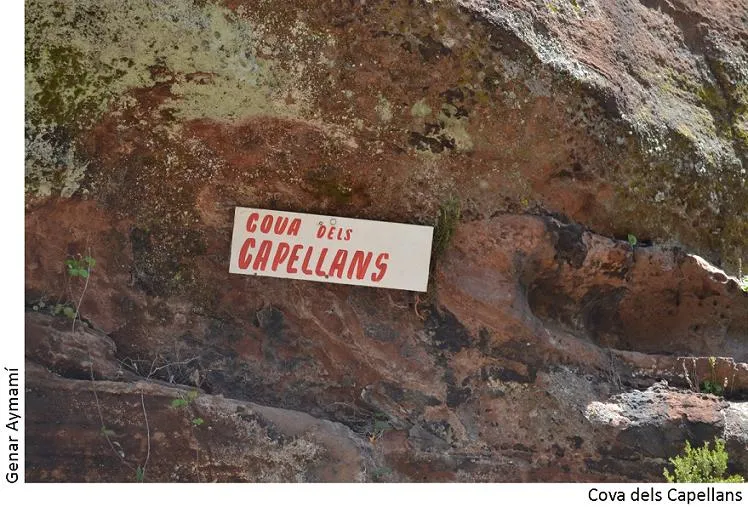
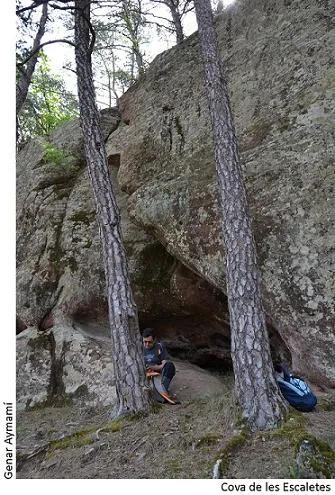
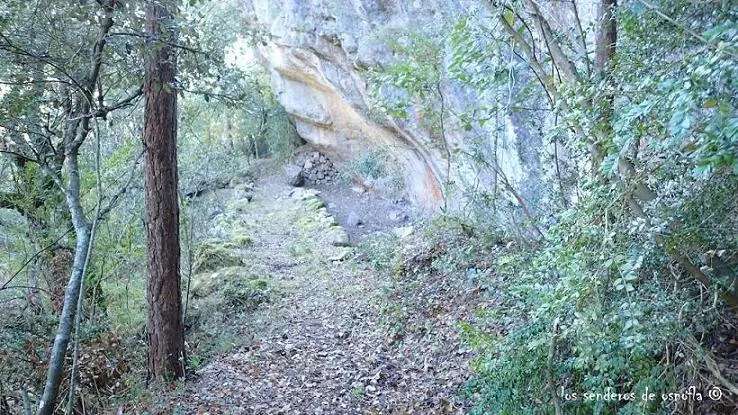
Photos
Espeleoindex · CC BY-NC 4.0, https://creativecommons.org/licenses/by-nc/4.0/ · Image © its author.
Description
Morphology
An elongated rock shelter of about 65 m, by about 10 m of depth in the final part, which is the deepest part, excavated in the red granite typical of the muntanyes de Prades.
Hydrology
We also find a couple of springs; the water is shut off.
Other details
Almost in the middle of the rock shelter stands the hermitage dedicated to the Mare de Déu de l'Abellera, and at the end of the cavern there is a chamber, with the door closed, which it is supposed must be used on the day of the aplec that takes place on Easter Monday and for the romiatge that is celebrated in the month of September. The whole cave is heavily modified by human action and the floor is paved.
History
Although popular belief attributes the origin of the place name to bees, in reality it has nothing to do with these hymenopteran insects, since it comes from the Latin apiliaria, which means stone full of holes, which is precisely what we see abundantly in this rock shelter.
It seems that this corner has been a refuge for hermits since quite remote times; a plaque placed on one of the walls of the cave tells us that between the years 1484 and 1493 the Benedictine Fra Bernat Boïl stayed there. He was the first missionary who evangelised America and accompanied Columbus on his second voyage to the new world.
In the year 1574 the hermitage was blessed by the rector of Prades; in the year 1578 the bell tower was added and at the beginning of the 18th century many reforms were made; the hermitage was built with ashlars of red stone from the surrounding area.
User Comments (0)
No comments yet.
Be the first to share your experience!
Registered Explorations (0)
No explorations registered yet.
Register your visit to this cave!
Bibliography
- Aymamí, Gener (2014).-Itineraris per les esglésies i els eremitoris rupestres de Catalunya. 47-49 Rafael Dalmau. Editor. Barcelona..
- Gras y Elías, Francisco (1909).- Historia de las ermitas del Arzobispado de Tarragona. Tip. Sanjuan Hermanos. Reus.
- Sànchez-Cid, Enric (2001).-Ermites i temples insòlits de Catalunya. 33-35. Cossetània edicions. Valls.
- Totes les dades, topografia i fotos, han estat extretes del blog de Jordi de Valles (cavitatsdecatalunya.com.es) post del dia 7 de juny de 2016. Autors de la fitxa Genar Aymamí i Jordi de Valles.
Nearby caves


Source: Espeleoindex (espeleoindex.com), modified. CC BY-NC 4.0, https://creativecommons.org/licenses/by-nc/4.0/