
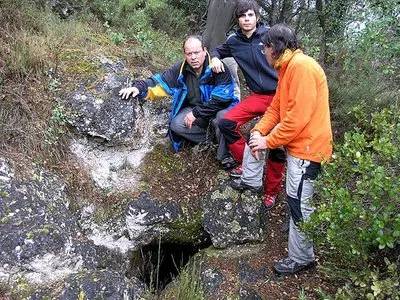
Avenc del Julivert
Petit, però interessant avenc de 22 m. de fondària al límit N de les muntanyes de Prades.
EspeleoWorld
Avenc del Julivert
Petit, però interessant avenc de 22 m. de fondària al límit N de les muntanyes de Prades.
Vimbodí i Poblet · Conca de Barberà
Length: 65 m · Depth: 22 m
Updated record
https://espeleoworld.com/en/c/avenc-del-julivert
Information can change. Always verify coordinates, access, weather, and cave conditions before setting out.
A small but interesting 22 m deep pit on the N edge of the muntanyes de Prades, explored in 1968 by the GIEM.
Topographic
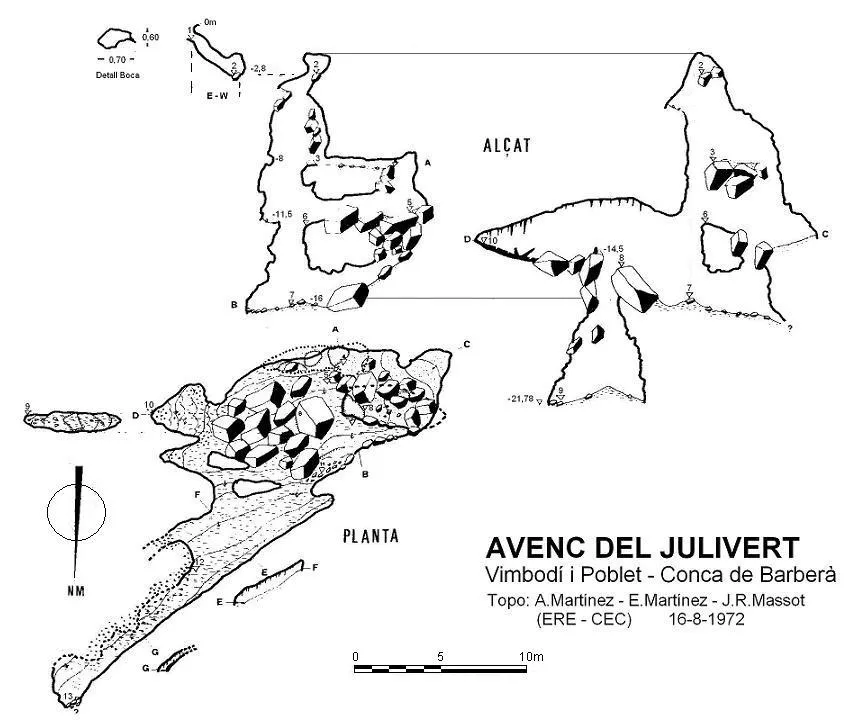

Espeleoindex · CC BY-NC 4.0, https://creativecommons.org/licenses/by-nc/4.0/ · Image © its author.
Photos

Espeleoindex · CC BY-NC 4.0, https://creativecommons.org/licenses/by-nc/4.0/ · Image © its author.
Description
Morphology
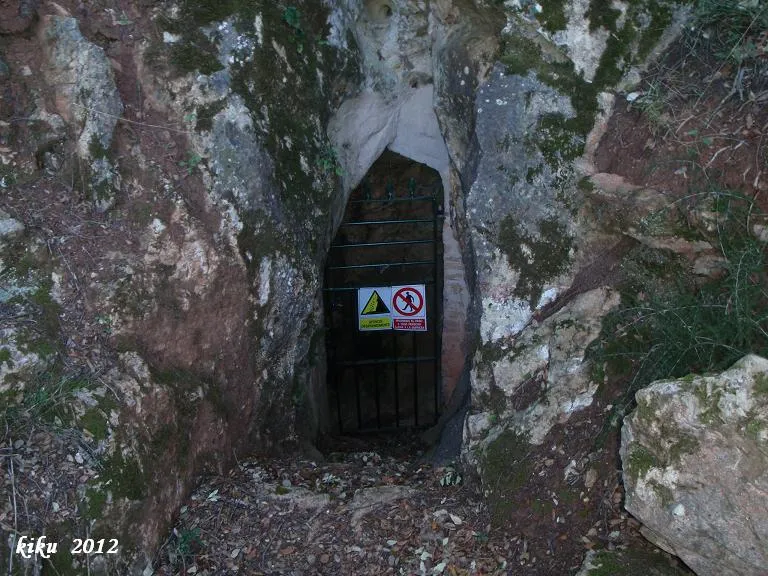
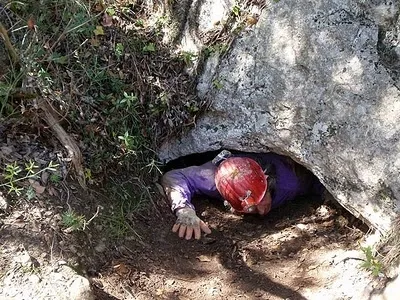
The entrance consists of a small opening which, after a first inclined stretch through a cylindrical conduit, leads to a vertical shaft about 11 metres deep, although we can avoid the last shaft by flanking along an intermediate level that also leads us to the main chamber of approximately 15 x 6 x 2.5 metres, with a floor that has a slope adopting a S-N orientation, at the end of which we find a small crawlway that leads us to the next chamber, which continues in a NE direction, of rather more modest dimensions and with the inclination characteristic of the bedding planes.
A second crawlway leads us to the final part of the cave, although it should be noted that in the main chamber, hidden among the blocks, there is a last shaft about 6.5 m deep, clearly structured on a joint, which constitutes the deepest point of the cave.
The avenc del Julivert constitutes a modest but interesting karstic cavity quite different from the neighbouring cova de Nerola; its genesis is clearly structured on the discontinuity that the limestone rock offers in the bedding planes, with joints playing a very modest role (entrance shaft and lower shaft). Thus, we observed how in its evolution the mechanisms of chemical dissolution of infiltration waters have played a primordial role, the tortuous rounded forms caused by corrosion being visible at many points of the cave, although we can also observe a notable presence of red clay as a by-product of that dissolution in many places on the floor of the chambers and galleries. It is interesting to note the presence on the floor of small blocks of shaly materials.
In the main chamber is the only place where we can see large blocks from the ceiling, produced by a later chemoclastic process, so that they occupy most of it, even hiding the entrance of the lower shaft.
Speleothems
Worthy of note is the existence of a modest reconstruction process, which continues active and which has endowed a large part of the ceiling with small isotubular stalactites between 1 and 5 cm in length, which has even welded together part of the walls and some blocks of the chamber.
History
First explored in 1968 by the young members of the incipient GIEM (Montblanc), based on information provided by a fellow student and native of Vimbodí.
Bio
Trichoptera: Mesophylax aspersus (Rambla) (specimens collected several times by the GIEM on 6/7/1969; 19/7/1970…)
Collembola: Pseudosinella tarraconensis, Heteromurus nitidus
Molluscs: Atenia quadrasi
Troglophilic isopod: Porcellio expansus (Dollfus)
Troglobitic isopods of the family Trichoniscidae: Catalauniscus bolivari (Arcangeli) (30/12/1971) and Oritoniscus lagari (Vandel)
Diplopoda: Origmatogona jacetanorum
Araneae: Lepthyphantes lorifer (opilionid), Dicranolasma soerensi
User Comments (0)
No comments yet.
Be the first to share your experience!
Registered Explorations (0)
No explorations registered yet.
Register your visit to this cave!
Bibliography
- Bosch, M, Cervelló, J.M., Romero, M. (1991): Noves dades sobre l'Espluga. Espeleòleg, 39: 4-10.
- Cervelló, J.M. i Freixes, A. (1986): Materials per a una guia del carst de l'Espluga de Francolí. Servei geològic de Catalunya (inèdit).
- Cervelló, J.M. (1986): El carst conglomeràtic de l'Espluga de Francolí. Espeleòleg, 37: 3-6.
- Mor, J. i Martínez, A. (1975-76).- “Sobre qualcunes observacions hidrogeològiques i tèrmiques dels sistemes freàtics i càrstics de Riudabella (Vimbodí – Tarragona)” Speleon (22): 75-107. Centre Excursionista de Catalunya. Barcelona.
- Palau, Ramon i Pallisé, Joan (2006).- “Ressenya de quatre fenòmens càrstics a la zona limítrofa del PNIN de Poblet”. Actes de les Segones Jornades sobre el Bosc de Poblet i les Muntanyes de Prades. Departament de Medi Ambient. Generalitat de Catalunya.
- Coordenades i fotografies extretes del blog: Espeleobloc (post del 18-4-2008).
Nearby caves
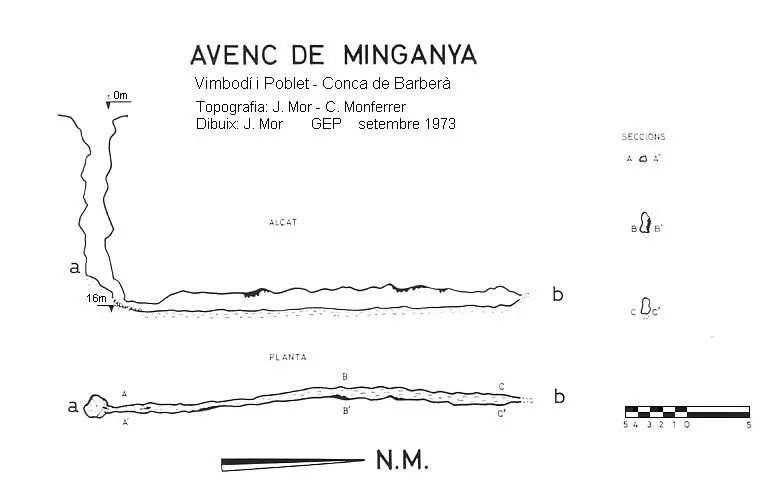
Avenc de Minganya
1.0 km · N
Vimbodí i Poblet (Conca de Barberà)
2 topo.
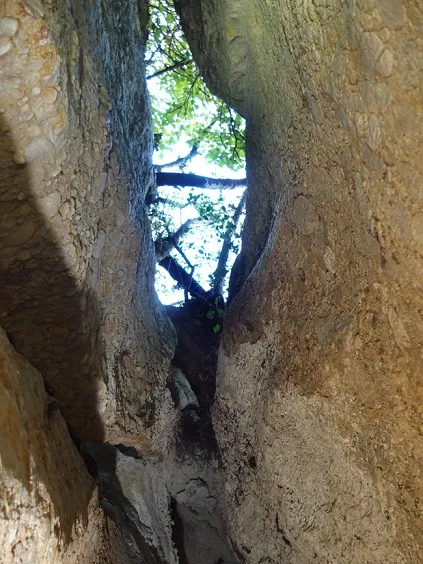
Cova de la Mata
1.2 km · E
Vimbodí i Poblet (Conca de Barberà)
1 topo.9 photos
Cova de Nerola
2.1 km · E
Vimbodí i Poblet (Conca de Barberà)
2 topo.2 photos
Cova del Mas de la Llana
2.3 km · W
Vallclara (Conca de Barberà)
1 topo.5 photos
Source: Espeleoindex (espeleoindex.com), modified. CC BY-NC 4.0, https://creativecommons.org/licenses/by-nc/4.0/