
Osterhöhle
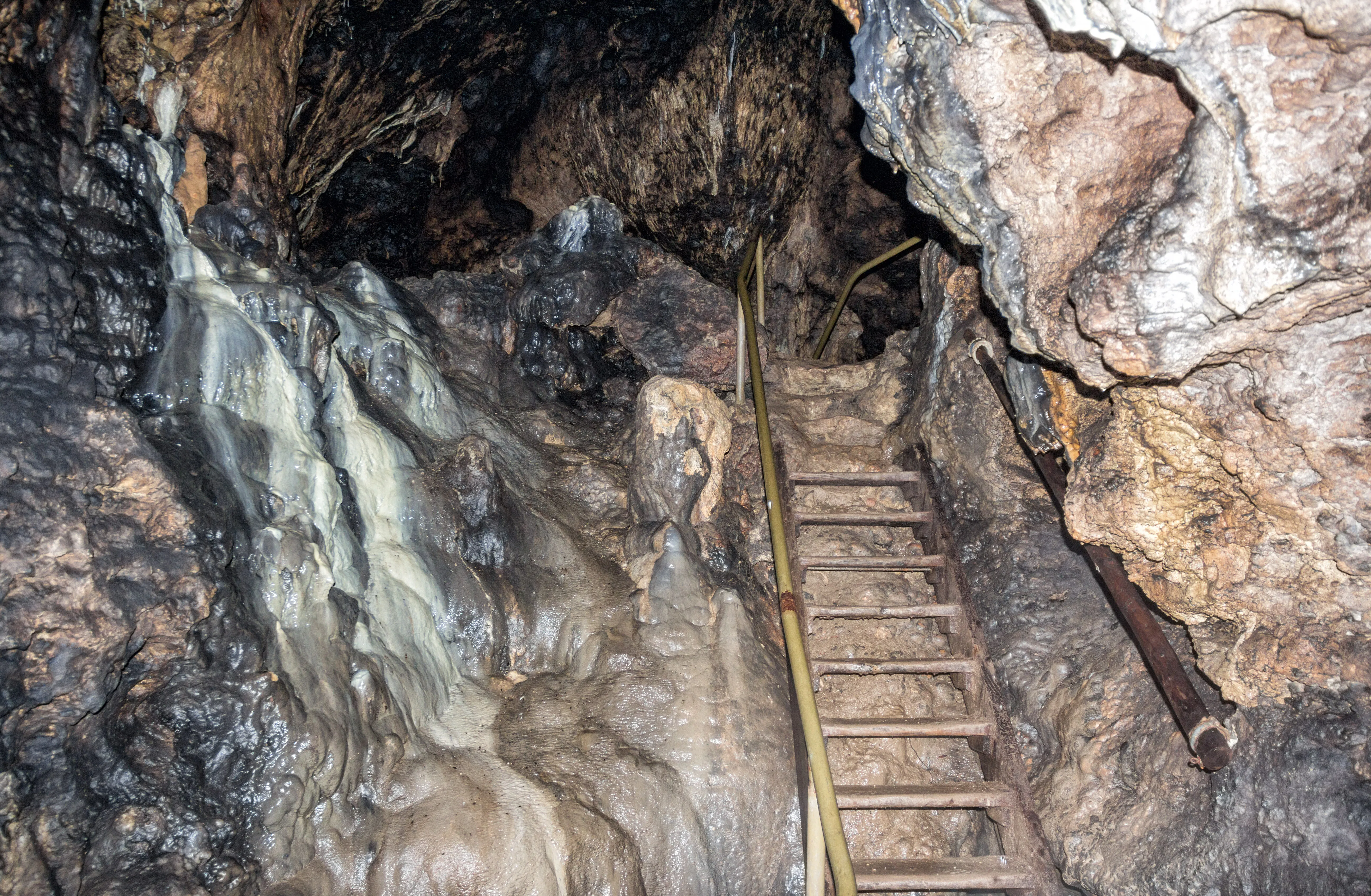
A dark show cave in the Franconian Jura with black manganese-coated walls, one of the last in Germany without electric light.
EspeleoWorld
Osterhöhle
A dark show cave in the Franconian Jura with black manganese-coated walls, one of the last in Germany without electric light.
Neukirchen b.Sulzbach-Rosenberg
Sviluppo: 185 m
Scheda aggiornata
https://espeleoworld.com/it/c/osterhoehle-neukirchen-b-sulzbach-rosenberg
Le informazioni possono cambiare. Verifica sempre coordinate, accesso, meteo e condizioni della cavità prima di partire.
A dark show cave in the Franconian Jura with black manganese-coated walls, one of the last in Germany without electric light.
Foto
© Derzno · CC BY-SA 4.0, https://creativecommons.org/licenses/by-sa/4.0/ · Wikimedia Commons · https://commons.wikimedia.org/wiki/File:2016_Osterh%C3%B6hle_22.jpg
Descrizione
Morfologia
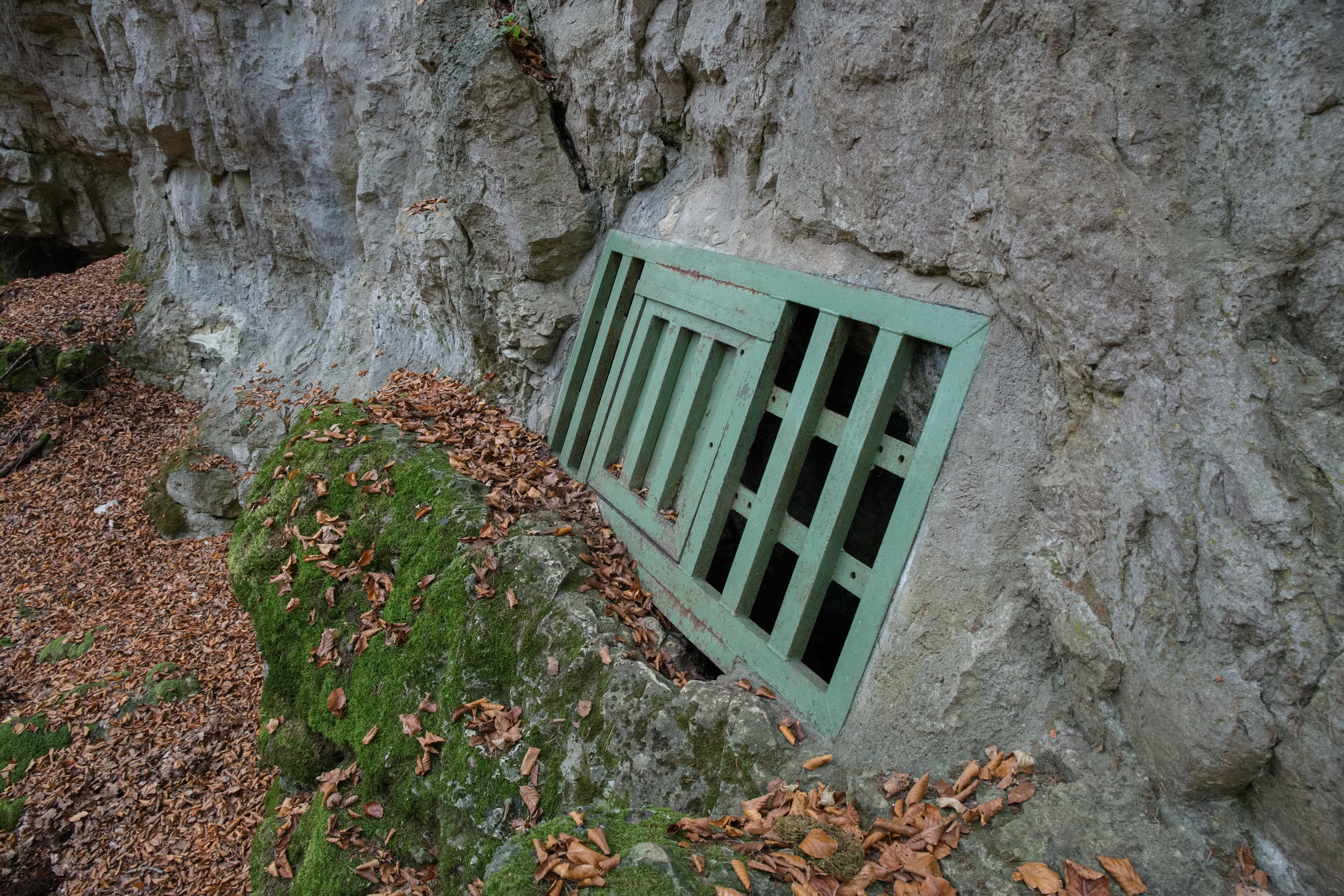
Approaching through the forest to the rocks and cliff faces, the first thing you will mention is the romantic Waldschänke, a small blockhouse built below the cliff with the cave entrance, surrounded by a huge beer garden. The cave entrance is a staircase going down an artificial tunnel, covered by a 9 m wide and 12 m high rock shelter. There is also a natural entrance, a narrow shaft above today’s entrance; it was grilled after the artificial entrance tunnel was built and is now used only by bats.
Descending the stairs, you reach the Dom (Dome), the largest chamber in the cave, quite impressive in size: 24 m long, 18 m wide, and up to 12 m high. The cave is, quite typical for the dolomite caves of the Franconian Jura, an alternation of larger rooms and very narrow connections.
Concrezioni
To the right from the Dom, you reach the Kirche (Church), which has more speleothems. The first assumption about the black cover of the walls and speleothems is grime, and indeed caves were visited over centuries with light sources like torches, carbide lamps, oil lamps, or candles. But a chemical analysis revealed that it consists mostly of natural manganese. Manganese is very common in this limestone, although its amount is quite low, but it is dissolved and relocated by the groundwater and then forms thin covers on the rocks. Even layers of a fraction of a millimetre are already completely dark black. There are often single rocks found which look black but are completely white inside. But it is rather rare that complete caves are covered by manganese. However, this cave was almost black even before the first human visitor entered it. In addition, this cave was certainly very rarely visited because of the difficult entrance shaft, so soot could only have formed after the development as a show cave. In many places, however, very white flowstone has grown on the black coating. The result is extraordinary, a "black and white cave", as Peter Hoffmann termed it so aptly.
Idrologia
From the Dom, turn left to visit the Wasserhalle (water hall), named after the water basins. There are several small ones and two larger ones, the largest of which is 7 m long and 3 m wide.
Progressione
This cave is pretty dark, which is mainly a result of the dark black walls. The fact that this cave is visited with handheld lamps will not make this a well lit tour. But that’s exactly what makes this cave so special: it is one of the last show caves in Germany without electric light. Until a few years ago it was still visited with carbide lamps. This beautiful tradition was actually something special, but is associated with effort for the operator. Moreover, the use of carbide lamps is now rightly frowned upon because it produces grime. The fact that you now get helmets for the tour, which is very unusual in German show caves, is probably intended to make the tour more exciting again.
Altri dettagli
The name Osterhöhle (Easter Cave) seems to have been used for centuries. The word Easter comes from the Germanic spring goddess of rising light Ostara, a pagan name for a Christian festival. As early as 1783, M. J. Schleiß von Löwenfeld reports in Beyträge zur Urgeschichte Sulsbachs aus den entferntesten Zeiten bis auf die Erscheinung Ernsts des ersten Grafen und Herrn zu Sulsbach (Contributions to the Prehistory of Sulsbach from the Most Distant Times to the Appearance of Ernst the First Count and Lord of Sulsbach) that the youth of Sulzbach walked to the cave on Easter holidays to have a celebration there. However, it is believed that the cave was probably named after its location, it is located at the foot of the Osterberg, one of the many wooded hills on the Franconian Alb plateau. Above the cave entrance there is a stucco relief with the head of Ostara, obviously placed when the entrance was built in 1905. Who did it and why is not known, but a connection with the development is very likely. Presumably the owner at the time had a romantic impulse.
Storia
Vessel shards from the Hallstatt and Latène periods were found in the cave, also remains from the Middle Ages. Whether people descended the entrance shaft as early as the Bronze Age is unclear, but it is known from that time that pottery was thrown into sacrificial caves. There was no archaeological investigation of the cave, but the neighbouring Lupberg Cave was investigated. It was a so-called sacrificial cave, probably also a burial cave; after the collapse of its entrance, the Osterhöhle became probably its successor. But Most of the finds were Most likely destroyed when the cave was developed as a show cave, and the few shards are out of context.
Commenti degli utenti (0)
Nessun commento ancora.
Sii il primo a condividere la tua esperienza!
Esplorazioni registrate (0)
Nessuna esplorazione registrata.
Registra la tua visita a questa grotta!
Grotte vicine

Fonte: Geotopkataster Bayern (Bayerisches Landesamt für Umwelt) (www.umweltatlas.bayern.de), modificato. CC BY 4.0, https://creativecommons.org/licenses/by/4.0/ Datenquelle: Bayerisches Landesamt für Umwelt, www.lfu.bayern.de · https://www.umweltatlas.bayern.de/mapapps/resources/reports/sb_geotope/generateBericht.pdf?additionallayerfieldvalue=371H002 · dati aggiornati a 2026 · Fonte: Show Caves of the World (Jochen Duckeck) (www.showcaves.com), modificato. CC0 1.0, https://www.showcaves.com/english/TermsOfUse.html Show Caves of the World (showcaves.com), Jochen Duckeck · Testo di Jochen Duckeck (Osterhöhle) · adattato da Espeleoworld (normalizzato, tradotto); l'adattamento è rilasciato con licenza CC0 1.0, https://www.showcaves.com/english/TermsOfUse.html · sviluppo, descrizione · ottenuti il 2026-11-19 · dati aggiornati a 2026