
Lupberghöhle
The Mittlere Lupberghöhle, also called "Lohberghöhle" or "Pumperloch", is a shaft cave about ten meters deep that ends in a hall about 20.0 × 35.0 meters in size.
EspeleoWorld
Lupberghöhle
The Mittlere Lupberghöhle, also called "Lohberghöhle" or "Pumperloch", is a shaft cave about ten meters deep that ends in a hall about 20.0 × 35.0 meters in size.
Neukirchen b.Sulzbach-Rosenberg
Scheda aggiornata
https://espeleoworld.com/it/c/lupberghoehle-neukirchen-b-sulzbach-rosenberg
Le informazioni possono cambiare. Verifica sempre coordinate, accesso, meteo e condizioni della cavità prima di partire.
The Mittlere Lupberghöhle, also called "Lohberghöhle" or "Pumperloch", is a shaft cave about ten meters deep that ends in a hall about 20.0 × 35.0 meters in size.
Foto
Sven-121 · CC0 1.0, https://creativecommons.org/publicdomain/zero/1.0/ · Wikimedia Commons · https://commons.wikimedia.org/wiki/File:Mittlere_Lupbergh%C3%B6hle_(A_169)_02.jpg
Descrizione
Morfologia
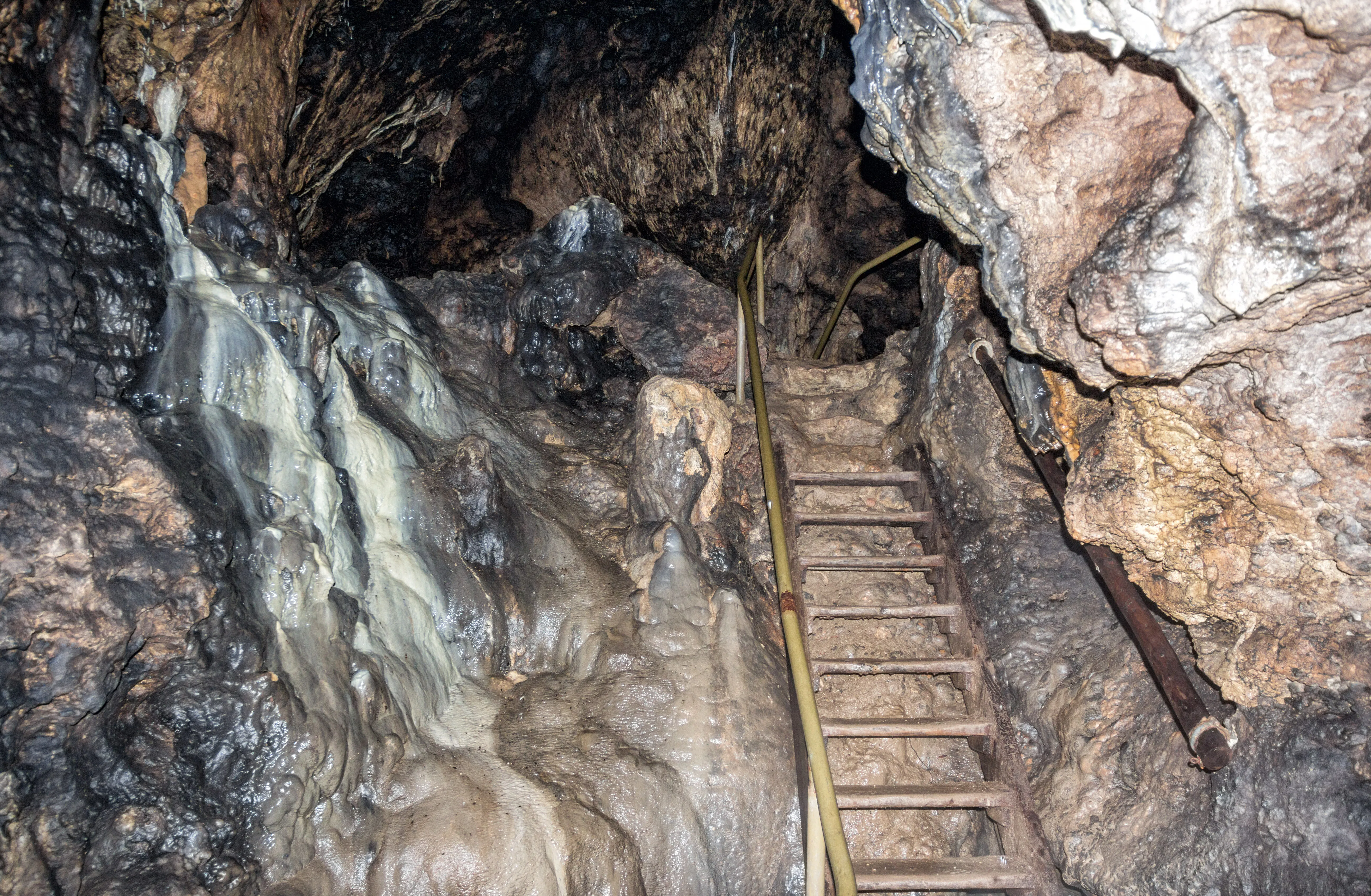
The Pumperloch is a shaft cave about ten meters deep with a diameter of three to five meters, which widens bottle-like toward the bottom and ends in a hall about 20.0 × 35.0 meters in size.
Altri dettagli
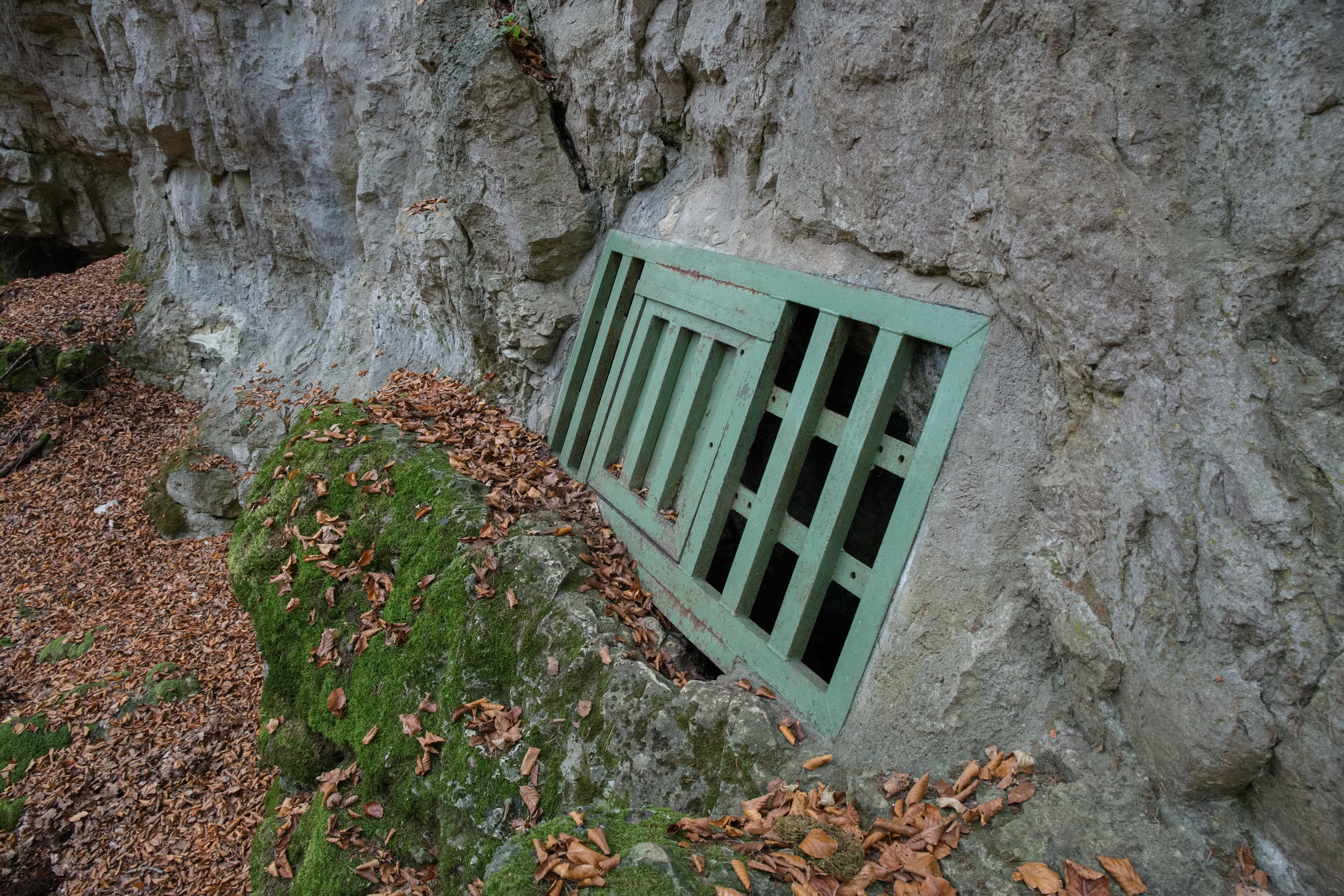
The cave is not accessible to the public. Looting excavations in the 1960s and 1970s prompted the cave to be made inaccessible.
Today the cave is protected as ground monument number D-3-6435-0105: "Lupberghöhle" (A 169) with finds from the Early and Middle Bronze Age, the Urnfield period and the Hallstatt period as well as human skeletal remains. It is designated as a natural monument.
Storia
The cave was discovered in 1893, and the survey took place in 1956. The first finds, including a Hallstatt-period sherd, go back to F. Knarr (1893), A. Ehrensberger (1890) and Josef Richard Erl (1906). The cave is distinguished by the good preservation of the finds scattered over the entire surface. Besides human and animal bones, sherds and bronzes were found.
According to Armin Stroh, the finds from the horizontal hall are exclusively from the Urnfield period. According to Michael Moser, however, on the upper part of the debris cone lay a bowl of the late La Tène period (1st century BC), which was thrown down together with body parts through an upper shaft entrance. From the private collection of H. Lindner there is also a perforated Urnfield-period skull amulet with 64 holes, whose bronze patina identifies the piece as a pendant. The amulet is not a trepanation but a post-mortem work.
Commenti degli utenti (0)
Nessun commento ancora.
Sii il primo a condividere la tua esperienza!
Esplorazioni registrate (0)
Nessuna esplorazione registrata.
Registra la tua visita a questa grotta!
Grotte vicine

Contiene informazioni da © OpenStreetMap contributors, www.openstreetmap.org, rese disponibili con la Open Database License (ODbL 1.0, https://opendatacommons.org/licenses/odbl/1-0/), modificate. · https://www.openstreetmap.org/node/7997449181 · dati aggiornati a 2026 · Fonte: Wikidata – cave items (Germany) (www.wikidata.org), modificato. CC0 1.0, https://creativecommons.org/publicdomain/zero/1.0/ Wikidata (CC0 1.0) · nomi · ottenuti il 2026-11-13 · dati aggiornati a 2026 · Fonte: German Wikipedia – article leads (cave descriptions) (de.wikipedia.org), modificato. CC BY-SA 4.0, https://creativecommons.org/licenses/by-sa/4.0/ Wikipedia contributors (de.wikipedia.org), CC BY-SA 4.0 · Testo di Wikipedia contributors (Mittlere Lupberghöhle) · adattato da Espeleoworld (normalizzato, tradotto); l'adattamento è rilasciato con licenza CC BY-SA 4.0, https://creativecommons.org/licenses/by-sa/4.0/ · descrizione · ottenuti il 2026-11-13 · https://de.wikipedia.org/wiki/Mittlere_Lupbergh%C3%B6hle · dati aggiornati a 2026 · I dati derivati sono disponibili su richiesta con licenza ODbL: [email protected]