
Cova del Traça
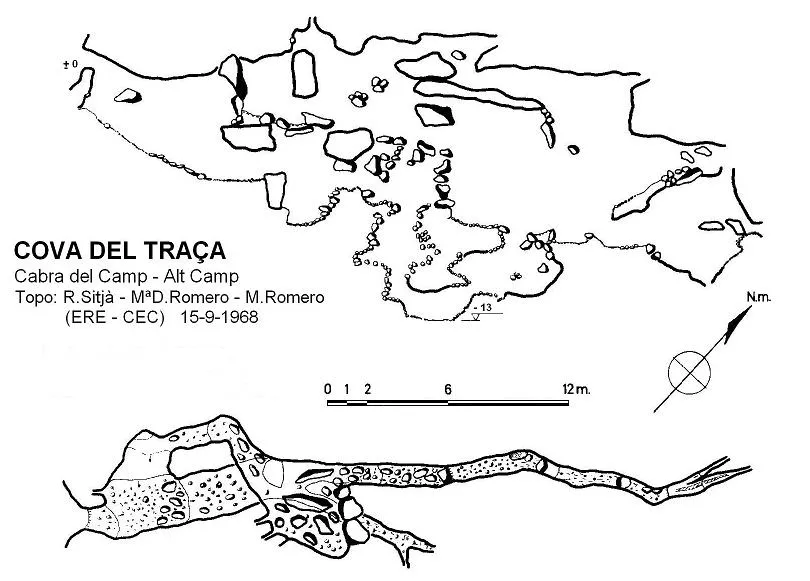
A 60 m long cave in Cabra del Camp, with an entrance 1 m by 1.5 m, a 2 m shaft and galleries between blocks. First visit by Francesc Español on 18 August 1923; survey by the ERE – CEC on 15 September 1968.
EspeleoWorld
Cova del Traça
A 60 m long cave in Cabra del Camp, with an entrance 1 m by 1.5 m, a 2 m shaft and galleries between blocks. First visit by Francesc Español on 18 August 1923; survey by the ERE – CEC on 15 September 1968.
Cabra del Camp · Alt Camp
Sviluppo: 60 m · Profondità: 13 m
Scheda aggiornata
https://espeleoworld.com/it/c/cova-del-traca
Le informazioni possono cambiare. Verifica sempre coordinate, accesso, meteo e condizioni della cavità prima di partire.
A 60 m long cave in Cabra del Camp, with an entrance 1 m by 1.5 m, a 2 m shaft and galleries between blocks. First visit by Francesc Español on 18 August 1923; survey by the ERE – CEC on 15 September 1968.
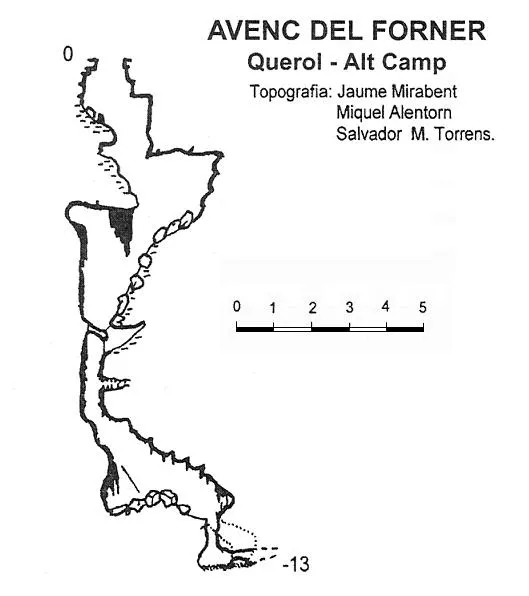
Topografia
Espeleoindex · CC BY-NC 4.0, https://creativecommons.org/licenses/by-nc/4.0/ · Immagine © del suo autore.
Foto
Espeleoindex · CC BY-NC 4.0, https://creativecommons.org/licenses/by-nc/4.0/ · Immagine © del suo autore.
Descrizione
Morfologia
An entrance 1 metre high by 1.5 wide gives way to a small 2 metre shaft easily descended with the help of a rope. At its base begins a slightly inclined gallery with a high ceiling, occupied by large blocks wedged between the walls of the main fissure. The gallery forks; to the right and at a lower level, the gallery ends after a few metres in a narrow passage; to the left it also descends over a small drop, but the joint gains height and can be climbed up towards some upper galleries formed between the wedged blocks. These upper galleries continue towards the exterior and connect with the base of the entrance shaft by a fairly steep drop.
Concrezioni
The fairly steep drop that connects the upper galleries with the base of the entrance shaft is largely covered by a thin layer of moonmilch.
Progressione
The small 2 metre shaft is easily descended with the help of a rope.
Storia
The first reference to the cave comes from a young Francesc Español who, on 18 August 1923, taking advantage of a few days of holidays at the house of some uncles in Fontscaldetes, visited the cave and made his debut as a biospeleologist.
We have found some graffittis inside and one of them records a stay inside during the year 1938.
It was not until 15 September 1968 that a team from the ERE – CEC, invited by Dr. Capell, owner of the estate, visited the cave and carried out the only known survey. We have news of sporadic later visits for the purpose of collecting fauna.
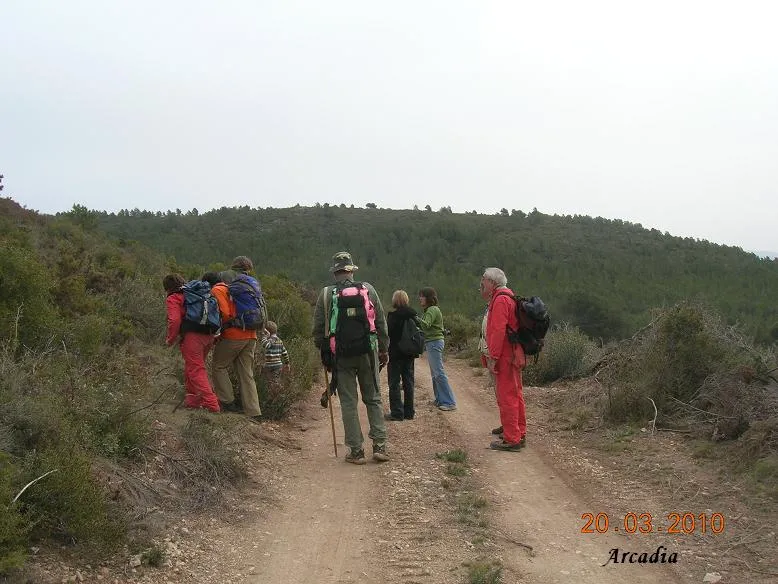
On 20 March 2010, members of the ERE – CEC and of the SIE – CE Àliga, accompanied by Josep Grases, current owner and grandson of Dr. Capell, visited the cave for biospeleological and photographic purposes and to establish an exact georeference.
Note biospeleologiche
Troglocharinus españoli (Collected by F. Español in 1923 and described in 1930 by R. Jeannel as a new species that for years had been known as Speophilus españoli until its unification).
Commenti degli utenti (0)
Nessun commento ancora.
Sii il primo a condividere la tua esperienza!
Esplorazioni registrate (0)
Nessuna esplorazione registrata.
Registra la tua visita a questa grotta!
Bibliografia
- Borràs,J.; Miñarro,JM; Talavera,F. (1978).- Catàleg Espeleològic de Catalunya (l'Alt Camp, la Conca de Barberà, el Baix Penedès i el Tarragonès). Vol 2: 246pp. Ed.Políglota. Barcelona.
- Español, F. (1950).- “Coleópteros cavernícolas de la provincia de Tarragona” Speleon I(2): 113-130. Universidad de Oviedo.
- Español, F. (1954).- “Treinta años de exploraciones subterráneas” Ibérica (283): 466-470
Grotte vicine


Fonte: Espeleoindex (espeleoindex.com), modificato. CC BY-NC 4.0, https://creativecommons.org/licenses/by-nc/4.0/