
Cova de la Penitenta
A small hollow between granite blocks in Fogars de Montclús (Montseny), accessible through two entrances, known since the 19th century for the legendary figure of the penitent.
EspeleoWorld
Cova de la Penitenta
A small hollow between granite blocks in Fogars de Montclús (Montseny), accessible through two entrances, known since the 19th century for the legendary figure of the penitent.
Fogars de Montclús · Vallès Oriental
Sviluppo: 17 m · Profondità: 3 m
Scheda aggiornata
https://espeleoworld.com/it/c/cova-de-la-penitenta
Le informazioni possono cambiare. Verifica sempre coordinate, accesso, meteo e condizioni della cavità prima di partire.
A small hollow between granite blocks in Fogars de Montclús (Montseny), accessible through two entrances, known since the 19th century for the legendary figure of the penitent.
Topografia
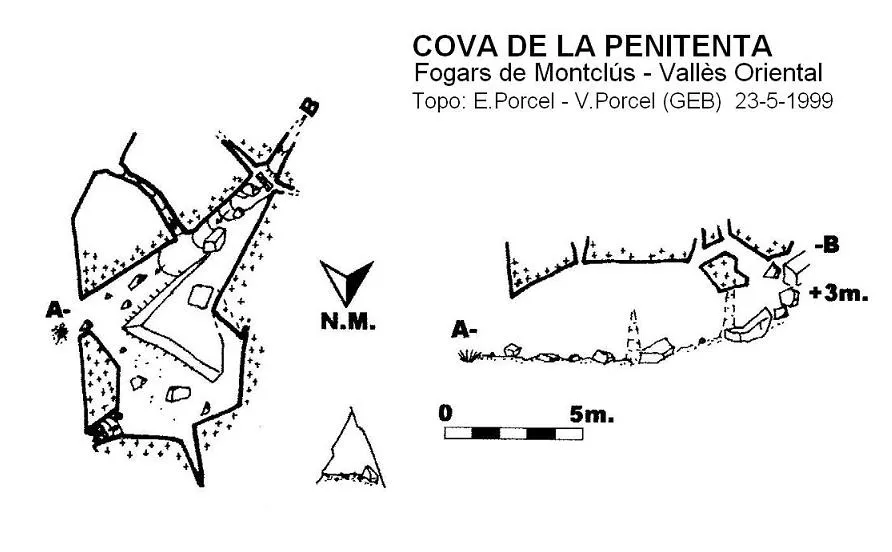

Espeleoindex · CC BY-NC 4.0, https://creativecommons.org/licenses/by-nc/4.0/ · Immagine © del suo autore.
Foto

Espeleoindex · CC BY-NC 4.0, https://creativecommons.org/licenses/by-nc/4.0/ · Immagine © del suo autore.
Descrizione
Morfologia
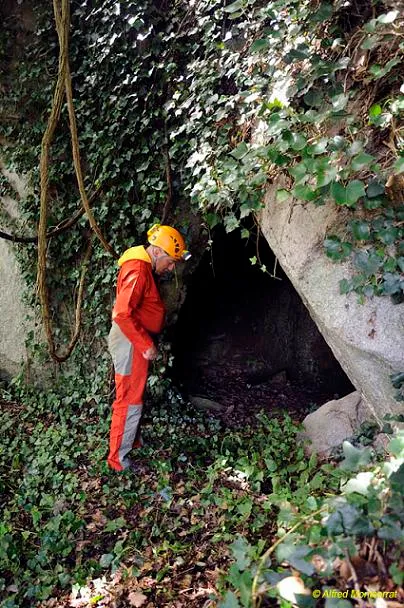
Some granite blocks fallen down the slope form a kind of chamber, accessible through two entrances. We will enter through the more comfortable one, triangular in type, 2 by 1 metre. The cave is formed by this single irregularly shaped chamber.
Storia
A hollow very well known in the region since the 19th century, for being the place of stay of a mysterious woman (a penitent, not a penitent woman as it is incorrectly known). Víctor Balaguer told this story in 1886 and it was reproduced by Martí Boada in his book Hivern al Montseny (1993), from which we have taken this mysterious story or legend:
The aforementioned figure, who according to Víctor Balaguer (Al pie de la encina. Progreso Editorial. Madrid, 1886) remained in this place from 1834 until 1840, was a tall woman, of great beauty, of refined and aristocratic manners. She was not yet thirty when she arrived. According to the hermit of Santa Fe, on the first night of her arrival on the mountain she wore a beautiful silk dress that she continued to wear until in time it became tattered.
Parlava poc, era de maneres discretes i reservada. Els seus cants admirables, romanços italians, s’escampaven per la muntanya; una veu fresca i argentina que revelava una bona formació en l’art del cant. Parlava un català barrejat amb mots castellans i francesos.
Before going up to the cave, she rented a house in Palautordera and hired two maids from the town. From time to time she went down there for a short while and returned to the mountain.
Sometimes she disappeared completely and took who knows how long to return.
Portava sempre, penjant de la cintura, un sarronet de seda amb un crani petit com d’infant que tot sovint acaronava, besava i li resava.
The chronicle recounts that once a person unknown to the region, of great distinction, went up to the cave and did not find her there. He left her some words as a message, engraved with a stylus on the trunk of a large beech beside the cave.
The penitent (sic), on arriving and reading the message, immediately had the tree cut down and split, and had it burned.
Once the penance of seven years was over, this mysterious woman who falsely called herself Bernadeta Flores disappeared.
It is said that she could be that English lady whom Lamartine mentions in his Travels in the East. It has also been said that she could have been a descendant of Marshal Stanhope, a high English military officer, defender of the fall of Barcelona.
Aquest supòsit sosté que aquesta dona havia estat amant del rei d’Anglaterra, de qui tingué un fill que no li fou reconegut; aquest infant se li morí. La mare mai més se separà del crani del seu fill, pel qual, sembla, féu la dura penitència.
And the mysterious knight of the message, who was he…?
Commenti degli utenti (0)
Nessun commento ancora.
Sii il primo a condividere la tua esperienza!
Esplorazioni registrate (0)
Nessuna esplorazione registrata.
Registra la tua visita a questa grotta!
Bibliografia
- Boada, Martí (1993).- Hivern al Montseny. Diari d'un naturalista. 117 pp. Ed. El Mèdol. Tarragona.
- Porcel, Enric (2005).- “Recull de petites cavitats de Catalunya”. Cavernes (25): 17-25. Grup d'Espeleologia de Badalona.
- Coordenades, localització i fotografies facilitades per Alfred Montserrat (ERE-CEC)
Grotte vicine
Forat Nº2 de les Pedreres
2.1 km · SE
Gualba (Vallès Oriental)
1 topo.4 foto
Forat Nº1 I 1/2 de les Pedreres
2.2 km · SE
Gualba (Vallès Oriental)
1 topo.
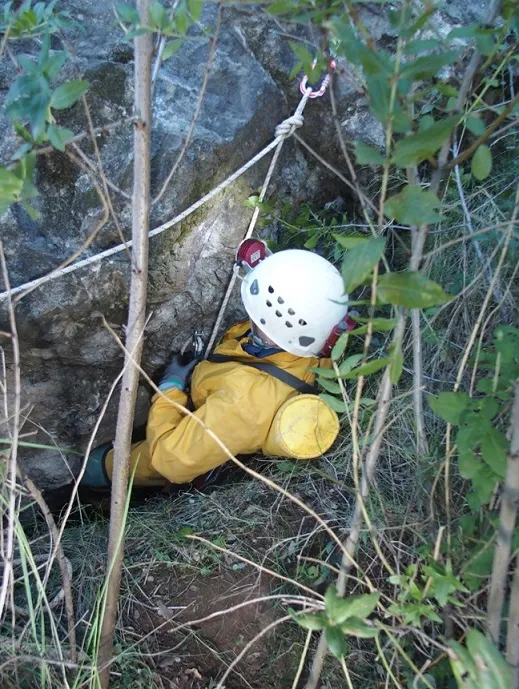
Avenc de les Pedreres
2.3 km · SE
Gualba (Vallès Oriental)
1 topo.4 foto
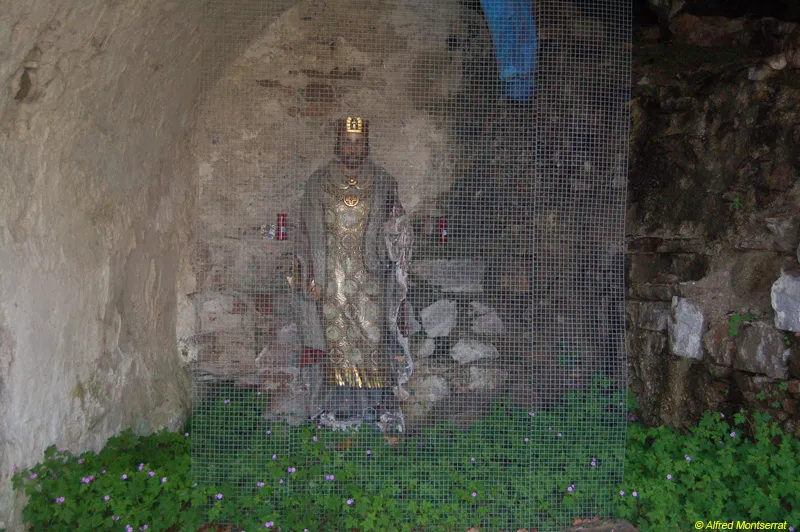
Cova de l'Ermita de Sant Segimon
12 km · NO
Viladrau (Osona)
1 topo.1 foto
Fonte: Espeleoindex (espeleoindex.com), modificato. CC BY-NC 4.0, https://creativecommons.org/licenses/by-nc/4.0/