
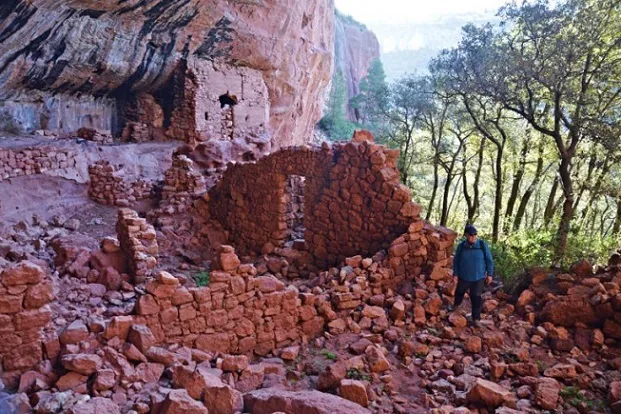
Cova de Donya Blanca
Large rock shelter with ancient buildings in Cornudella de Montsant, known as de Donya Blanca, with remains of walls, dry-stone walls and arches.
EspeleoWorld
Cova de Donya Blanca
Large rock shelter with ancient buildings in Cornudella de Montsant, known as de Donya Blanca, with remains of walls, dry-stone walls and arches.
Cornudella de Montsant · Priorat
Sviluppo: 17 m
Scheda aggiornata
https://espeleoworld.com/it/c/cova-de-donya-blanca
Le informazioni possono cambiare. Verifica sempre coordinate, accesso, meteo e condizioni della cavità prima di partire.
Large rock shelter with ancient buildings in Cornudella de Montsant, known as de Donya Blanca, with remains of walls, dry-stone walls and arches.
Topografia
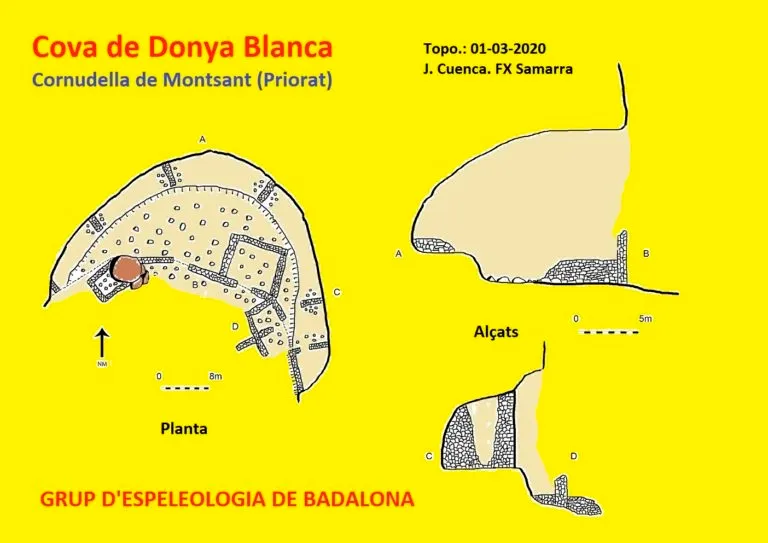

Espeleoindex · CC BY-NC 4.0, https://creativecommons.org/licenses/by-nc/4.0/ · Immagine © del suo autore.
Foto

Espeleoindex · CC BY-NC 4.0, https://creativecommons.org/licenses/by-nc/4.0/ · Immagine © del suo autore.
Descrizione
Morfologia
The rock shelter has maximum dimensions of 51 m in length by 17 m in depth and a height of 7 m.
Progressione
We will leave the village of Cornudella de Montsant by the T-3225 road that leads to Siurana; after 2.5 km we will pass through the coll d'Esplugues, here we will leave the car to continue along the road to the Km 3 point and take a path on the left that climbs through the forest until we reach the red sandstone cliff; right at the foot, before us, we will find the built rock shelter known as de Donya Blanca.
Altri dettagli
In the rock shelter only remains of different types of buildings are preserved. Thick walls, dry-stone walls and arches still stand.
Storia
Joan Ferraté already mentions it in 1918, saying: Davant de Ciurana, a l'altre banda del riuet Estupinyà, es troba aquesta cova, que s'ha fet famosa per la tràgica tradició que s'hi conte, d'haver-hi viscut fins a sa mort, com a càstig per tenir amors amb un trovaire de Provença, una filla del comte de Prades. De major interès folklòric que espeleològic. (sic)
Josep Iglésies, in his book: Siurana (1960), mentions the legend of the cave.
There is documented evidence of the occupation of the rock shelter from the 16th century to the 18th century; later no documents are preserved, this does not mean that it was not still occupied.
Commenti degli utenti (0)
Nessun commento ancora.
Sii il primo a condividere la tua esperienza!
Esplorazioni registrate (0)
Nessuna esplorazione registrata.
Registra la tua visita a questa grotta!
Bibliografia
- Ferraté, Joan (1918),- Espeleologia de les comarques tarragonines. Reus
- Dades actuals, topografia i fotografies extretes del web: geb.cat (del Grup d'Espeleologia de Badalona). Apunt del 5-5-2020
Grotte vicine
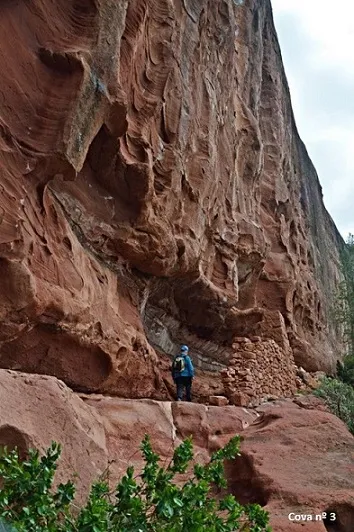
Coves 3 I 4 del Titi
0.0 km · S
Cornudella de Montsant (Priorat)
1 topo.2 foto
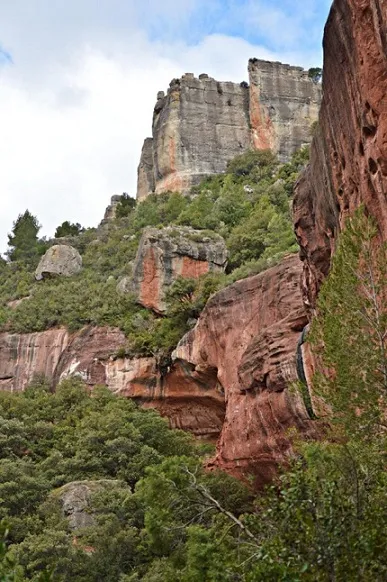
Cova Nº2 del Titi
0.0 km · S
Cornudella de Montsant (Priorat)
1 topo.4 foto
Cova del Cingle del Bodro
1.7 km · E
Cornudella de Montsant (Priorat)
1 topo.4 foto
Cova de Porta-lloret
1.9 km · E
Cornudella de Montsant (Priorat)
3 topo.4 foto
Fonte: Espeleoindex (espeleoindex.com), modificato. CC BY-NC 4.0, https://creativecommons.org/licenses/by-nc/4.0/