
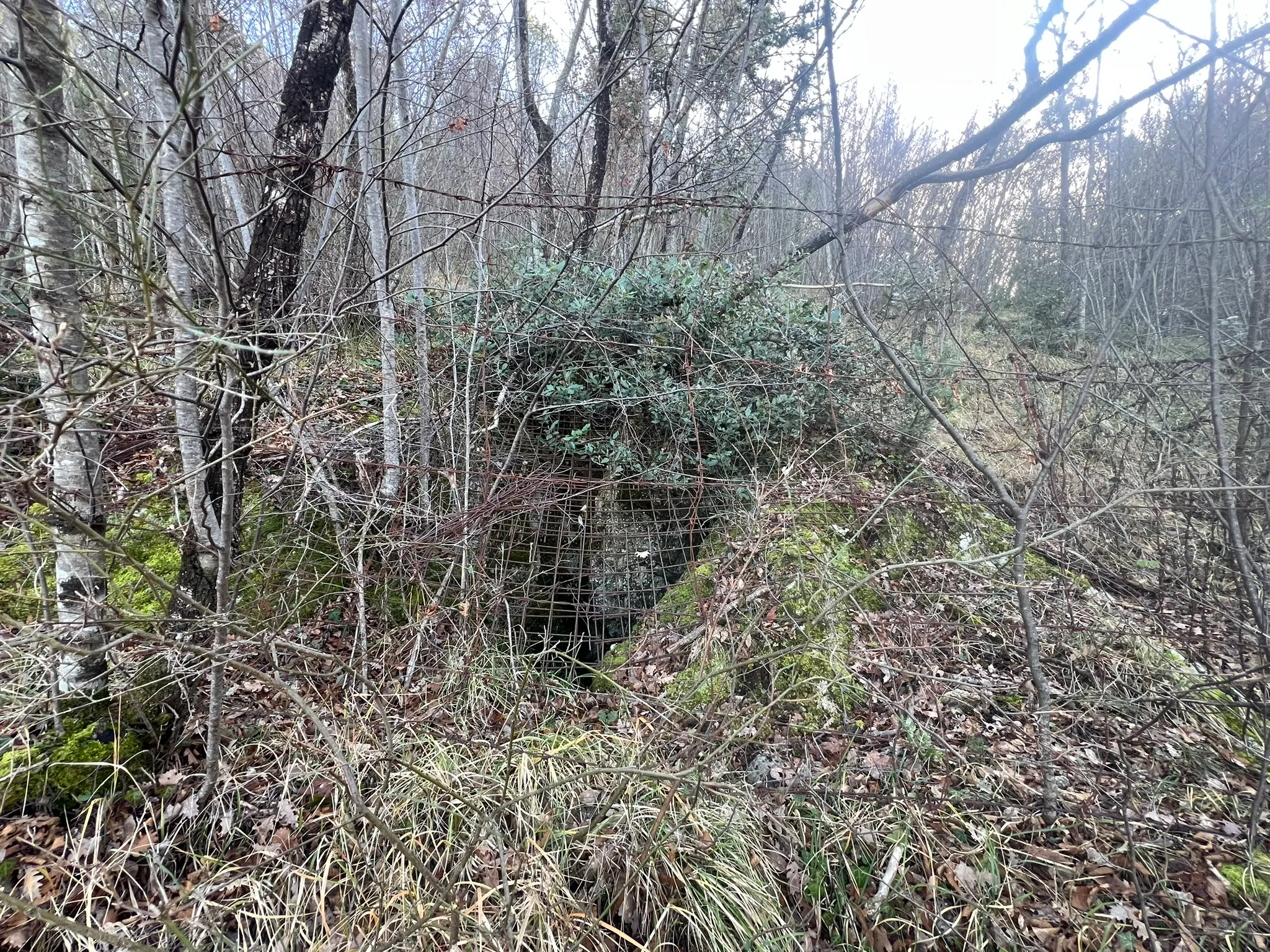
Pozzo della Peccerella
Pit of about 20 m developed on a fault in the Limestone Massiccio/Corniola, predominantly vertical, closed by a grate and used in the past as a dump.
EspeleoWorld
Pozzo della Peccerella
Pit of about 20 m developed on a fault in the Limestone Massiccio/Corniola, predominantly vertical, closed by a grate and used in the past as a dump.
Trevi
Longueur: 35 m · Profondeur: 25 m
Fiche actualisée
https://espeleoworld.com/fr/c/pozzo-della-peccerella-trevi-perugia
Les informations peuvent changer. Vérifiez toujours les coordonnées, l'accès, la météo et l'état de la cavité avant de partir.
Pit of about 20 m developed on a fault in the Limestone Massiccio/Corniola, predominantly vertical, closed by a grate and used in the past as a dump.
Photos
© Mauro Barbieri · LicenseRef-FUGS-media-per-item · Federazione Umbra Gruppi Speleologici (FUGS), Catasto Speleologico dell'Umbria · https://catasto.fugs.it/index.php?mod=caves&op=view&id=690
Description
Morphologie
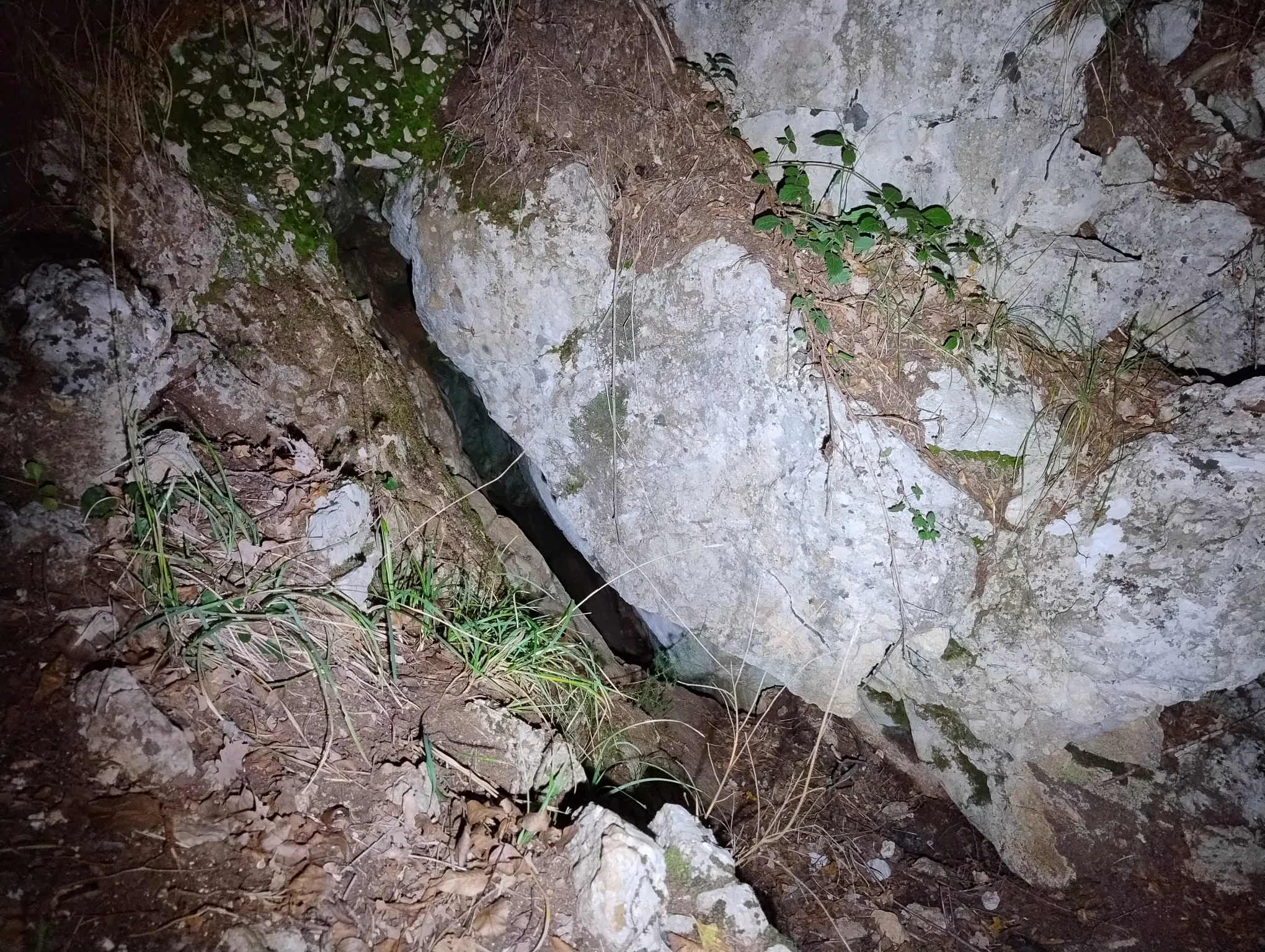
Pit of about 20 m developed on the massive stratification and on a fault that widens at the base, following the fracture. Predominantly vertical trend.
Geology: COI Corniola - Lower Jurassic (Sinemurian-Toarcian); MAS Limestone Massiccio - Lower-Upper Jurassic (Sinemurian-Pliensbachian); stratified micritic limestones; stratified, massive; inclined; faults. The cavity is developed along an intraformational fault of the Limestone Massiccio/Corniola, following the massive inclined stratification, visible especially at the base of the pit. The initial part of the pit shows typically altered rocks (fault breccia), subject to collapses and crumbling. The base of the pit is developed along the fault; the walls show typical fault mirrors and solution features.
Hydrologie
Internal temperature 9.5 °C; humidity 85 %; air flows absent.
Progression
Traversability: experts only; recommended period all year round. Rigging: temporary. Progression difficulty: pits, slides, narrow passages. Hazards: dangerous access, landslides/collapses, pits that discharge.
Autres détails
Pollution: solid waste, high intensity, notable presence of solid and bulky waste of every kind; the pit was used as a dump.
Histoire
In 1942 a newborn girl was thrown into the pit, hence the name of the cave. In the cavity a deposit of weapons from the last war was found. The writings at the bottom of the pit indicate first explorations by the Gruppo Speleologico di Spoleto in 1964 and by another Gruppo di Roma in 1965. (R. Giorgetti, 1979)
Notes on the name: it takes its name from a newborn girl thrown into the pit.
Bio
Chiroptera: presence of at least 2 bats as of 17/01/2026. Other hypogean fauna: Dolichopoda, shell-less snails. Hypogean botany: abundant moss in the first metres. Environmental and biological protections: no.
Commentaires des utilisateurs (0)
Aucun commentaire pour le moment.
Soyez le premier à partager votre expérience !
Explorations enregistrées (0)
Aucune exploration enregistrée pour le moment.
Enregistrez votre visite dans cette cavité !
Grottes à proximité

Source : Catasto Cavità Umbria (Federazione Umbra Gruppi Speleologici, FUGS) (catasto.fugs.it), avec modifications. LicenseRef-FUGS-no-licence-stated Federazione Umbra Gruppi Speleologici (FUGS), Catasto Speleologico dell'Umbria · https://catasto.fugs.it/index.php?mod=caves&op=view&id=690 · données de 2025 · Source : Catasto Cavità Umbria (Federazione Umbra Gruppi Speleologici, FUGS) (catasto.fugs.it), avec modifications. LicenseRef-FUGS-media-per-item Federazione Umbra Gruppi Speleologici (FUGS), Catasto Speleologico dell'Umbria · données de 2025