
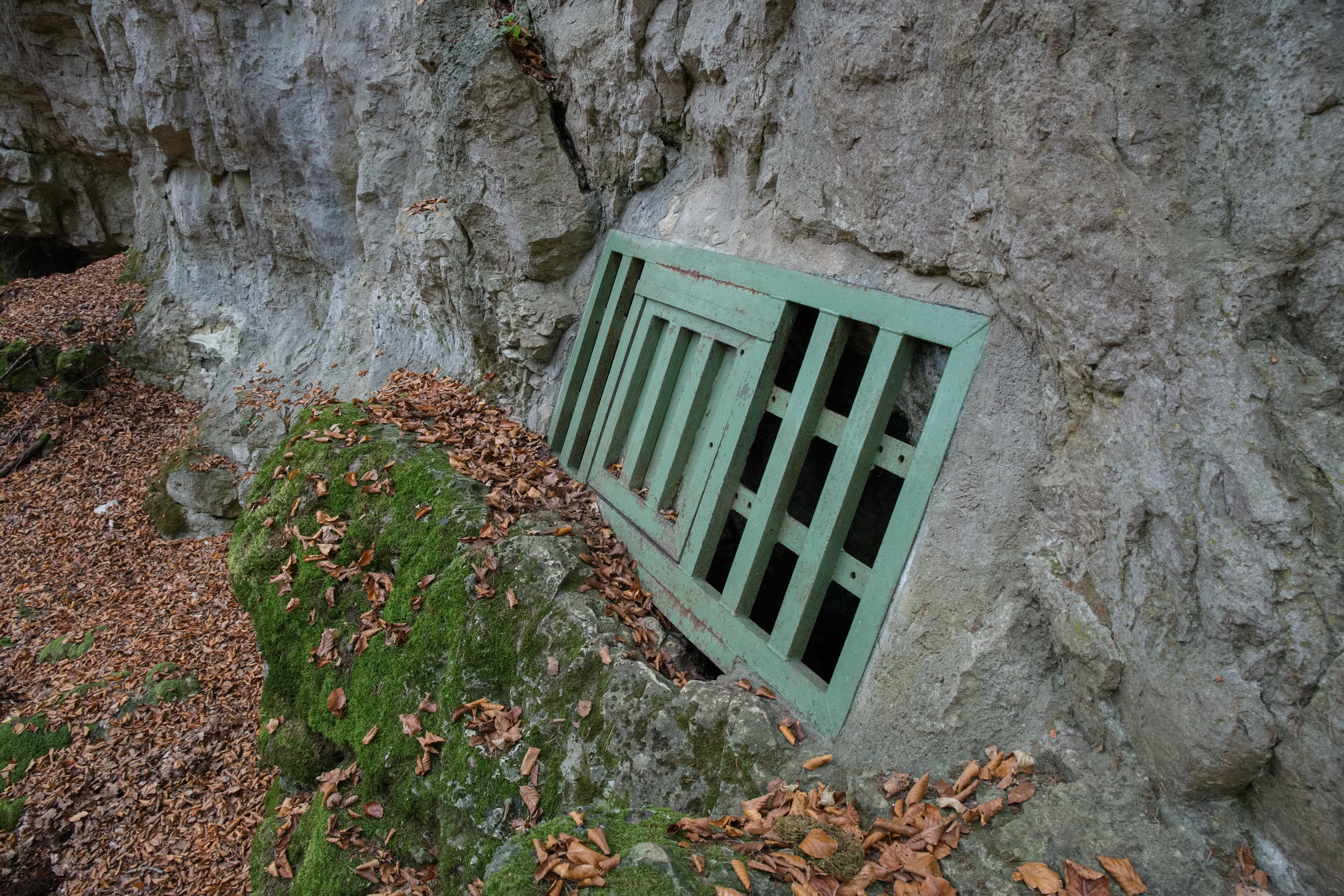
Lupberghöhle
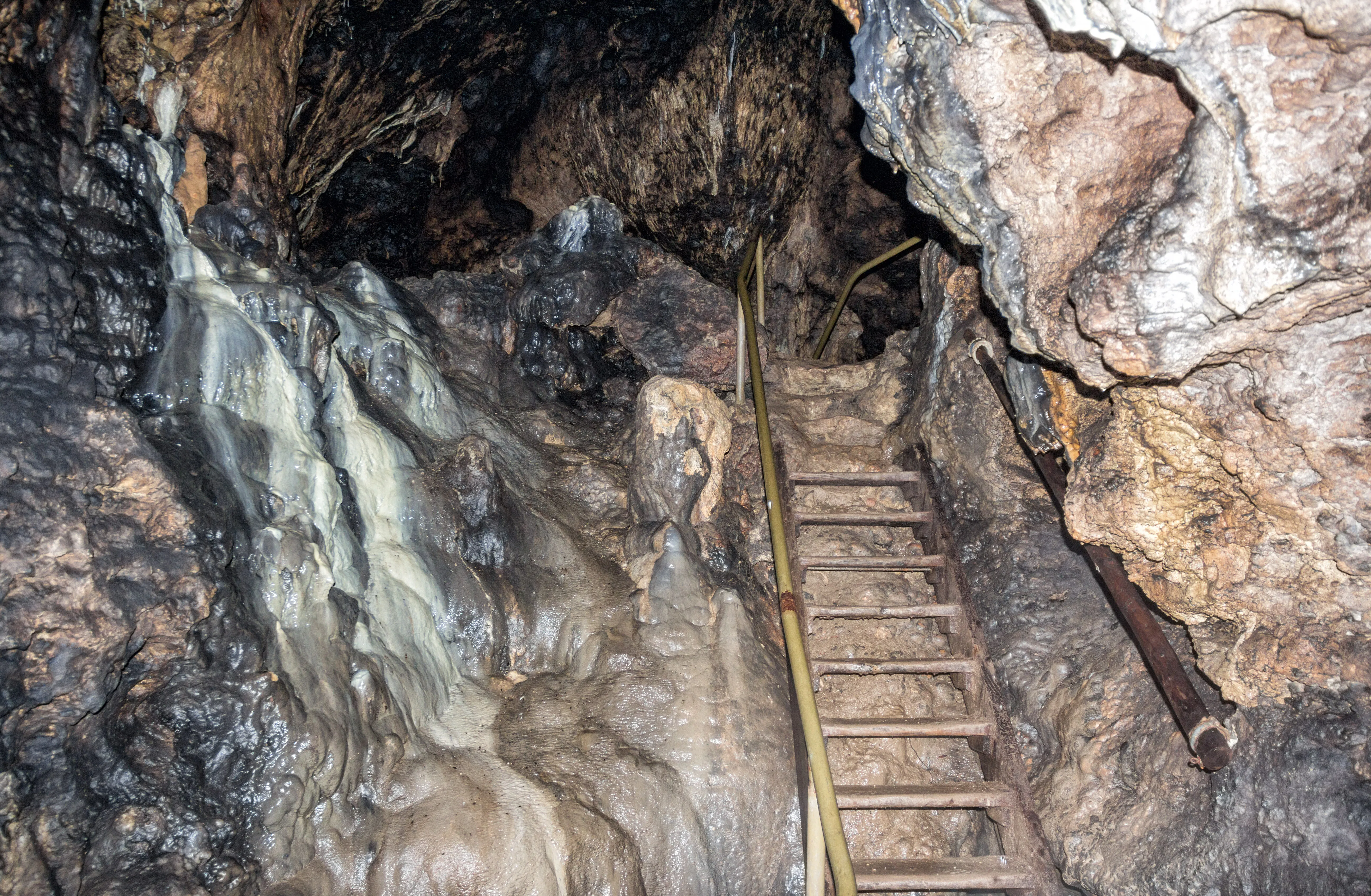
The Mittlere Lupberghöhle, also called "Lohberghöhle" or "Pumperloch", is a shaft cave about ten meters deep that ends in a hall about 20.0 × 35.0 meters in size.
EspeleoWorld
Lupberghöhle
The Mittlere Lupberghöhle, also called "Lohberghöhle" or "Pumperloch", is a shaft cave about ten meters deep that ends in a hall about 20.0 × 35.0 meters in size.
Neukirchen b.Sulzbach-Rosenberg
Fiche actualisée
https://espeleoworld.com/fr/c/lupberghoehle-neukirchen-b-sulzbach-rosenberg
Les informations peuvent changer. Vérifiez toujours les coordonnées, l'accès, la météo et l'état de la cavité avant de partir.
The Mittlere Lupberghöhle, also called "Lohberghöhle" or "Pumperloch", is a shaft cave about ten meters deep that ends in a hall about 20.0 × 35.0 meters in size.
Photos
Sven-121 · CC0 1.0, https://creativecommons.org/publicdomain/zero/1.0/ · Wikimedia Commons · https://commons.wikimedia.org/wiki/File:Mittlere_Lupbergh%C3%B6hle_(A_169)_02.jpg
Description
Morphologie
The Pumperloch is a shaft cave about ten meters deep with a diameter of three to five meters, which widens bottle-like toward the bottom and ends in a hall about 20.0 × 35.0 meters in size.
Autres détails
The cave is not accessible to the public. Looting excavations in the 1960s and 1970s prompted the cave to be made inaccessible.
Today the cave is protected as ground monument number D-3-6435-0105: "Lupberghöhle" (A 169) with finds from the Early and Middle Bronze Age, the Urnfield period and the Hallstatt period as well as human skeletal remains. It is designated as a natural monument.
Histoire
The cave was discovered in 1893, and the survey took place in 1956. The first finds, including a Hallstatt-period sherd, go back to F. Knarr (1893), A. Ehrensberger (1890) and Josef Richard Erl (1906). The cave is distinguished by the good preservation of the finds scattered over the entire surface. Besides human and animal bones, sherds and bronzes were found.
According to Armin Stroh, the finds from the horizontal hall are exclusively from the Urnfield period. According to Michael Moser, however, on the upper part of the debris cone lay a bowl of the late La Tène period (1st century BC), which was thrown down together with body parts through an upper shaft entrance. From the private collection of H. Lindner there is also a perforated Urnfield-period skull amulet with 64 holes, whose bronze patina identifies the piece as a pendant. The amulet is not a trepanation but a post-mortem work.
Commentaires des utilisateurs (0)
Aucun commentaire pour le moment.
Soyez le premier à partager votre expérience !
Explorations enregistrées (0)
Aucune exploration enregistrée pour le moment.
Enregistrez votre visite dans cette cavité !
Grottes à proximité

Contient des informations de © OpenStreetMap contributors, www.openstreetmap.org, mises à disposition sous la licence Open Database License (ODbL 1.0, https://opendatacommons.org/licenses/odbl/1-0/), avec modifications. · https://www.openstreetmap.org/node/7997449181 · données de 2026 · Source : Wikidata – cave items (Germany) (www.wikidata.org), avec modifications. CC0 1.0, https://creativecommons.org/publicdomain/zero/1.0/ Wikidata (CC0 1.0) · noms · obtenu le 2026-11-13 · données de 2026 · Source : German Wikipedia – article leads (cave descriptions) (de.wikipedia.org), avec modifications. CC BY-SA 4.0, https://creativecommons.org/licenses/by-sa/4.0/ Wikipedia contributors (de.wikipedia.org), CC BY-SA 4.0 · Texte de Wikipedia contributors (Mittlere Lupberghöhle) · adapté par Espeleoworld (normalisé, traduit) ; l'adaptation est sous licence CC BY-SA 4.0, https://creativecommons.org/licenses/by-sa/4.0/ · description · obtenu le 2026-11-13 · https://de.wikipedia.org/wiki/Mittlere_Lupbergh%C3%B6hle · données de 2026 · Les données dérivées sont disponibles sur demande sous l'ODbL : [email protected]