
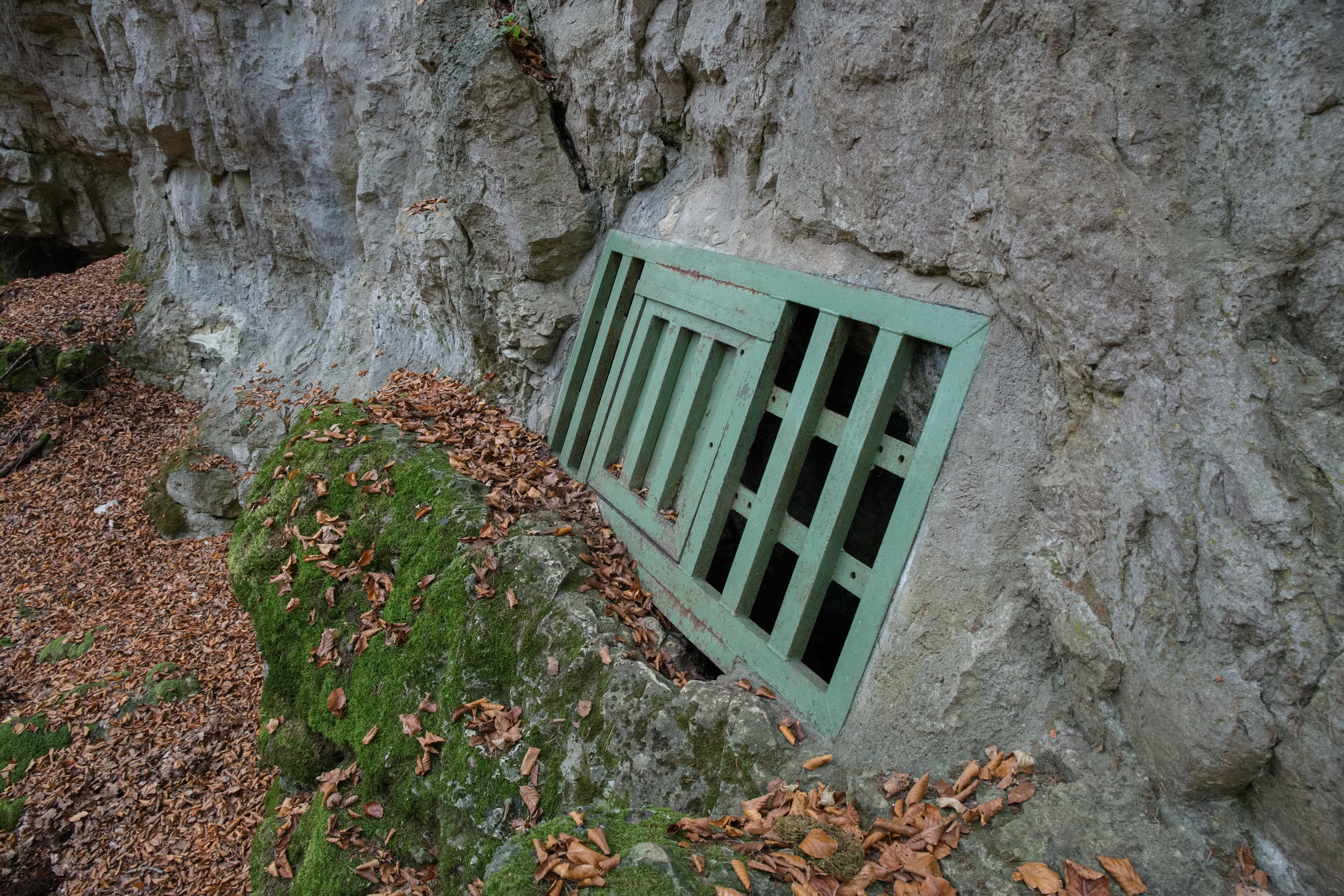
Lupberghöhle
The Mittlere Lupberghöhle, also called "Lohberghöhle" or "Pumperloch", is a shaft cave about ten meters deep that ends in a hall about 20.0 × 35.0 meters in size.
EspeleoWorld
Lupberghöhle
The Mittlere Lupberghöhle, also called "Lohberghöhle" or "Pumperloch", is a shaft cave about ten meters deep that ends in a hall about 20.0 × 35.0 meters in size.
Neukirchen b.Sulzbach-Rosenberg
Ficha actualizada
https://espeleoworld.com/es/c/lupberghoehle-neukirchen-b-sulzbach-rosenberg
La información puede cambiar. Comprueba siempre las coordenadas, el acceso, la meteorología y las condiciones de la cavidad antes de salir.
The Mittlere Lupberghöhle, also called "Lohberghöhle" or "Pumperloch", is a shaft cave about ten meters deep that ends in a hall about 20.0 × 35.0 meters in size.
Fotos
Sven-121 · CC0 1.0, https://creativecommons.org/publicdomain/zero/1.0/ · Wikimedia Commons · https://commons.wikimedia.org/wiki/File:Mittlere_Lupbergh%C3%B6hle_(A_169)_02.jpg
Descripción
Morfología
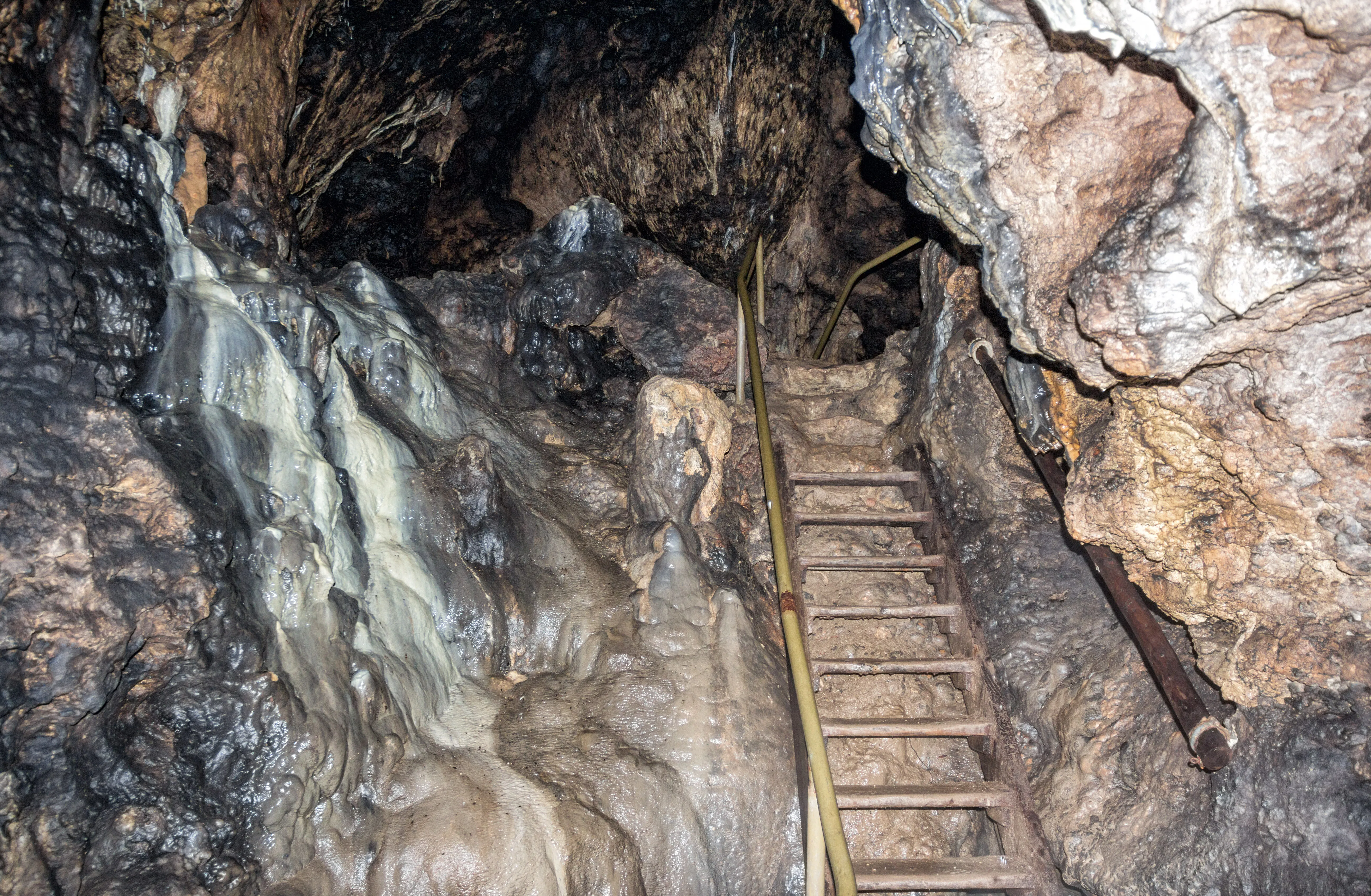
The Pumperloch is a shaft cave about ten meters deep with a diameter of three to five meters, which widens bottle-like toward the bottom and ends in a hall about 20.0 × 35.0 meters in size.
Otros detalles
The cave is not accessible to the public. Looting excavations in the 1960s and 1970s prompted the cave to be made inaccessible.
Today the cave is protected as ground monument number D-3-6435-0105: "Lupberghöhle" (A 169) with finds from the Early and Middle Bronze Age, the Urnfield period and the Hallstatt period as well as human skeletal remains. It is designated as a natural monument.
Historia
The cave was discovered in 1893, and the survey took place in 1956. The first finds, including a Hallstatt-period sherd, go back to F. Knarr (1893), A. Ehrensberger (1890) and Josef Richard Erl (1906). The cave is distinguished by the good preservation of the finds scattered over the entire surface. Besides human and animal bones, sherds and bronzes were found.
According to Armin Stroh, the finds from the horizontal hall are exclusively from the Urnfield period. According to Michael Moser, however, on the upper part of the debris cone lay a bowl of the late La Tène period (1st century BC), which was thrown down together with body parts through an upper shaft entrance. From the private collection of H. Lindner there is also a perforated Urnfield-period skull amulet with 64 holes, whose bronze patina identifies the piece as a pendant. The amulet is not a trepanation but a post-mortem work.
Comentarios de usuarios (0)
Aún no hay comentarios.
¡Sé el primero en compartir tu experiencia!
Exploraciones registradas (0)
Aún no hay exploraciones registradas.
¡Registra tu visita a esta cavidad!
Cuevas cercanas

Contiene información de © OpenStreetMap contributors, www.openstreetmap.org, disponible bajo la Open Database License (ODbL 1.0, https://opendatacommons.org/licenses/odbl/1-0/), con modificaciones. · https://www.openstreetmap.org/node/7997449181 · datos a 2026 · Fuente: Wikidata – cave items (Germany) (www.wikidata.org), con modificaciones. CC0 1.0, https://creativecommons.org/publicdomain/zero/1.0/ Wikidata (CC0 1.0) · nombres · obtenido el 2026-11-13 · datos a 2026 · Fuente: German Wikipedia – article leads (cave descriptions) (de.wikipedia.org), con modificaciones. CC BY-SA 4.0, https://creativecommons.org/licenses/by-sa/4.0/ Wikipedia contributors (de.wikipedia.org), CC BY-SA 4.0 · Texto de Wikipedia contributors (Mittlere Lupberghöhle) · adaptado por Espeleoworld (normalizado, traducido); la adaptación tiene licencia CC BY-SA 4.0, https://creativecommons.org/licenses/by-sa/4.0/ · descripción · obtenido el 2026-11-13 · https://de.wikipedia.org/wiki/Mittlere_Lupbergh%C3%B6hle · datos a 2026 · Los datos derivados están disponibles bajo petición con la ODbL: [email protected]