
les Flandes dels Casots
Gran esquerda als Casots (Subirats).
EspeleoWorld
les Flandes dels Casots
Gran esquerda als Casots (Subirats).
Subirats · Alt Penedès
Length: 58 m · Depth: 10 m
Updated record
https://espeleoworld.com/en/c/les-flandes-dels-casots
Information can change. Always verify coordinates, access, weather, and cave conditions before setting out.
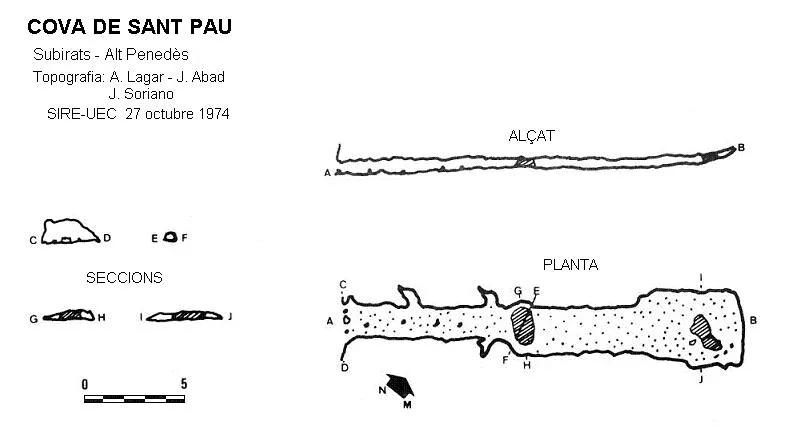
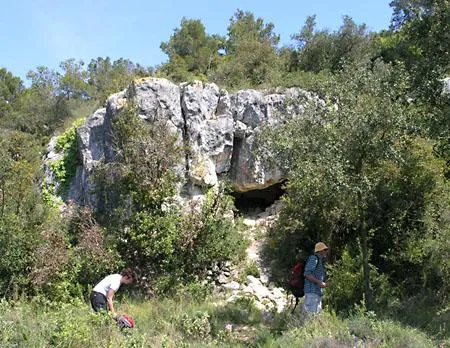
A large fissure at Casots (Subirats), accessible from both ends, with a main passage of 58.5 metres and a height difference of 10 metres.
Topographic
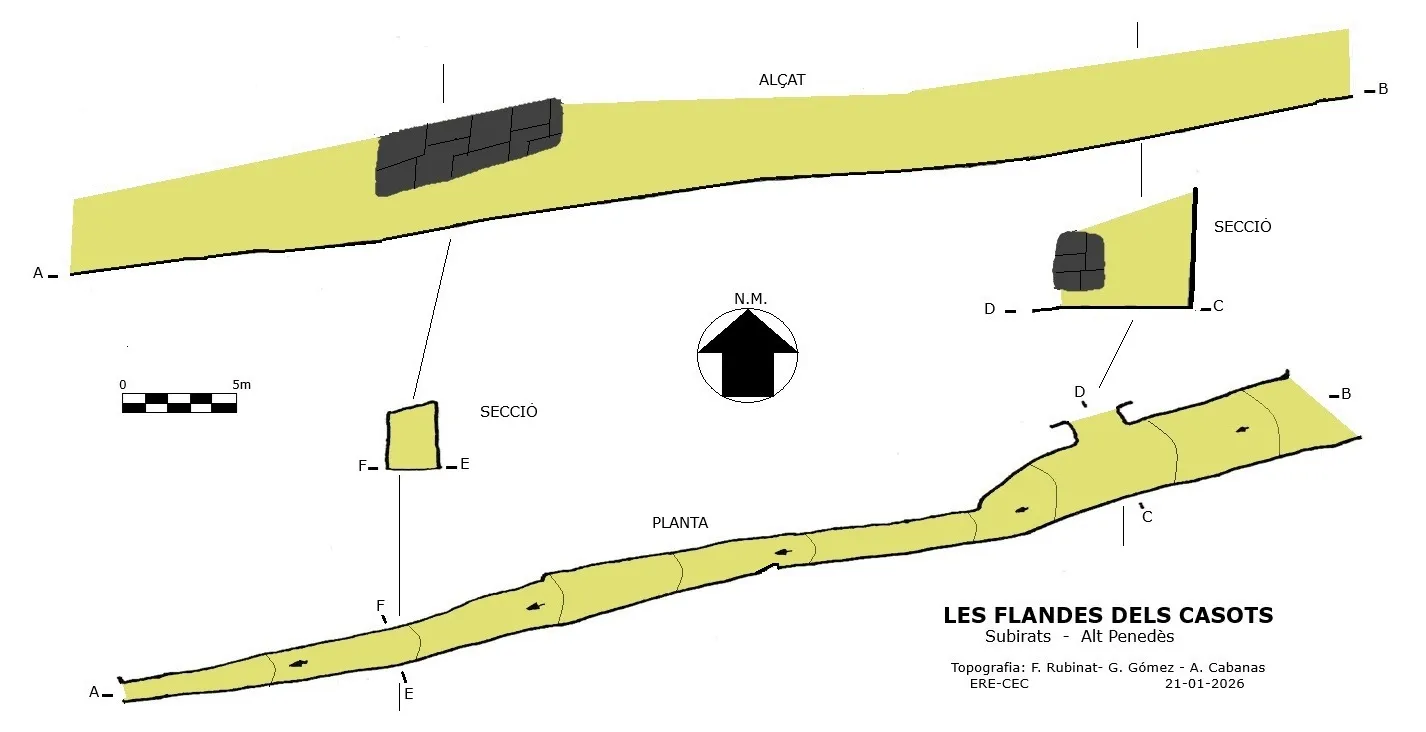
Espeleoindex · CC BY-NC 4.0, https://creativecommons.org/licenses/by-nc/4.0/ · Image © its author.
Photos
Espeleoindex · CC BY-NC 4.0, https://creativecommons.org/licenses/by-nc/4.0/ · Image © its author.
Description
Morphology
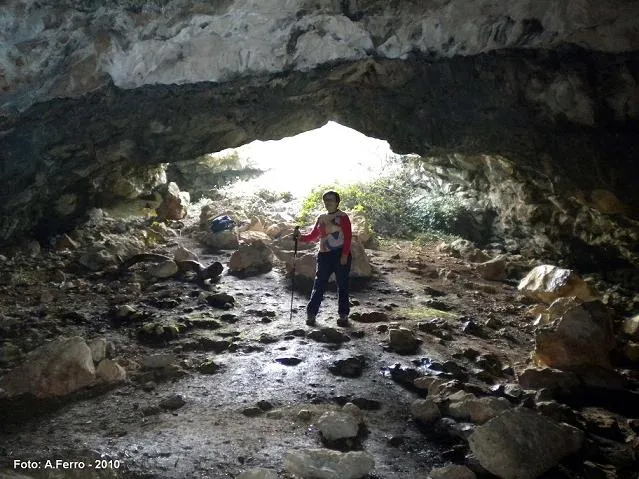
It is a fissure that can be entered from both ends and in which the main part consists of a passage 58.5 metres long, with a height difference between the two ends of 10 metres with no step, a third of the fissure is covered forming a tunnel, the rest has no roof.
Progression
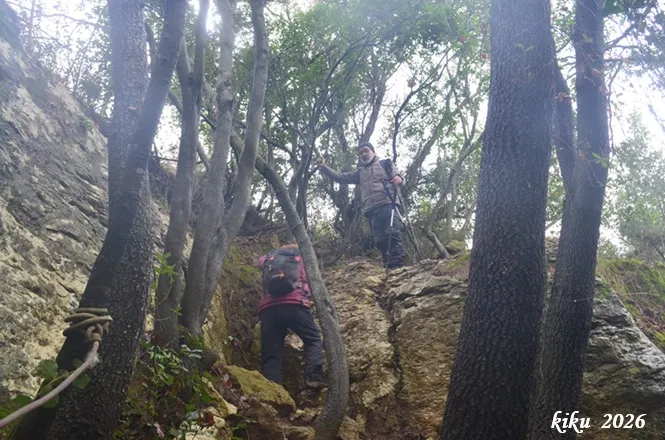
A path that descends a step and is equipped with ropes, since when the ground is wet it is quite slippery; once down we will follow the path to the right that will take us into the interior of the fissure.
Other details
The place name Flandes, widely used in Anoia and part of the Penedès, refers to an alternation of very plastic Clay and very calcareous limestones that have a much more rigid consistency and that does not allow it to adapt to the changes of slope produced by the incipient Miocene folding, of an age of 10-12 million years. Over time (geological, of course) in these strata there occur, first of all, some fissures. The fissures evolve towards open fractures and the creation of large blocks. These blocks, favoured by rainwater and also by the effects of erosion, finally slide over the lower plastic strata (according to Josep Mª Nogué, ADENC, Sabadell).
History
Although they have long been known in the area and by hikers, they have never been catalogued speleologically.
User Comments (0)
No comments yet.
Be the first to share your experience!
Registered Explorations (0)
No explorations registered yet.
Register your visit to this cave!
Bibliography
Totes les dades, coordenades, topografia i fotografies han estat facilitades per Francesc Rubinat (ERE-CEC).
Nearby caves


Source: Espeleoindex (espeleoindex.com), modified. CC BY-NC 4.0, https://creativecommons.org/licenses/by-nc/4.0/