
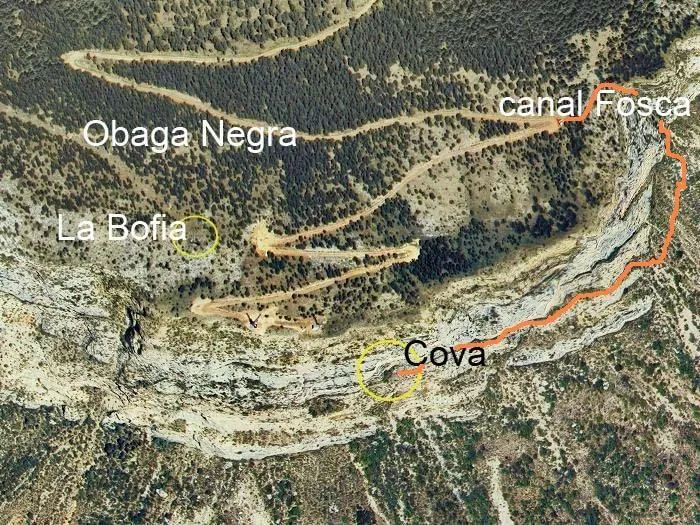
Forat Negre de la Roca de Set Comelles
Cova de 100 m. de recorregut, de gran interès arqueològic, a la serra de Sant Joan (Boumort).
EspeleoWorld
Forat Negre de la Roca de Set Comelles
Cova de 100 m. de recorregut, de gran interès arqueològic, a la serra de Sant Joan (Boumort).
Coll de Nargó · Alt Urgell
Length: 100 m · Depth: 29 m
Updated record
https://espeleoworld.com/en/c/forat-negre-de-la-roca-de-set-comelles
Information can change. Always verify coordinates, access, weather, and cave conditions before setting out.
A 100 m long cave in the serra de Sant Joan (Boumort), of great archaeological interest. In 2005, eight Bronze Age skeletons were studied there, among them a woman with bracelets and necklaces.
Topographic
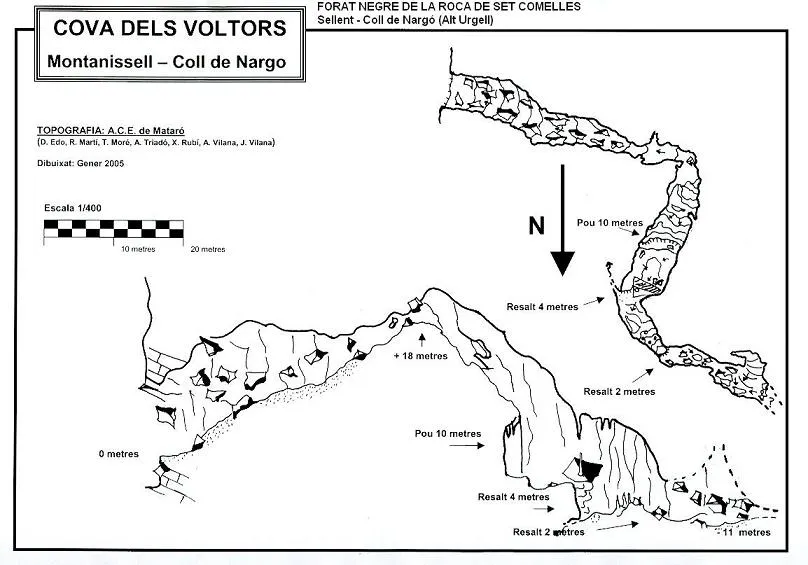

Espeleoindex · CC BY-NC 4.0, https://creativecommons.org/licenses/by-nc/4.0/ · Image © its author.
Photos

Espeleoindex · CC BY-NC 4.0, https://creativecommons.org/licenses/by-nc/4.0/ · Image © its author.
Description
Morphology
Through a wide portico one enters an ascending gallery about 40 metres long that overcomes a height difference of 18 metres. From here a descending passage begins, the first metres along a steep 45º ramp that ends in a 10 metre vertical drop. At its base, and after overcoming a 4 metre step, one reaches the terminal gallery, about 20 metres long, which becomes impassable among the blocks and the narrowness of the possible continuation. The total height difference is 29 metres (-11/+18).
History
Despite its evident visibility, the cave had never been a target for speleologists, until, around 2004, firefighters from Isona, following the indications of a resident of Sellent (Sallent according to official toponymy) carried out its exploration and discovered the important funerary remains located at its bottom, bringing this to the attention of specialists at the Universitat de Lleida. In January 2005 a team from the Agrupació Científico Excursionista de Mataró carried out the topographic survey of the cavity.
After the preliminary actions, in June 2005 the archaeological campaign called Senyora de les Muntanyes began, carried out by the UdL and UAB, Museu d'Arqueologia de Catalunya and sponsored by the Direcció de Patrimoni de la Generalitat de Catalunya. There was also the collaboration of the Bombers de la Generalitat and technicians of the Federació Catalana d'Espeleologia, who made the appropriate installations to facilitate the archaeologists' access to the interior of the cavity.
The campaign took care of the “in situ” study and subsequent removal of the eight skeletons dated to the Bronze Age (3700 years) and very especially of one of the two adults, specifically a woman, adorned with different bracelets and necklaces.
At first, its first explorers called it la Cova del Voltor; later, the archaeologists chose to call it la Cova sepulcral de Montanissell. Finally, and at the request of people from Sellent (the former municipality where the cave is located) they investigated the correct name and the designation Forat Negre de la Roca de Set Comelles was adopted (see the website: sellent.cat).
User Comments (0)
No comments yet.
Be the first to share your experience!
Registered Explorations (0)
No explorations registered yet.
Register your visit to this cave!
Bibliography
- Armentano, N.; Gallart, J. et al. (2007).- “La cova sepulcral de Montanissell, Sallent-Coll de Nargó, alt Urgell: pràctiques funeràries singulars durant l'edat del bronze al Prepirineu” Tribuna d'Arqueologia (2006): 141-167. Generalitat de Catalunya. Departament de Cultura. Barcelona
- Aymamí, G. (2006).- “La cova sepulcral del Voltor. Montanissell (Sallent – Coll de Nargó, Alt Urgell)”. EspeleoCat (4): 34-35. Federació Catalana d'Espeleologia. Barcelona.
- Valles, J. de (2009).- Catàleg Espeleològic de Catalunya. Vol. 2, 384 pp. Espeleo Club de Gràcia i Federació Catalana d'Espeleologia. Barcelona.
· Topografia i fotos facilitades pel company Josep Maria Cervelló (ERE – CEC) que va col·laborar amb l'equip d'arqueòlegs durant els treballs del 2005.
Nearby caves
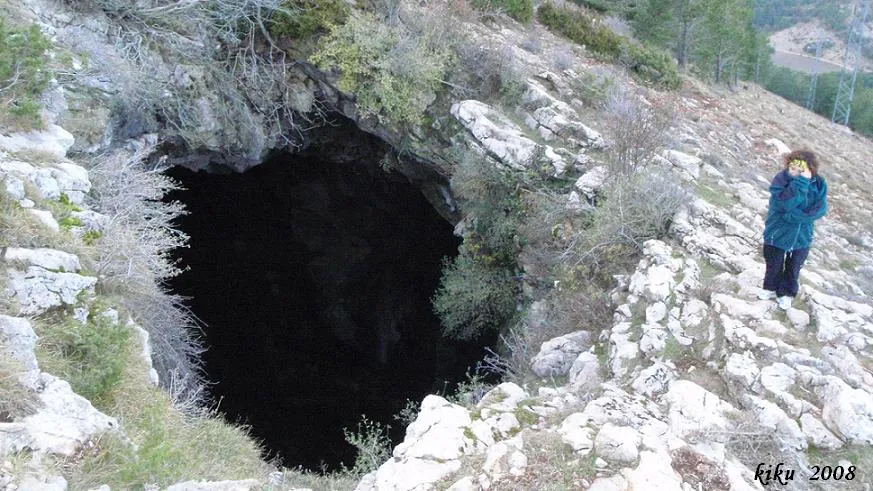
Bòfia dels Prats
0.2 km · NW
Coll de Nargó (Alt Urgell)
4 topo.11 photos
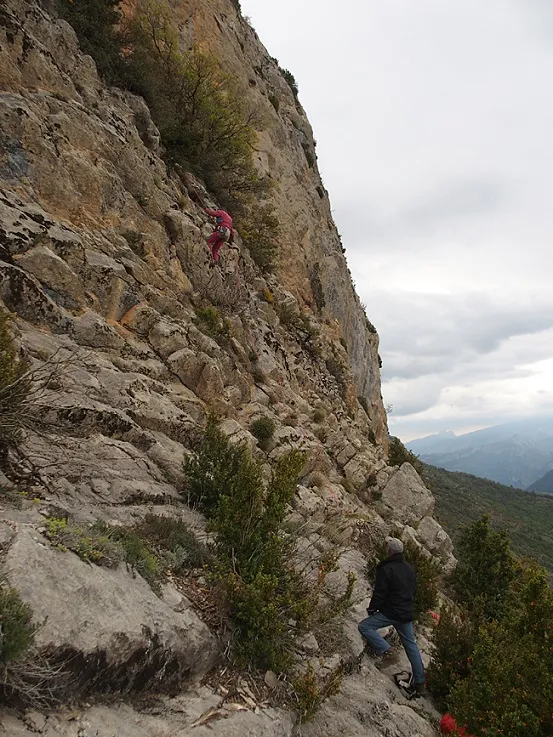
Espluga dels Maquis
1.0 km · NE
Coll de Nargó (Alt Urgell)
1 topo.7 photos
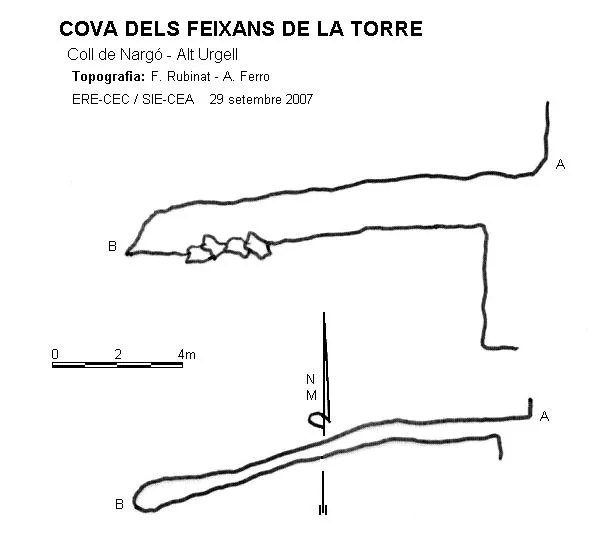
Cova dels Feixans de la Torre
1.0 km · W
Coll de Nargó (Alt Urgell)
1 topo.
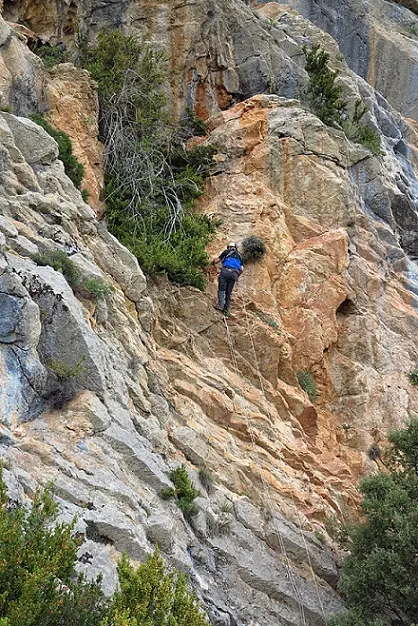
Espluga del Sabater
1.0 km · NE
Coll de Nargó (Alt Urgell)
1 topo.5 photos
Source: Espeleoindex (espeleoindex.com), modified. CC BY-NC 4.0, https://creativecommons.org/licenses/by-nc/4.0/