
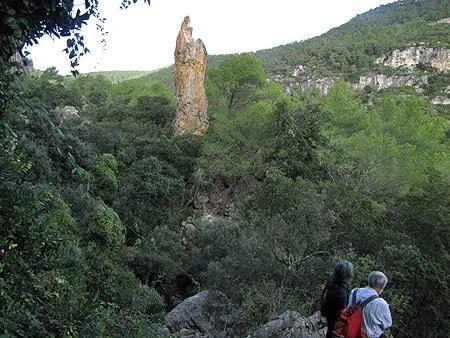
Forat de la Boira
Small interstitial cavity in the Fondal de Valldellós (Mediona), in a chaos of limestone blocks of archaeological interest. The Forat o Cova de la Boira has 43 surveyed metres and three entrances.
EspeleoWorld
Forat de la Boira
Small interstitial cavity in the Fondal de Valldellós (Mediona), in a chaos of limestone blocks of archaeological interest. The Forat o Cova de la Boira has 43 surveyed metres and three entrances.
Mediona · Alt Penedès
Length: 43 m
Updated record
https://espeleoworld.com/en/c/forat-de-la-boira
Information can change. Always verify coordinates, access, weather, and cave conditions before setting out.
Small interstitial cavity in the Fondal de Valldellós (Mediona), in a chaos of limestone blocks of archaeological interest. The Forat o Cova de la Boira has 43 surveyed metres and three entrances.
Topographic
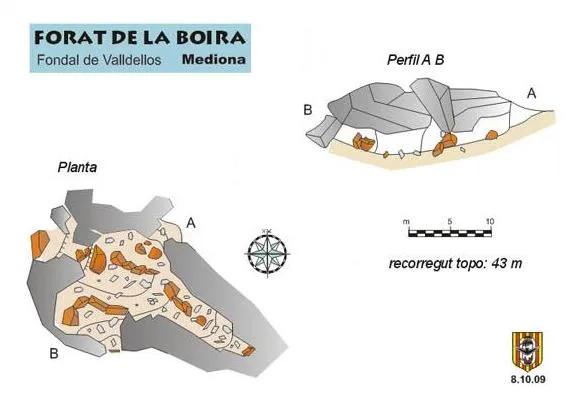
Espeleoindex · CC BY-NC 4.0, https://creativecommons.org/licenses/by-nc/4.0/ · Image © its author.
Photos
Espeleoindex · CC BY-NC 4.0, https://creativecommons.org/licenses/by-nc/4.0/ · Image © its author.
Description
Morphology
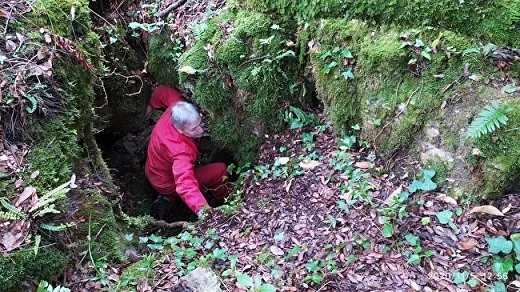
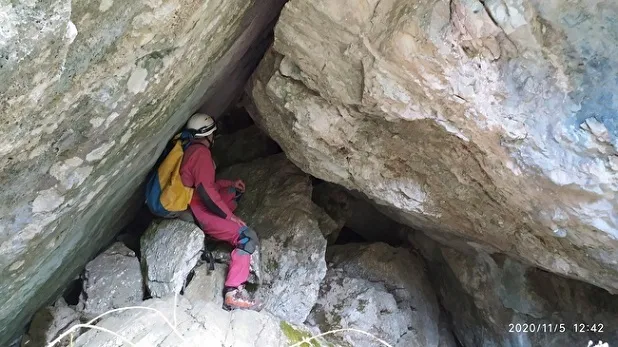
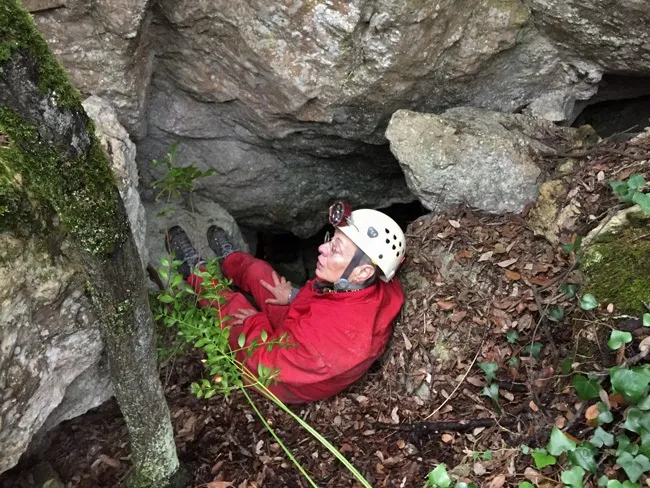
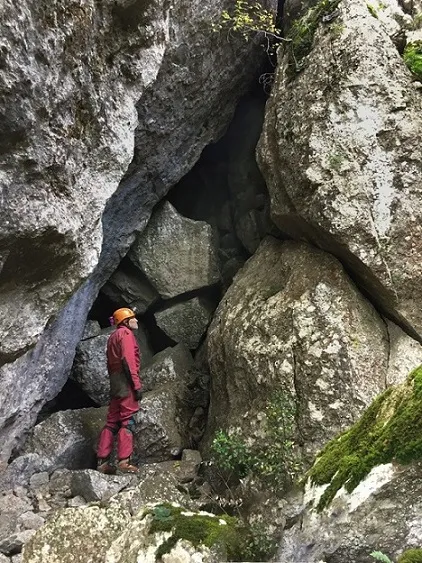
The so-called Forat o Cova de la Boira (or de la Cuina) is one of those with a more “caveman-like” appearance. With a surveyed route of 43 metres, it has three entrances, one of them a ramp, the second in the form of a 4-metre shaft-step and the last like a narrow squeezebox. The whole ensemble, walls, ceiling and floor, is an accumulation of piled-up blocks that deserve the adjective chaotic.
Other details
Although conditions do not appear favourable for permanent troglodytic habitation, the fact is that numerous pieces from prehistoric times (Neolithic and Bronze) and from the early Christian era have been collected inside the small “almost” caves that open beneath the blocks.
History
The fondal de Valldellós is already mentioned in 1928 in an itinerary of the Centre Excursionista Rafel de Casanova (at that time it was called Fondal de Clivelleres).
In 1956, Pere Giró mentions a donation of archaeological material made by Josep Lloret to the Museu de Vilafranca del Penedès.
But it is not until 1975 that, three members of the Agrupació Excursionista Talaia (Vilanova i la Geltrú) (J. Alegret, M. Pàmies and J. Virella), rediscover the site, and from 1978 until 1986 the area was the subject of an important archaeological intervention by the Associació d'Estudis Científics i Culturals de Mediona.
User Comments (0)
No comments yet.
Be the first to share your experience!
Registered Explorations (0)
No explorations registered yet.
Register your visit to this cave!
Bibliography
- Coll, J.M.; Molina, J.A.; Roig, J. (1995).- “El fondal de Valldellós (Mediona, Alt Penedès): Un nucli eremític-cultual en cova del s. V”. Miscel·lània Penedesenca (20): 169-183. Institut d'Estudis Penedesencs.
- Rafecas, Eduard (1995).- Mediona. Guia d'esports d'aventura. 76 pp. Ajuntament de Mediona.
- Fotografies, topografia i altres dades extretes del blog: espeleobloc.blogspot (Apunt del 21-10-2009)
- Fotografies 2020 extretes del web: espeleodijous.cat Apunt del 5-11-2020
Nearby caves


Source: Espeleoindex (espeleoindex.com), modified. CC BY-NC 4.0, https://creativecommons.org/licenses/by-nc/4.0/