

Forat d'Estela
Legendary 20 m deep pit at the summit of the Roca d'Auró (Castellar del Riu), known since time immemorial and mentioned in hiking and speleological literature.
EspeleoWorld
Forat d'Estela
Legendary 20 m deep pit at the summit of the Roca d'Auró (Castellar del Riu), known since time immemorial and mentioned in hiking and speleological literature.
Castellar del Riu · Berguedà
Length: 31 m · Depth: 20 m
Updated record
https://espeleoworld.com/en/c/forat-d-estela
Information can change. Always verify coordinates, access, weather, and cave conditions before setting out.
Legendary 20 m deep pit at the summit of the Roca d'Auró (Castellar del Riu), known since time immemorial and mentioned in hiking and speleological literature.
Topographic


Espeleoindex · CC BY-NC 4.0, https://creativecommons.org/licenses/by-nc/4.0/ · Image © its author.
Photos

Espeleoindex · CC BY-NC 4.0, https://creativecommons.org/licenses/by-nc/4.0/ · Image © its author.
Description
Morphology
The mouth is 1.70 metres wide by 7 metres high. From here one enters through a very steep ramp (43º) with dangerously loose stones, which leads to the head of a 7.80 metre shaft. At the base of this shaft the cavity ends, at -20 metres depth.
Hydrology
It is detected that through a small crack air current blows.
Progression
The mouth 1.70 metres wide by 7 metres high gives access to a very steep ramp (43º) with dangerously loose stones, which leads to the head of a 7.80 metre shaft. At the base of this shaft the cavity ends, at -20 metres depth.
Other details
The first specific speleological reference is due to the visit of members of the SIE-CEA who surveyed it in October 1973. They assign it a depth of 29 metres by placing the 0 level at the upper lip of the cliff.
It is surveyed again by members of the GE Badalona who visit it in November 2007, naming it Forat R.12 de Rasets, a practice that we believe is erroneous to apply to known cavities, previously catalogued and with their own name, something that has already been done in other cases and that complicates cavity inventories.
History
Known since time immemorial and full of legends. The oldest reference we know is that of an anonymous Berguedà hiker who together with another companion from La Prosperitat Bergistana went in September 1885 to visit the hole. He makes a detailed description of the itinerary and they reach the end of the entrance ramp of the cavity, desisting from descending the shaft before them. The whole account is of a very florid literature typical of the era; among many other things he explains the legend of the existence inside of a silver image of Saint John and the account of a shepherd they meet during the excursion who informs them, among other things, of a whole series of caves from around the world is not to be missed.
Everything suggests that Font i Sagué was unaware of this earlier publication and in his Catàleg (1897) he cites the 'Cugulló de Estela' at Espinalvet, as a cave located at the Rasos de Peguera, of which many fantastic deeds are told, and which is deep and of reduced width. He takes this data from the Interrogatori that the Centre Excursionista de Catalunya had made in 1896 at the proposal of its delegate in Granollers, Dionís Puig.
Over the years it appears mentioned in different hiking literature, especially in the guides to the Berguedà. A. Jolis and Mª A. Simó in their work Alt Berguedà i Cardener (CEC,1950) say: 'It is a pit of about thirty metres, in a reduced and cliffy place'.
User Comments (0)
No comments yet.
Be the first to share your experience!
Registered Explorations (0)
No explorations registered yet.
Register your visit to this cave!
Bibliography
AA. (1889).-Lo Forat d'Estela. Entreteniment historich-poetich-fantastich escrit amb ploma robellada d'en nou en nou y ajustat a la tradició del pahís, per Un excursionista. 48 pp. Imprenta y llibreria de Ramon Diaz. Berga.
Armendariz, Joan.(1979).-'Cim Estel.la 64'. Butll. Divul. Espeleol. (0):122-133. ERE.AE Catalunya. Barcelona
Borràs, J; Miñarro, JM.; Talavera, F.(1980).-'l'urgell, el solsonès, la segarra i el berguedà'. Catàleg Espeleològic de Catalunya (vol.5):52-53. Ed. Políglota. Barcelona.
Font i Sagué, N.(1897).-'Catàleg Espeleològich de Catalunya (Continuació)'. Butlletí Centre Exc. Catalunya (26):107-112. CEC. Barcelona.
Iñigo, G. (1976).- ·'Avenc Fred y Forat d'Estela (Rasos de Peguera)'. EspeleoSie (18): 21-27. SIE-CE Àliga. Barcelona
Valles, Jordi de (2009).-'Berguedà, Cerdanya, Garrotxa, Ripollès'. Catàleg Espeleològic de Catalunya (vol.3):56-57. ECG-FCE.
Fotografies (1963) facilitades per Ferran Talavera.
Coordenades, situació i fotografies facilitades per Nil Hosta Ferrer i Tanit Sanmartin. Juliol de 2025.
Nearby caves
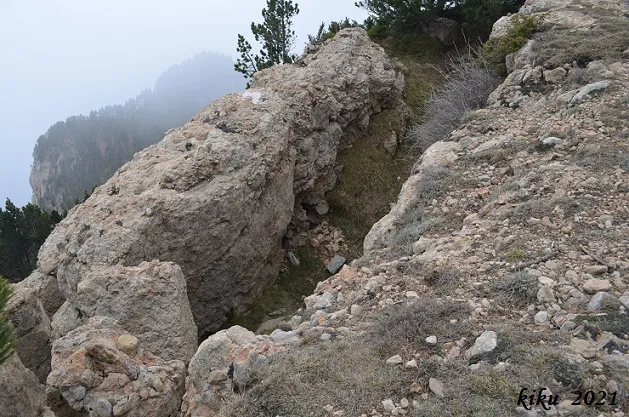
Esquerda R.9 de Rasets
0.2 km · N
Castellar del Riu (Berguedà)
2 topo.5 photos
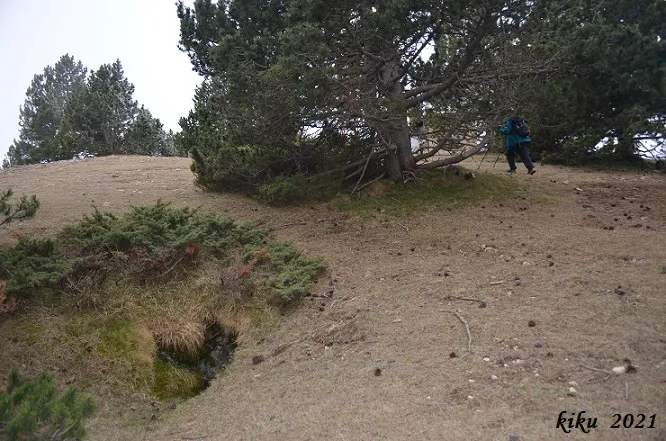
Avenc de la Torrota
0.2 km · N
Castellar del Riu (Berguedà)
3 topo.4 photos
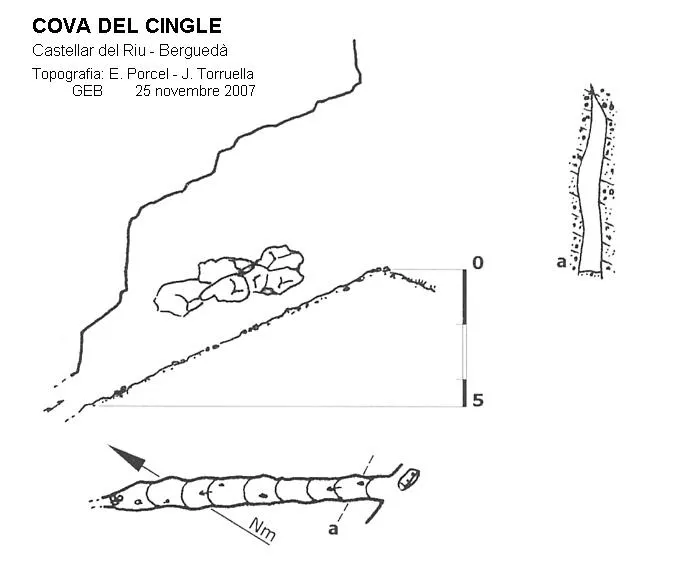
Cova del Cingle
0.2 km · NW
Castellar del Riu (Berguedà)
1 topo.
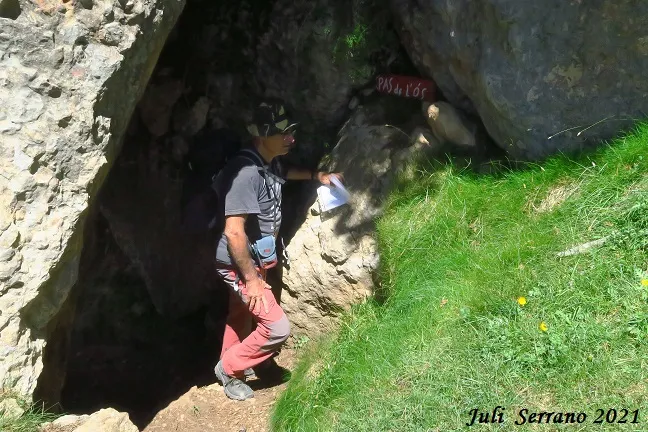
Avenc de la Nevera de Puigventós
0.3 km · NW
Castellar del Riu (Berguedà)
2 topo.8 photos
Source: Espeleoindex (espeleoindex.com), modified. CC BY-NC 4.0, https://creativecommons.org/licenses/by-nc/4.0/