
Coves Nº2-3 de Can Mas
Coves amb espectaculars formes d'erosió a Torrelles de Llobregat.
EspeleoWorld
Coves Nº2-3 de Can Mas
Coves amb espectaculars formes d'erosió a Torrelles de Llobregat.
Torrelles de Llobregat · Baix Llobregat
Length: 35 m · Depth: 6 m
Updated record
https://espeleoworld.com/en/c/coves-n-2-3-de-can-mas
Information can change. Always verify coordinates, access, weather, and cave conditions before setting out.
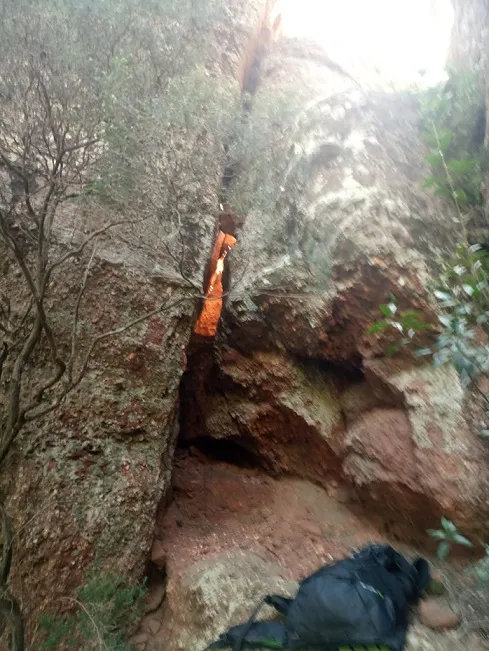
Caves with spectacular erosion forms in Torrelles de Llobregat, excavated in the red sandstones of the Buntsandstein (Triassic).
Topographic

Espeleoindex · CC BY-NC 4.0, https://creativecommons.org/licenses/by-nc/4.0/ · Image © its author.
Photos

Espeleoindex · CC BY-NC 4.0, https://creativecommons.org/licenses/by-nc/4.0/ · Image © its author.
Description
Morphology
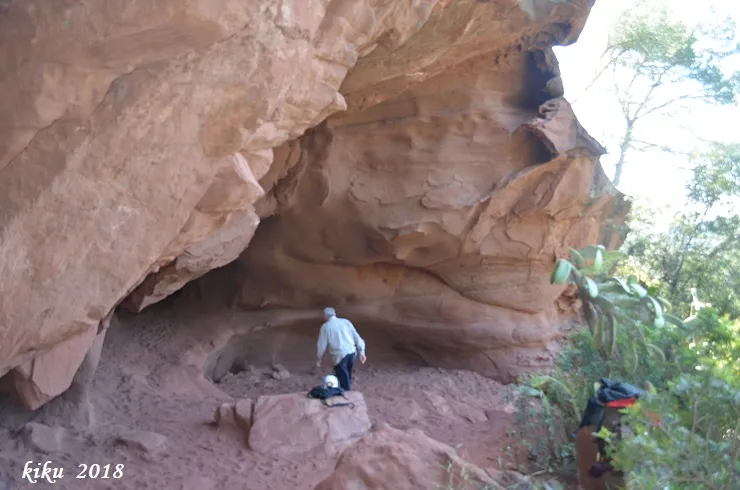
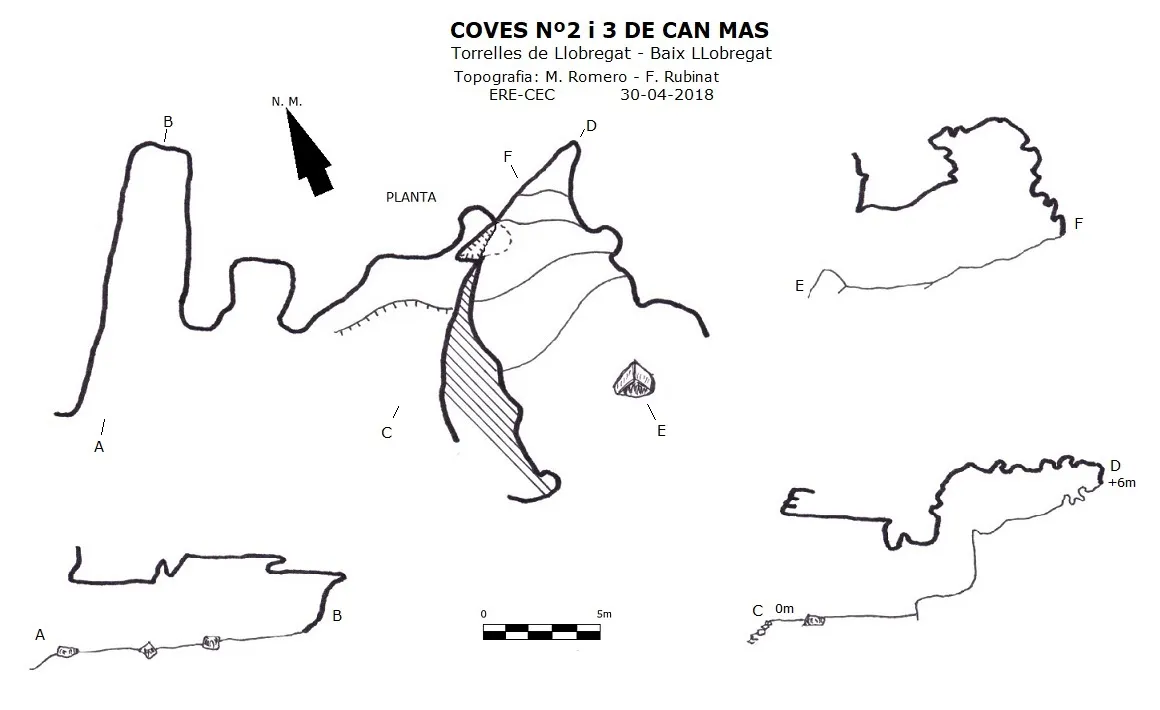
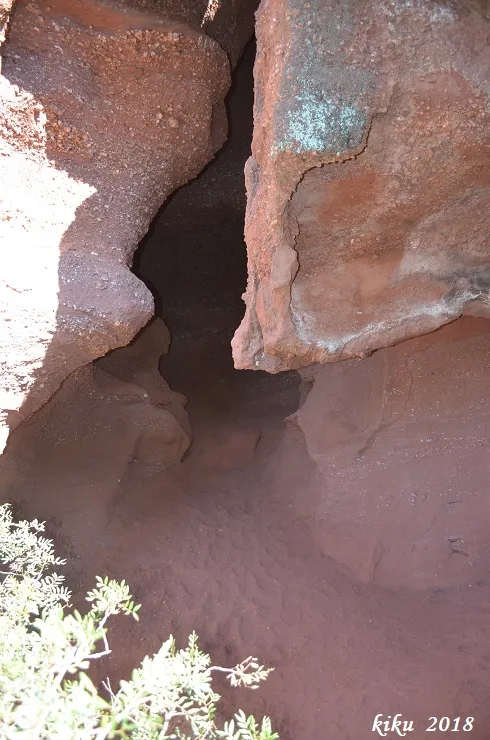
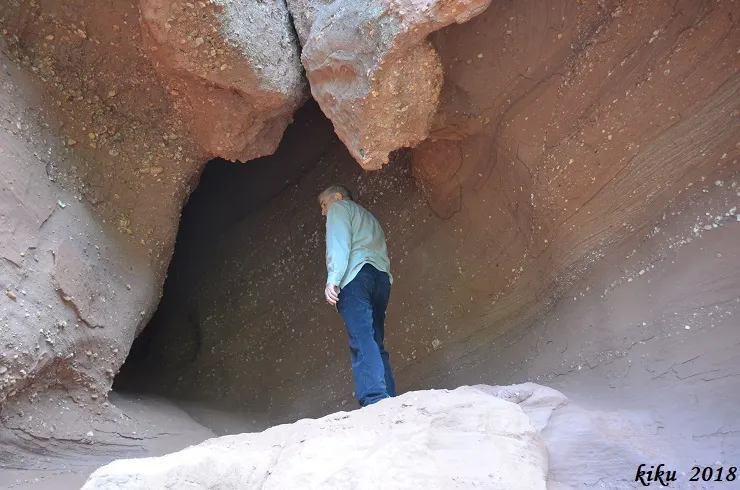
A wide rock shelter gives way to a passage in its West part 11 metres long with an average height of 2.50 metres. In an Easterly direction, we find another parallel passage with a low roof and 6 metres in length; following the rock shelter in an Easterly direction, we find a wide passage that ends in an ascending shaft of 2.25 metres that connects with the cave located furthest East of this one. Following the cliff outside for about fifteen metres, we find the wide mouth that gives access to a gallery of about 14 metres in length with spectacular erosion forms; at the back on the left we find the shaft that connects with the neighbouring cave.
Other details
Its genesis is basically the product of wind erosion on the red sandstones of the Buntsandstein (Triassic), entirely similar to that of the neighbouring balmes de Bruguers (Gavà). It presents the peculiar alveolar forms of this type of “taffoni”.
History
N. Font i Sagué, on page 148 of his Catàlech (1897) quotes verbatim:
Torrelles de Llobregat. 144) Coves de Can Mas.- Són varies y estan situades en la montanya qu'ils dóna nom.
Later this citation is picked up by Faura i Sans (1909) and even later by Llopis Lladó in the first editions of the Ordal maps of Editorial Alpina. Despite this, no data are given for these cavities.
It is not until April 2018 that a fellow hiker tells us about some spectacular caves in Torrelles de Llobregat. A simple internet search on different blogs and hiking routes (wikiloc) gives us news and images of some caves excavated in the Triassic sandstones and located above Can Mas. The great majority of these references call them Coves de Can Riera (taking as a reference the house located not far away, but in the municipality of Cervelló). Others also call them Cova Vermella and Cova Bonica.
There is no doubt that these curious cavities, very well known for a long time by hikers, are none other than those cited by Font i Sagué more than 120 years ago.
User Comments (0)
No comments yet.
Be the first to share your experience!
Registered Explorations (0)
No explorations registered yet.
Register your visit to this cave!
Bibliography
- Font i Sagué, N.(1897).-”Catàlech Espeleològich de Catalunya”. Butll. Cent. Exc. Catalunya (27):148. CEC. Barcelona
- Coordenades, situació, dades, topografia i fotografies aportades per Martí Romero i Francesc Rubinat (ERE-CEC).
Nearby caves
Cova Nº1 de Can Mas
0.0 km · S
Torrelles de Llobregat (Baix Llobregat)
1 topo.5 photos
Cova Nº4 de Can Mas
0.0 km · SE
Torrelles de Llobregat (Baix Llobregat)
1 topo.3 photos

Foradada Nº1 de la Serra de Can Valent
0.1 km · E
Torrelles de Llobregat (Baix Llobregat)
1 topo.6 photos
Foradada Nº2 de la Serra de Can Valent
0.2 km · E
Torrelles de Llobregat (Baix Llobregat)
1 topo.4 photos
Source: Espeleoindex (espeleoindex.com), modified. CC BY-NC 4.0, https://creativecommons.org/licenses/by-nc/4.0/