
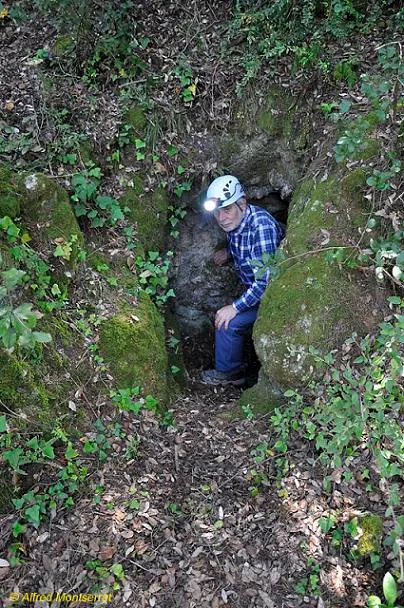
Cova de Solanes
Small cave of archaeological interest in Caldes de Montbui, with a single gallery of about 25 metres and two entrances, excavated between 1966 and the early 80s.
EspeleoWorld
Cova de Solanes
Small cave of archaeological interest in Caldes de Montbui, with a single gallery of about 25 metres and two entrances, excavated between 1966 and the early 80s.
Caldes de Montbui · Vallès Oriental
Length: 30 m · Depth: 4 m
Updated record
https://espeleoworld.com/en/c/cova-de-solanes
Information can change. Always verify coordinates, access, weather, and cave conditions before setting out.
Small cave of archaeological interest in Caldes de Montbui, with a single gallery of about 25 metres and two entrances, excavated between 1966 and the early 80s.
Topographic
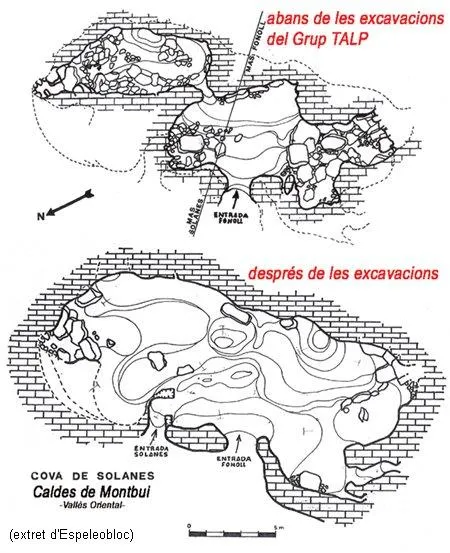

Espeleoindex · CC BY-NC 4.0, https://creativecommons.org/licenses/by-nc/4.0/ · Image © its author.
Photos

Espeleoindex · CC BY-NC 4.0, https://creativecommons.org/licenses/by-nc/4.0/ · Image © its author.
Description
Morphology
The cavity consists basically of a single gallery about 25 metres long and between 5-7 metres wide in the central zone, with small unimportant side branches at different points. It is accessed laterally to the central zone through two entrances: the westernmost one (boca Mas Solanes), where there is an old iron grille today totally useless, and the easternmost one (boca Mas Fonoll), which opens down a ramp to a small drop. The whole cave has a chaotic appearance, mainly due to the intense work of the archaeological excavations.
The cova de Solanes is developed very close to the front of a small overthrust formed by the limestones and dolomites of the lower Muschelkalk over the sandstones and clay of the middle Muschelkalk. This structural location has surely conditioned the genesis of the cavity, as well as others of the hill of the same name.
Other details
Different surveys carried out over the years are attached, where the evolution of the outline of the cavity can be observed. The most modern one (year 2000) was made by members of the SIS – CE Terrassa when the excavations had already finished some years earlier. Until now it had remained unpublished and was provided to us by our friend Xavier Badiella.
History
Despite being known since very ancient times by the people of the area, it does not appear in the old speleological catalogues.
The cave began to be studied in 1915 by the well-known Dr. Pere Bosch Gimpera (1891-1974). Later, in January 1966 the Grup d'Arqueologia TALP of Sant Feliu de Codines, directed by the local scholar Martí Garriga i Argullós, began intense excavations that lasted until the early 80s. As a result of this work many important materials were discovered that today are studied, restored and exhibited at the Museu Municipal Can Xifreda of the town. Also collaborating in the work were the then director of the Museu de Granollers, Josep Estrada i Garriga, with Pere Font, Emili Ramón and the geologist Enric Sunyer.
The work was so intense that it changed the topography of the cavity, both in the surface of the plan and in its drop, since excavation reached a depth of about four metres, coming to triple the surface of the original plan. And it was not continued because the whole became unstable to the point that one day, while they were excavating, a great collapse occurred, fortunately without consequences, but which advised the stoppage and later abandonment of the work.
The boundary that separates two different properties passes just above the cave. When Pere Bosch's work began, it seemed that the cavity had a single entrance, the one on the side of the mas del Fonoll, but later a second access was found on the side of the mas de Solanes. One on each side of the boundary and only about five metres apart. The respective owners always wanted to have the right over the cave, especially on finding the archaeological remains there, for we already know that which they often ask us: Have you found some treasure there? Well yes, there is no greater treasure than having curiosity and wanting to find out about our past. (Data from Lluís Auroux)
Bio
The topographic changes suffered have not affected, at least significantly, the cave fauna, since it is not rare to find there, for example, the beetle Parvospeonomus urgellesi, described by Francesc Español in 1965 from the Avenc de les Aranyes of Hortsavinyà, in the Montnegre. It is a species that also colonises the karstified limestone patches that exist at some intermediate points up to the mountain of the Farell, above Caldes de Montbui. (Data from Lluís Auroux).
User Comments (0)
No comments yet.
Be the first to share your experience!
Registered Explorations (0)
No explorations registered yet.
Register your visit to this cave!
Bibliography
- Bosch Gimpera, Pere (1920).- “La Cova de Solanes”. Memòries de l'Institut d'Estudis Catalans. Pàg. 479. Barcelona.
- Pallarès-Personat, Joan (1980).- “Els fenòmens espeleològics de Caldes de Montbui”. Setmanari MONTBUI (11 d'octubre). Caldes de Montbui.
- Pallarès-Personat, Joan (1985).- “La Cova de Solanes”. Setmanari MONTBUI (12 d'octubre). Caldes de Montbui.
- Altres dades extretes del blog: espeleobloc (apunt del 27-6-2008, redactat per Lluís Auroux)
- Coordenades, fotografies i dades geològiques facilitades per Alfred Montserrat i Martí Romero (ERE – CEC)
Nearby caves
Font de l'Hort
0.5 km · N
Caldes de Montbui (Vallès Oriental)
1 topo.
Cau dels Llimbs
1.0 km · E
Sant Feliu de Codines (Vallès Oriental)
1 topo.6 photos
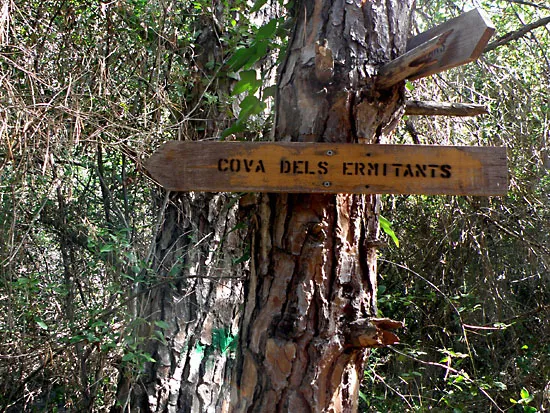
Cova dels Ermitans
2.0 km · S
Caldes de Montbui (Vallès Oriental)
1 topo.8 photos
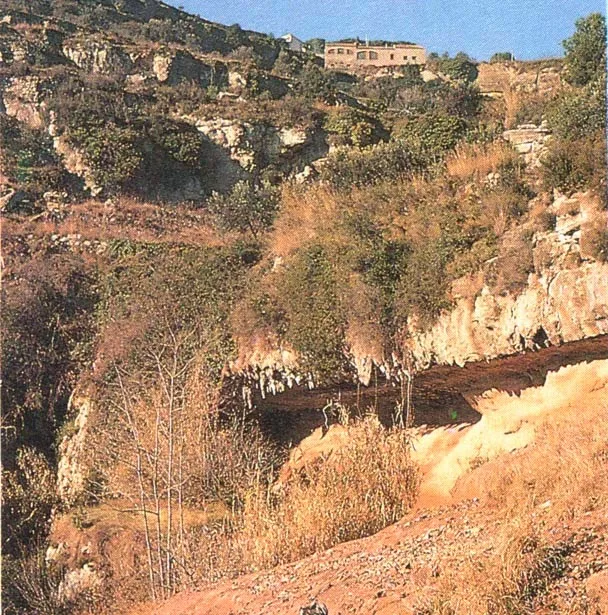
Balma del Ca
3.3 km · E
Sant Feliu de Codines (Vallès Oriental)
2 topo.2 photos
Source: Espeleoindex (espeleoindex.com), modified. CC BY-NC 4.0, https://creativecommons.org/licenses/by-nc/4.0/