
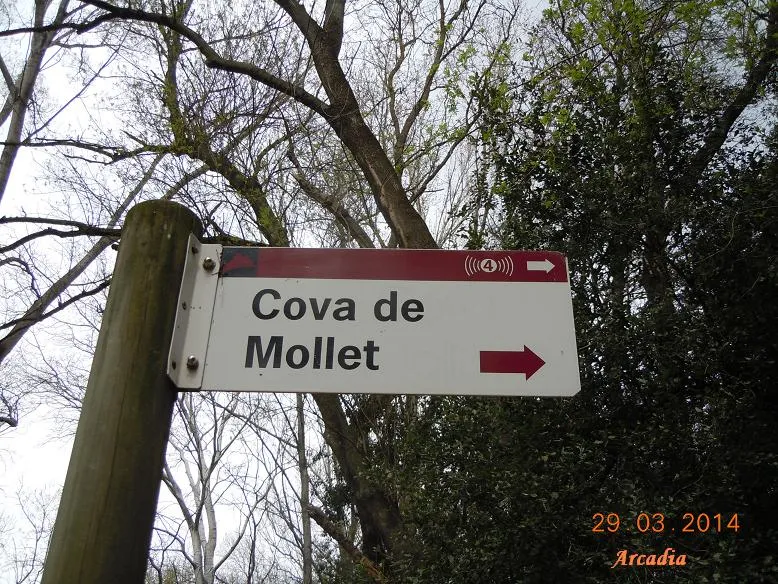
Cova d'en Mollet
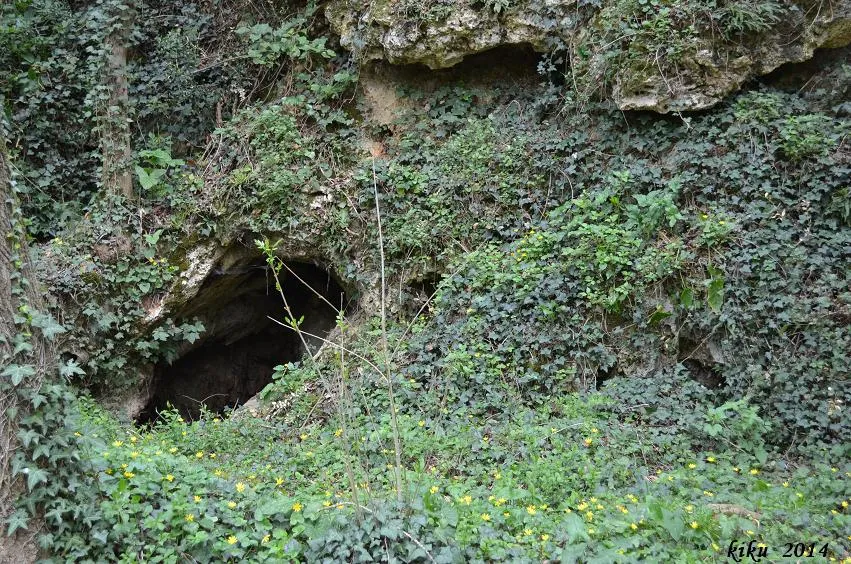
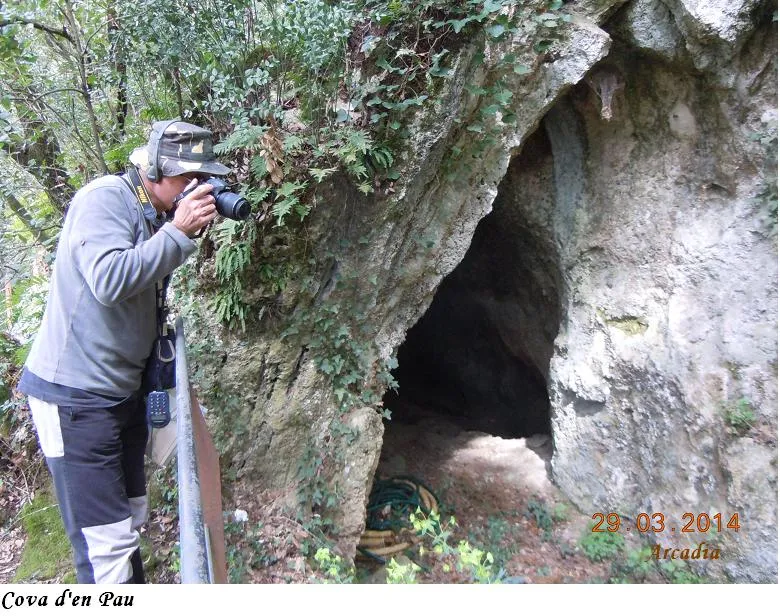
Small prehistoric cave in Serinyà, within the Prehistoric Caves Park. Mollet I is the only one of the five caves of speleological interest; the others are open travertine shelters.
EspeleoWorld
Cova d'en Mollet
Small prehistoric cave in Serinyà, within the Prehistoric Caves Park. Mollet I is the only one of the five caves of speleological interest; the others are open travertine shelters.
Serinyà · Pla de l'Estany
Length: 8 m · Depth: 3 m
Updated record
https://espeleoworld.com/en/c/cova-d-en-mollet
Information can change. Always verify coordinates, access, weather, and cave conditions before setting out.
Small prehistoric cave in Serinyà, within the Prehistoric Caves Park. Mollet I is the only one of the five caves of speleological interest; the others are open travertine shelters.
Topographic
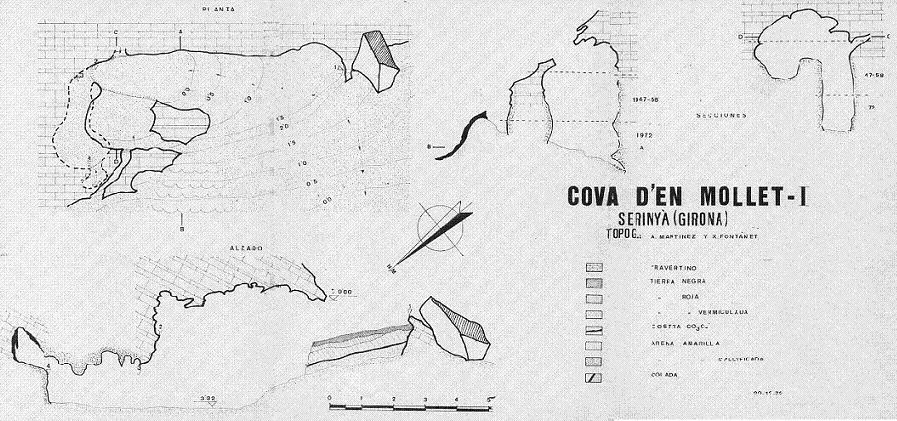
Espeleoindex · CC BY-NC 4.0, https://creativecommons.org/licenses/by-nc/4.0/ · Image © its author.
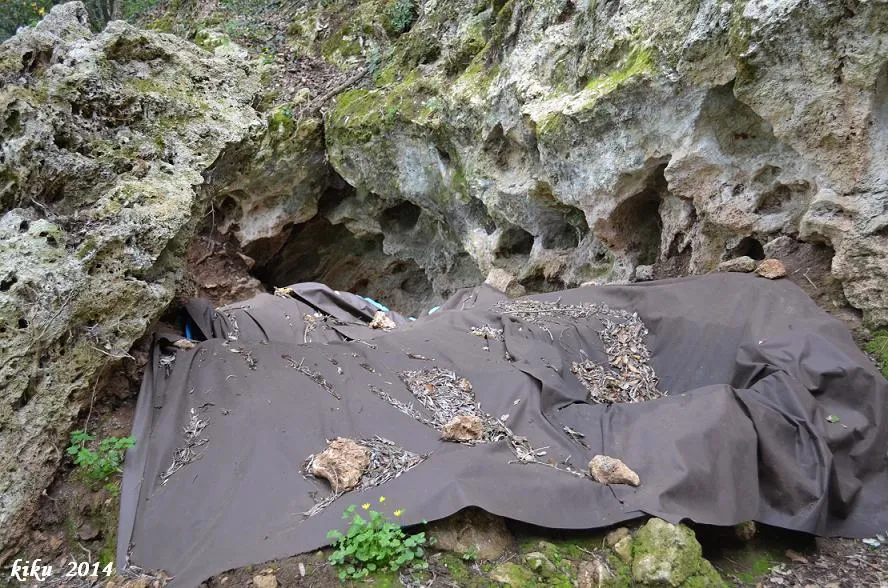
Photos
Espeleoindex · CC BY-NC 4.0, https://creativecommons.org/licenses/by-nc/4.0/ · Image © its author.
Description
Morphology
Currently most of the caves that make up the Prehistoric Caves Park of Serinyà are blurred with respect to their original form. A large part of their ceilings, when not the entire cavity, are collapsed and the areas that have not yet been excavated remain completely refilled with sediments, essentially clay and travertine fragments, which hide the forms and the location of the walls. The one of the Reclau Viver, for being completely excavated and for having a piece of intact ceiling, is the one that best shows us its original morphology. The cova de Mollet I is the only one of the five known by this name that has some speleological interest; the other four are simple shelters open in the travertine; the cova de Mollet III would probably have been the widest before the collapse of the ceiling cornice.
History
In some texts, we are told that while Josep M. Corominas was excavating in the cova del Reclau Viver (Serinyà), Baldiri Costa, tenant of Can Mollet, a house near the site, indicated to him the presence of a possible new cave, which received the name cova de Mollet. In other texts the discovery is attributed to Josep Pau and Jaume Franch in 1943. When, in the 70s, new discoveries were made it was called Mollet I, in order to distinguish it from the other caves that received the same name. Thus we find that in the bibliography it is cited indistinctly as cova de Mollet or de Mollet I. The first works were carried out by Dr. Josep M. Corominas in 1947, and were continued by himself in 1948. He did not resume them until 1958, now co-directed with Eduard Ripoll and Lluís Pericot. In 1972 J.M. Corominas excavated again at Mollet I, as well as a narrow corridor or "racó", located at the end of the cave on the north side. After these works, he considered his intervention at the site finished. It was in the 1972 excavations that a human molar was found. This molar, conserved with the palaeontological remains, was identified while cleaning and classifying the fauna. Unfortunately in this case the depth reference that J.M. Corominas always placed on all materials was lost, and therefore we do not know the exact place where it was found. This molar has become the oldest human remain in Catalonia dated at about 215,000 years.
User Comments (0)
No comments yet.
Be the first to share your experience!
Registered Explorations (0)
No explorations registered yet.
Register your visit to this cave!
Bibliography
- Borràs, J;Miñarro, JM; Talavera, F.(1982).-”el baix empordà, el gironès, la selva,l'osona, el vallès oriental i el maresme.” Catàleg Espeleològic de Catalunya (vol.6):109. Ed Políglota. Barcelona.
- Canal i Roquet, Josep; Soler i Masferrer, Narcís.(1976).-El Paleolític a les Comarques Gironines.
- Cortada,T; Maroto,J.(1990).-”La dent humana Paleolítica de la cova de Mollet I (Serinyà)” Quaderns del centre d'estudis comarcals de Banyoles (1988-89):135-147.
- Pinta Rodriguez, Jordi Ll de la.(1984).-”Repertori de cavitats d'interès arqueològic” Exploracions (8):19-31. EC Gràcia. Barcelona.
- Topografia. Arxiu ERE del CEC.
Nearby caves


Source: Espeleoindex (espeleoindex.com), modified. CC BY-NC 4.0, https://creativecommons.org/licenses/by-nc/4.0/