
Balma de Sant Bartomeu de Fraguerau
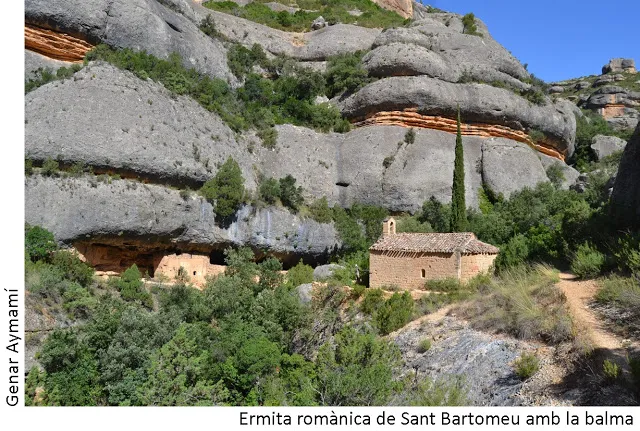
Large rock shelter beside the Romanesque chapel of Sant Bartomeu, in Montsant (Ulldemolins), with a built section and the font dels Cossis.
EspeleoWorld
Balma de Sant Bartomeu de Fraguerau
Large rock shelter beside the Romanesque chapel of Sant Bartomeu, in Montsant (Ulldemolins), with a built section and the font dels Cossis.
Ulldemolins · Priorat
Length: 15 m
Updated record
https://espeleoworld.com/en/c/balma-de-sant-bartomeu-de-fraguerau
Information can change. Always verify coordinates, access, weather, and cave conditions before setting out.
Large rock shelter beside the Romanesque chapel of Sant Bartomeu, in Montsant (Ulldemolins), with a built section and the font dels Cossis.
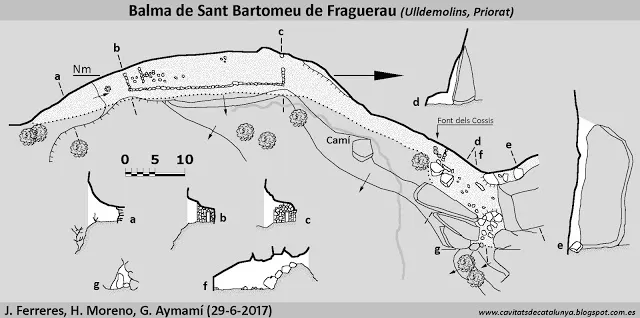
Topographic

Espeleoindex · CC BY-NC 4.0, https://creativecommons.org/licenses/by-nc/4.0/ · Image © its author.
Photos

Espeleoindex · CC BY-NC 4.0, https://creativecommons.org/licenses/by-nc/4.0/ · Image © its author.
Description
Morphology
The rock shelter measures 91 metres in length and on the S side is the built part, which constitutes the most interesting part and is where we find the rooms. Some steps are still standing, the fireplace, the ceiling is full of soot, which evidences a long stay; on this side a door gives onto the exterior, at the rear part of the construction. Further on we find a small chamber of 3.2 by 3 metres with two small windows; on the walls one can see the sockets of the beams that must have supported the floor of an upper storey now disappeared.
The main built part is formed by a room 24 metres long by about 4.5 wide where no remains of partitions are observed, there is only a small window at one end and at the other is the access door to the enclosure, which measures 3.7 metres in width.
On the exterior side one observes how in the construction of the wall there are parts built of stone and parts of rammed earth.
The cavity ends in a chaos of fallen blocks with an exit to the exterior through the upper part.
Hydrology
A few metres further on we find a part of the cavern called balma de les Bassetes, where the font dels Cossis is located and where dripstones are present; the water is collected in one natural cossi and two artificial ones. This corner is protected by a stone wall.
Other details
Beside the chapel, which constitutes a beautiful example of Romanesque architecture, there is a large cavity, already used during prehistoric periods; here resided a hermit monk to whom the construction of the chapel is attributed.
History
Known since time immemorial. On 28 July 1192, the anchorite fra Guerau Miquel (the name Guerau is an archaic form of the current name Gerard) obtained possession of a part of the valley of the Montsant river, where he already lived since the year 1160, and there he built two chapels, that of Santa Maria and that of Sant Bartomeu, which is the one that has survived to the present day.
User Comments (0)
No comments yet.
Be the first to share your experience!
Registered Explorations (0)
No explorations registered yet.
Register your visit to this cave!
Bibliography
- Totes les dades, topografia i fotografies han estat extretes del blog: cavitatsdecatalunya.blogspot (de Jordi de Valles). Apunt del 20-8-2017. Autor fitxa: G. Aymamí
Nearby caves
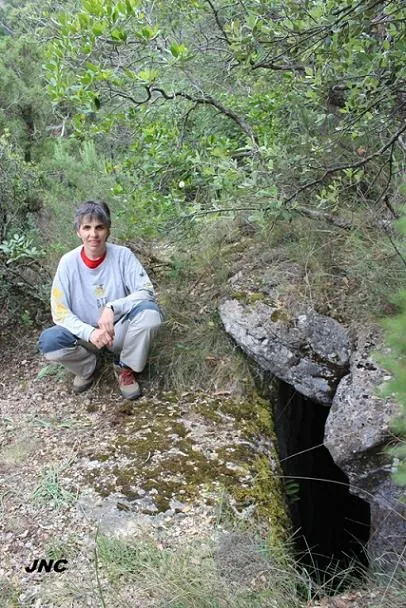
Avenc del Moliner
0.8 km · SE
Ulldemolins (Priorat)
1 topo.6 photos
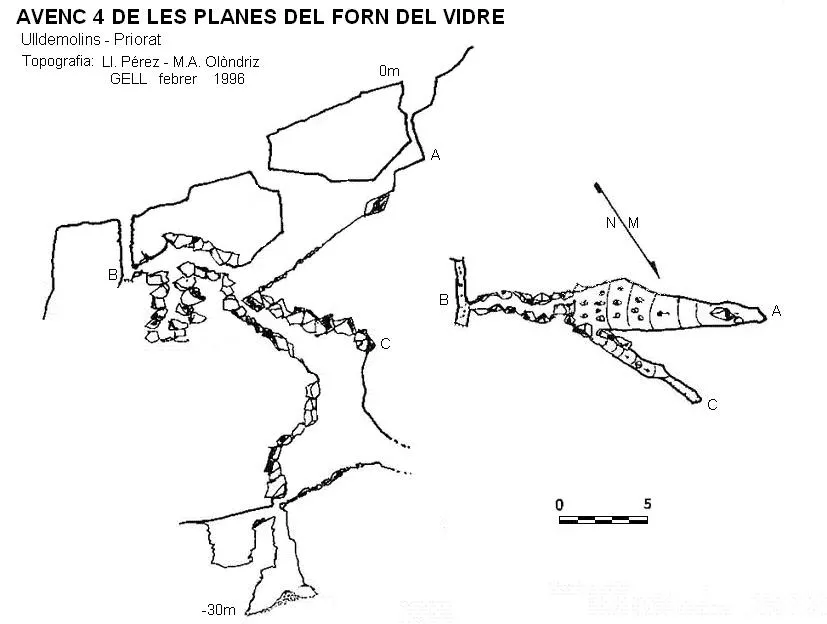
Avenc 4 de les Planes del Forn del Vidre
1.3 km · S
Ulldemolins (Priorat)
1 topo.
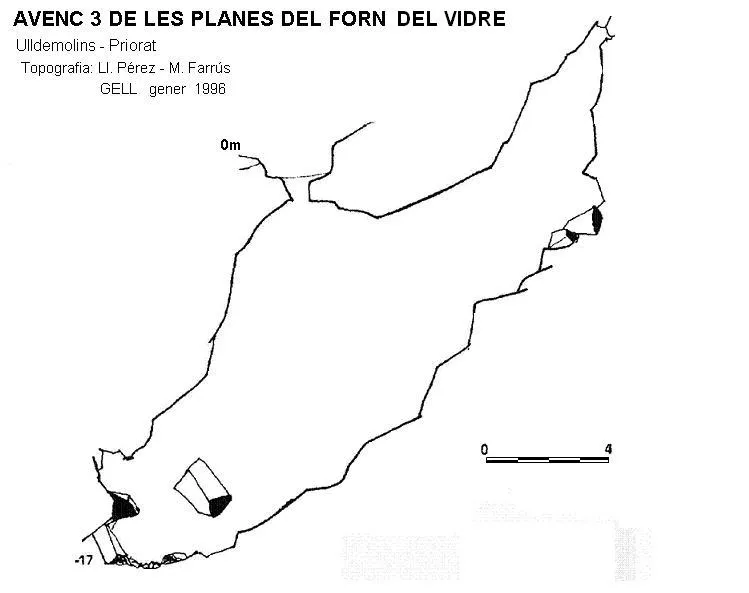
Avenc 3 de les Planes del Forn del Vidre
1.3 km · S
Ulldemolins (Priorat)
1 topo.
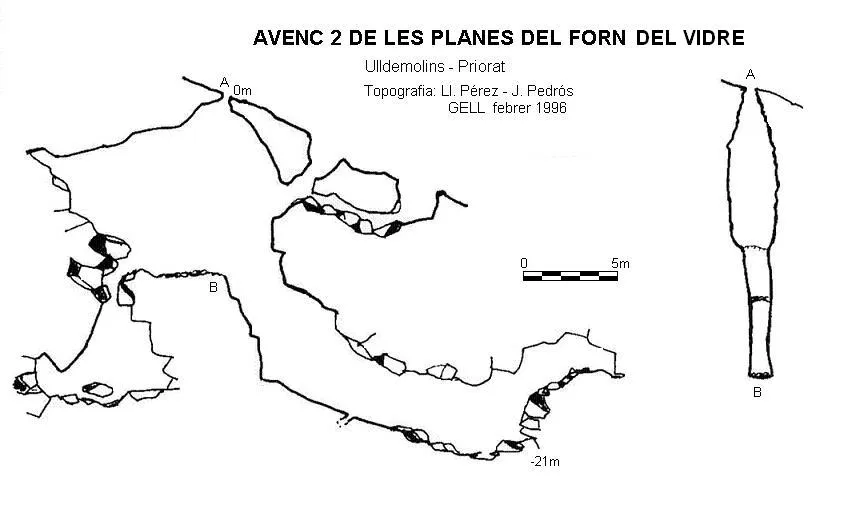
Avenc 2 de les Planes del Forn del Vidre
1.3 km · S
Ulldemolins (Priorat)
1 topo.
Source: Espeleoindex (espeleoindex.com), modified. CC BY-NC 4.0, https://creativecommons.org/licenses/by-nc/4.0/