
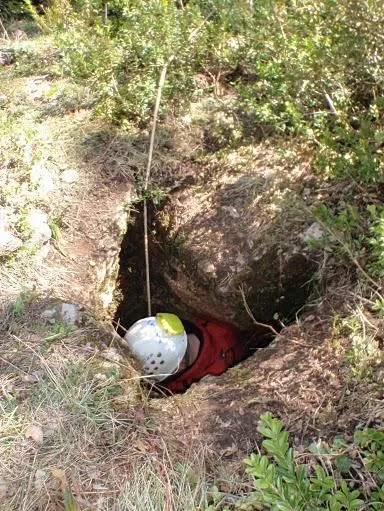
Avenc de l'Engany
A 78 m deep pit at the Mola de Catí (el Port, Tortosa), with a labyrinthine route and large vertical shafts.
EspeleoWorld
Avenc de l'Engany
A 78 m deep pit at the Mola de Catí (el Port, Tortosa), with a labyrinthine route and large vertical shafts.
Tortosa · Baix Ebre
Length: 150 m · Depth: 78 m
Updated record
https://espeleoworld.com/en/c/avenc-de-l-engany
Information can change. Always verify coordinates, access, weather, and cave conditions before setting out.
A 78 m deep pit at the Mola de Catí (el Port, Tortosa), with a labyrinthine route and large vertical shafts.
Topographic
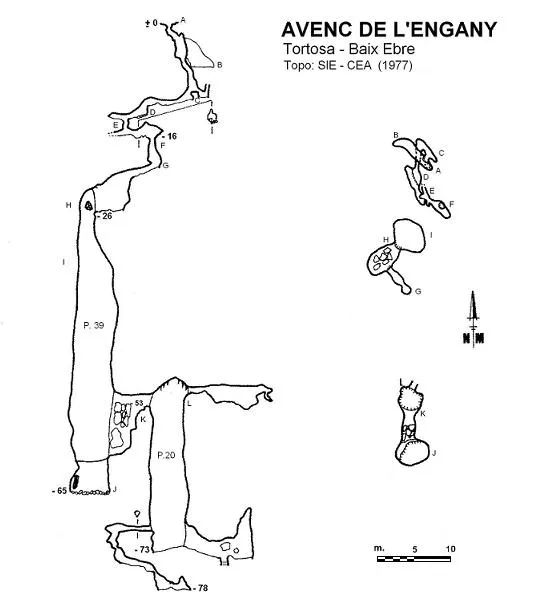
Espeleoindex · CC BY-NC 4.0, https://creativecommons.org/licenses/by-nc/4.0/ · Image © its author.
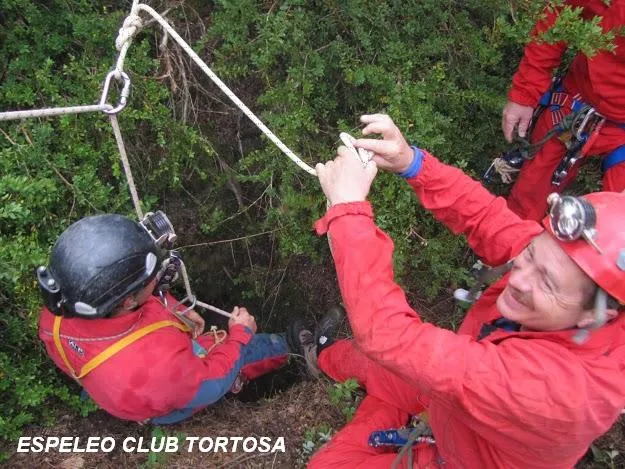
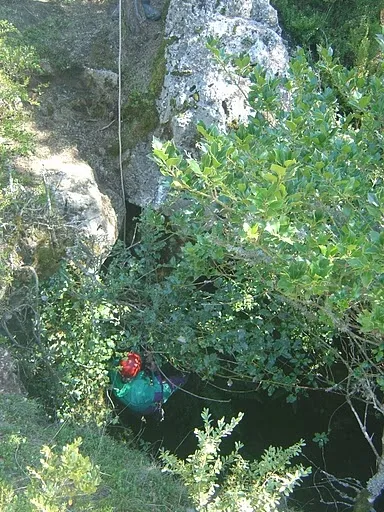
Photos
Espeleoindex · CC BY-NC 4.0, https://creativecommons.org/licenses/by-nc/4.0/ · Image © its author.
Description
Morphology
The entrance appears as a tiny shaft of irregular outline, with dimensions of 0.4 x 0.6 metres that increase slightly as depth is gained. At -1.5 a 3 metre drop is descended by opposition, leading out into a small side chamber. The continuation is found just in front of the last vertical (NE), being a crawl with a steep slope that gives onto a 3 metre drop which we will also descend by opposition, following a further 1.5 metre drop that leads to the -10 level. From this point until reaching 15 metres depth it is a chaotic and labyrinthine stretch. From -10 we follow towards the NW for 3 metres, then turn sharply to the S. 4 metres further on, crawling, a further 1.2 metre drop is descended, the fissure turns towards the SE 4 metres more and shortly before ending, on the floor and behind a block, a 2.2 metre shaft opens; at its bottom there are two possible continuations. We take the more southerly one and after a low crawl with a bend, one reaches the small chamber at the -16 level. From here, a 3.8 metre shaft leads us to a well-defined conduit, 4 metres long, 25º inclination and 1 metre in diameter, leading out, by means of an overhanging 4.6 metre shaft, into a chamber of 5 x 3 x 5 metres, with the floor covered in blocks. From this chamber (-26.5 level) a morphological change becomes evident and the signs of dissolution-corrosion are clear, exposing the rhythmic stratification characteristic of the great cavities of the massif. By means of a window one reaches the broad 39 metre shaft that constitutes the major axis of the pit; at its bottom, -65 level, there is no appreciable continuation, but 5 metres above the base, there is a ledge on the SE wall with a cornice that curves diagonally around the shaft and allows us to overcome, between blocks, 7 metres until reaching the -53 level, where a gallery leads us rapidly to another broad 20 metre shaft. Before beginning the descent, by means of a delicate and airy traverse between flowstone on the eastern part of the shaft, one can reach 5 metres further on and just in front of the gallery joining the two “great” shafts, a stretch of gallery about 12 metres long. At the bottom of the shaft (-73 level), there is a short gallery towards the SW. With a terminal chimney and a small flooded shaft. However, progression can be continued by climbing 2.4 metres up the base of the shaft. At this point, and through a crawl in keyhole form, one reaches a descending 4 metre drop and at its bottom, after a very selective narrow section, the conduit becomes vertical again for 3 metres to continue at its bottom again with difficulties and lead out within a few metres into a terminal small chamber 1.5 metres in diameter, where the point of maximum depth is reached.
Hydrology
At the bottom of the shaft (-73 level), there is a small flooded shaft.
Progression
Progression can be continued by climbing 2.4 metres up the base of the shaft. At this point, and through a crawl in keyhole form, one reaches a descending 4 metre drop and at its bottom, after a very selective narrow section, the conduit becomes vertical again for 3 metres to continue at its bottom again with difficulties and lead out within a few metres into a terminal small chamber 1.5 metres in diameter, where the point of maximum depth is reached.
History
Discovered and explored down to -30m during Holy Week (April 1970) by D. Schibi and F. Monsonís (ERE – CEC). During these same days the Avenc de la Casualitat (-7m) was explored, of which no data are preserved and which could be some other cavity in the area later known under another name.
A week later (25 and 26-4-1970) a team from the ERE-CEC (D. Schibi, O. Escolá, M. Ubach and P. Cantons) return to the cavity and carry out the complete exploration down to -80m, according to the sketch made at that time. (Information provided by Pere Cantons).
It is not until 1977 that it is rediscovered by members of the SIE-CEA and they make it known the following year.
User Comments (0)
No comments yet.
Be the first to share your experience!
Registered Explorations (0)
No explorations registered yet.
Register your visit to this cave!
Bibliography
SIE (1978).- “Contribució al coneixement espeleològic dels Ports del Caro (Baix Ebre) (IV): La Mola de Catí i el Mont Caro”. EspeleoSie (21): 27-70. SIE-CE Àliga. Barcelona.
Fotografies i Coordenades aportades per: Elena Mateu, Oscar Barquero i Joan Sabater.
Nearby caves
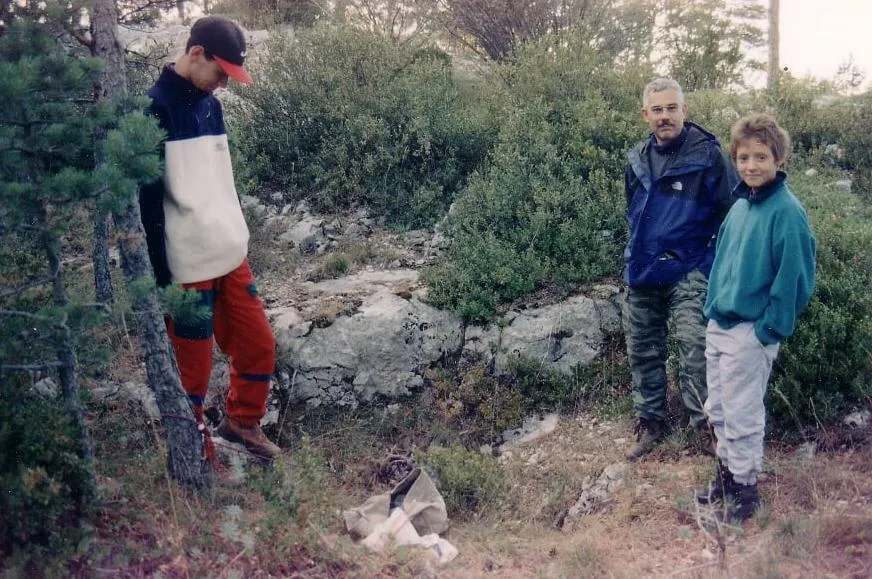
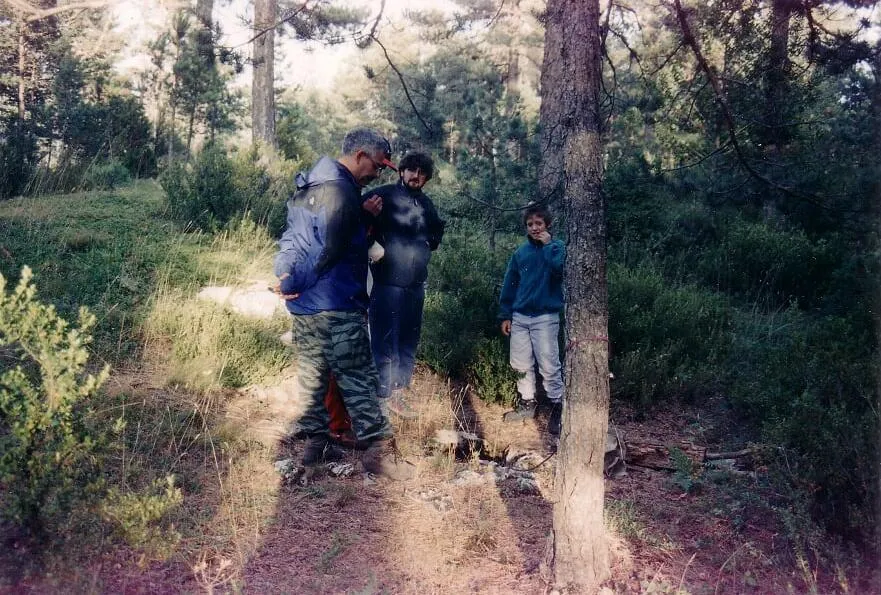


Source: Espeleoindex (espeleoindex.com), modified. CC BY-NC 4.0, https://creativecommons.org/licenses/by-nc/4.0/