
EspeleoWorld
Cueva de Pozalagua
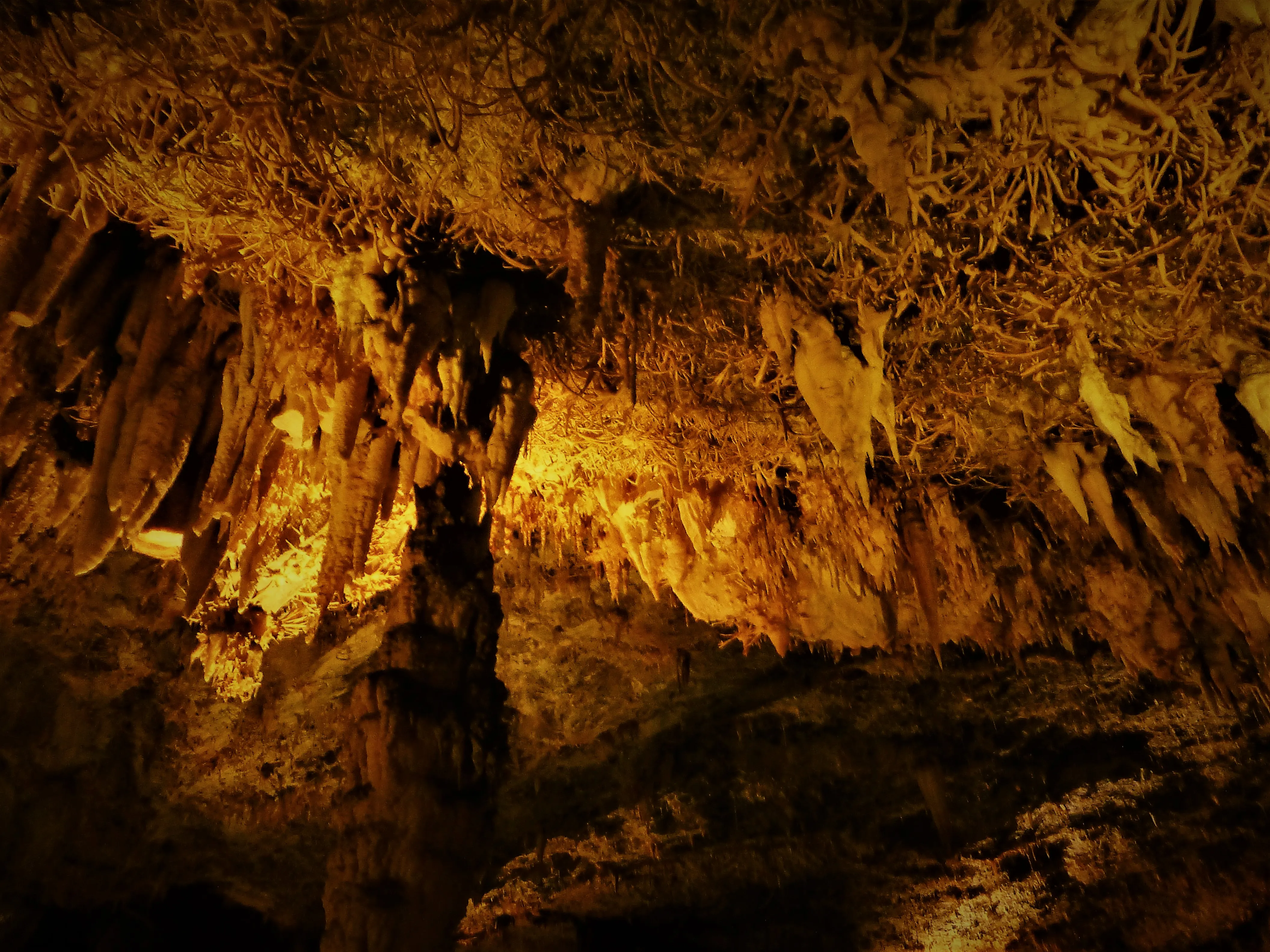
A single huge chamber in the limestones of the Peñas de Ranero, 60 m wide, 110 m long and up to 20 m high, filled with speleothems and said to hold the biggest concentration of helictites in the world.
Karrantza Harana/Valle de Carranza
Länge: 225 m
Aktueller Datensatz
https://espeleoworld.com/de/c/cueva-de-pozalagua-karrantza-harana-valle-de-carranza
Informationen können sich ändern. Koordinaten, Zugang, Wetter und Höhlenbedingungen vor dem Aufbruch immer prüfen.
A single huge chamber in the limestones of the Peñas de Ranero, 60 m wide, 110 m long and up to 20 m high, filled with speleothems and said to hold the biggest concentration of helictites in the world.
Fotos
Makeip · CC0 1.0, https://creativecommons.org/publicdomain/zero/1.0/ · Wikimedia Commons · https://commons.wikimedia.org/wiki/File:Pozalagua_leizea.jpg
Beschreibung
Morphologie
The cave is a single huge chamber, 60 m wide, 110 m long, and up to 20 m high.
Speläotheme
The chamber is filled with an abundance of speleothems, stalagmites, stalactites, columns, shawls and curtains. But the highlights are a great number of helictites, found all over the chamber. They talk of the biggest concentration of helictites in the world.
Befahrung
There is a normal cave tour, but also a historic tour named Pozalagua Flashback which recalls the day of the discovery. The cave is entered with headlamps, like the quarry workers did in 1957 when they discovered the cave. Groups can also visit the Old Dolomite Factory. For school groups they have prepared didactic units for both the cave and the dolomites factory, so the pupils can work on the topic before or after the visit.
Weitere Einzelheiten
Another interesting fact about the cave is a recent restoration project. At this time, the industrial era of this area ended and tourism increased, and so a number of institutions tried to optimize the country’s touristic infrastructure, which included a Restoration and Classification Plan for the Pozalagua area. An initial survey of the cave revealed that the original light system produced a lot of light and heat which resulted in the growth of lampenflora. So, after less than a decade, the cave already suffered from various damages. They were, of course, less than the damages of an unprotected cave, which is subject to vandalism and looting. And a good sign was the stable climate, which shows that the cave is able to handle 30.000 visitors per year.
The first change was the renovation of the light system; powerful lamps were replaced by cold lamps, which emit much less infrared light. This also resulted in a reduction of electricity consumption by 30%. The innovative lighting systems tried to light the cave very uniformly and during the tour the light slowly becomes darker, which gives the eyes time to adapt. This was a very early experiment in using LED technology; their original publications did not even mention the term LED, because it was completely unknown to the public at that time.
Benutzerkommentare (0)
Noch keine Kommentare.
Seien Sie der Erste, der seine Erfahrung teilt!
Registrierte Erkundungen (0)
Noch keine Erkundungen registriert.
Registrieren Sie Ihren Besuch in dieser Höhle!
Höhlen in der Nähe

Enthält Informationen aus Grottocenter (Wikicaves), grottocenter.org, bereitgestellt unter der Open Database License (ODbL 1.0, https://opendatacommons.org/licenses/odbl/1-0/), verändert. · https://grottocenter.org/ui/entrances/37957 · Datenstand 2026 · Quelle: Show Caves of the World (Jochen Duckeck) (www.showcaves.com), verändert. CC0 1.0, https://www.showcaves.com/english/TermsOfUse.html Show Caves of the World (showcaves.com), Jochen Duckeck · Text von Jochen Duckeck (Cueva de Pozalagua) · bearbeitet von Espeleoworld (normalisiert, übersetzt); die Bearbeitung steht unter der Lizenz CC0 1.0, https://www.showcaves.com/english/TermsOfUse.html · Namen, Beschreibung · abgerufen am 2026-11-19 · Datenstand 2026 · Die abgeleiteten Daten sind auf Anfrage unter der ODbL erhältlich: [email protected]