
EspeleoWorld
Cova del Canelobre
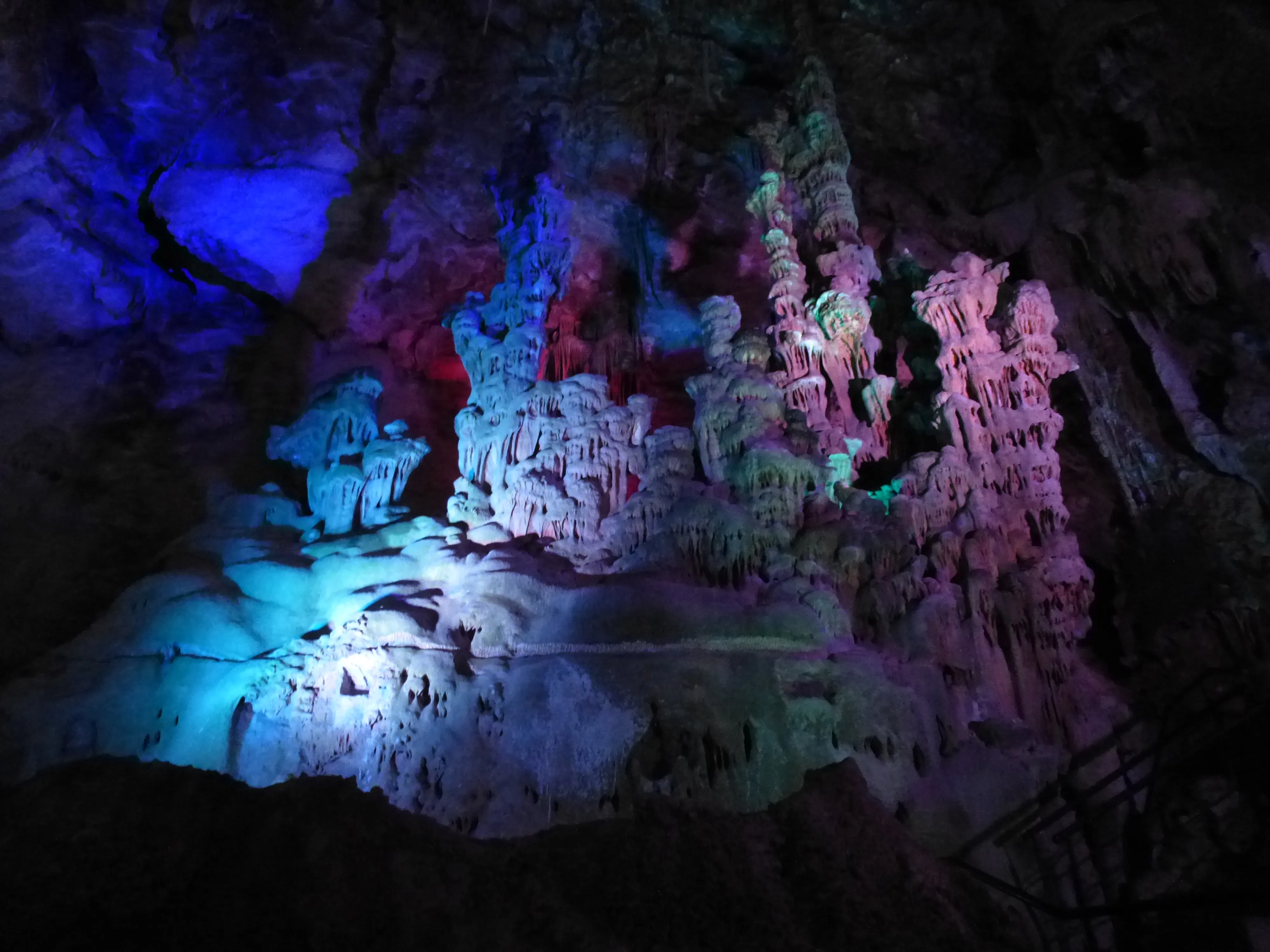
Cuevas del Canalobre is a single huge chamber 150 m long and 70 m high, known for stalactites resembling chandeliers and used for concerts and folk festivals.
Busot
Länge: 150 m · Tiefe: 50 m
Aktueller Datensatz
https://espeleoworld.com/de/c/cova-del-canelobre-busot
Informationen können sich ändern. Koordinaten, Zugang, Wetter und Höhlenbedingungen vor dem Aufbruch immer prüfen.
Cuevas del Canalobre is a single huge chamber 150 m long and 70 m high, known for stalactites resembling chandeliers and used for concerts and folk festivals.
Fotos

© chisloup · CC BY 3.0, https://creativecommons.org/licenses/by/3.0/ · Wikimedia Commons · https://commons.wikimedia.org/wiki/File:La_grotte_de_canelobre_-_panoramio_(6).jpg
Beschreibung
Morphologie
Cuevas del Canalobre (Caves of the Chandelier) is a single huge chamber with a length of 150 m and a height of 70 m. The mountain consists of 145 million years old Upper Jurassic rock.
Speläotheme
The cave contains many stalactites, some of them looking like chandeliers, which gave the cave its name. Outside the stage there are several groups of stalagmites; the La Sagrada Familia reaches a height of 25 m, and the El Canelobre is thought to be more than 100,000 years old.
Befahrung
The cave is known since a thousand years, but was never important. During the 19th century there were some documented visits, but just touristic visits, no exploration. The first time the cave became actually important was in the Spanish Civil War, in the 1930s, when it was used as an aircraft repair shop by the Republican army. For this it was necessary to do some development work: an access tunnel to the cave was built, also trails and several platforms inside the chamber. Those developments are still part of the show cave trails.
Weitere Einzelheiten
The huge chamber has a good sound, so it is used for concerts and folk festivals. The cave contains a large stage for such events. Despite so many favorable facts, there are two drawbacks: the cave is in summer very well visited, there are regular bus trips from the tourist centers at the coast, and it is lighted with coloured light.
Benutzerkommentare (0)
Noch keine Kommentare.
Seien Sie der Erste, der seine Erfahrung teilt!
Registrierte Erkundungen (0)
Noch keine Erkundungen registriert.
Registrieren Sie Ihren Besuch in dieser Höhle!
Höhlen in der Nähe
Quelle: Generalitat Valenciana – ICV, Catálogo de Cuevas de la Comunitat Valenciana (Decreto 65/2006) (dadesobertes.gva.es), verändert. CC BY 4.0, https://creativecommons.org/licenses/by/4.0/ Catálogo de Cuevas 2006 CC BY 4.0, Generalitat · Datenstand 2006 · Quelle: Show Caves of the World (Jochen Duckeck) (www.showcaves.com), verändert. CC0 1.0, https://www.showcaves.com/english/TermsOfUse.html Show Caves of the World (showcaves.com), Jochen Duckeck · Text von Jochen Duckeck (Cuevas del Canelobre) · bearbeitet von Espeleoworld (normalisiert, übersetzt); die Bearbeitung steht unter der Lizenz CC0 1.0, https://www.showcaves.com/english/TermsOfUse.html · Tiefe, Länge, Namen, Beschreibung · abgerufen am 2026-11-19 · Datenstand 2026