
Schillat-Höhle
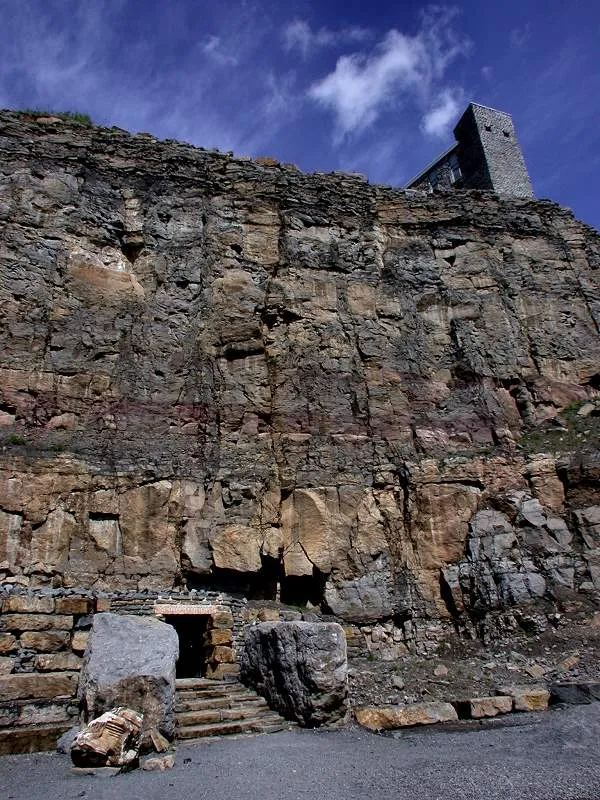
The Schillathöhle is a developed show cave in oolitic limestone of the Süntel ridge, more than half of its once 400 m length destroyed by quarrying, with a dry river passage and small speleothems.
EspeleoWorld
Schillat-Höhle
The Schillathöhle is a developed show cave in oolitic limestone of the Süntel ridge, more than half of its once 400 m length destroyed by quarrying, with a dry river passage and small speleothems.
Hessisch Oldendorf
Sviluppo: 400 m
Scheda aggiornata
https://espeleoworld.com/it/c/schillat-hoehle-hessisch-oldendorf
Le informazioni possono cambiare. Verifica sempre coordinate, accesso, meteo e condizioni della cavità prima di partire.
The Schillathöhle is a developed show cave in oolitic limestone of the Süntel ridge, more than half of its once 400 m length destroyed by quarrying, with a dry river passage and small speleothems.
Foto

Jochen Duckeck · CC0 1.0, https://creativecommons.org/publicdomain/zero/1.0/ · Show Caves of the World (showcaves.com) · https://www.showcaves.com/english/de/showcaves/Schillat.html
Descrizione
Morfologia
The Schillathöhle (Schillat Cave) is one of several caves in the mountain ridge called Süntel, in the northern Weserbergland. The typical rocks here are oolitic limestone from the Oxfordian (Upper Jurassic, Malm). This stage is locally called Korallenooloith (corall oolite) and is most important for both quarrying and caves. Here at the quarry Segelhorst it is quarried by the Norddeutsche Naturstein GmbH. In their limestone quarries, now and then caves are found, like the Schillathöhle or the Riesenberghöhle.
More than half of the once 400 m long cave was destroyed by the quarrying of the limestone. There are two remaining parts, which are not connected any more. An artificial connection was constructed to protect the visitors from falling rocks from the quarry walls above. It is made of a concrete tube, the outside covered by natural rocks, but the inside painted with cave paintings in the habit of the Grotte de Lascaux (France) by students of the Kunsthochschule Hildesheim.
In this tube is an exit to the quarry floor, which is the first stop of the tour. It gives the guide the chance to explain a bit about the time the rocks were deposited. There are ripple marks on the rocks, which show the sedimentary origin. The high walls above with the entrance building and the elevator tower above are impressive.
Concrezioni
The cave passage which the visitors now enter is completely without speleothems, as it is a now dry river passage. First there is a collection of speleothems, and calcite crystals, cave pearls and cave coral relocated from other caves of the area. Many of these exhibits were a result of the quarrying, and the caves they were found in are completely destroyed. The last part of the cave does contain some speleothems. They are really small and unspectacular, even for German means, and thus some fancy legends are told about them. For example there is the story of a bad guy who was banned into the cave and petrified here. A pair of stalagmites is said to be his legs.
Idrologia
There are the remains of flowing water, including solution pits and erosional forms in the rock.
Progressione
All visitors are equipped with helmets, a tradition of show mines, which is rather uncommon for a show cave. An elevator accomplishes the vertical transportation needs of the visitors to the 45 m deeper level of the cave. As there is only one passage the tour returns the same way, through the exhibitions and the artificial tunnel to the elevator. Behind the elevator there is the opposite end of the cave, which is equipped with seats and a slide projector.
Altri dettagli
The Schillathöhle was named after Bodo Schillat, a speleologist of the Höhlengruppe Nord and discoverer of the famous Riesenberghöhle. The Riesenberghöhle is one of the biggest caves of Niedersachsen and about 1,100 m long. It has extraordinary formations, but unfortunately they are rather fragile. Because of this, this cave is protected and a development for the public is impossible. But on the other hand there is a huge demand for a public cave in this part of Germany, as there are no other show caves. So the persons in charge decided to develop the smaller Schillathöhle to allow the public to see a local cave, which on the other hand reduced pressure on the opening of the more fragile Riesenberghöhle. This strategy was even supported by the local environmentalist party, the Fraktion der Grünen Hessisch Oldendorf. During several years of development work by the future cave administration and the caving club Höhlengruppe Nord, the main passage was equipped with light and concrete paths.
But after entering this building, the view down into the quarry is really impressive. A cave which is really ordinary, if not to say boring, at least for the average visitor. It seems, the only reason to develop this cave was really the lack of any other show cave in the area. And as the management was aware of this, they decided to spice it up by adding a rather huge exhibition inside this cave. A second part of the exhibition is dedicated to fossils from the Jurassic, ammonites, belemnites and echinites. Plastic models show how those once looked like. The third part of the exhibition shows minerals of the area, which are not connected with Jurassic limestones. There are different rocks around with some interesting ores and crystals. Thus distracted from the boring cave the visitor reaches the last part of the cave. A 3D slide show takes the cave visitors on a virtual tour through the closed Riesenberghöhle. The photographs were made by Franz Miller from south Germany and David Stuckey from Sydney, Australia. This is probably the most impressive part of the tour.
Commenti degli utenti (0)
Nessun commento ancora.
Sii il primo a condividere la tua esperienza!
Esplorazioni registrate (0)
Nessuna esplorazione registrata.
Registra la tua visita a questa grotta!
Grotte vicine
Contiene informazioni da Grottocenter (Wikicaves), grottocenter.org, rese disponibili con la Open Database License (ODbL 1.0, https://opendatacommons.org/licenses/odbl/1-0/), modificate. · https://grottocenter.org/ui/entrances/23615 · dati aggiornati a 2026 · Contiene informazioni da © OpenStreetMap contributors, www.openstreetmap.org, rese disponibili con la Open Database License (ODbL 1.0, https://opendatacommons.org/licenses/odbl/1-0/), modificate. · https://www.openstreetmap.org/node/158789995 · dati aggiornati a 2026 · Fonte: Wikidata – cave items (Germany) (www.wikidata.org), modificato. CC0 1.0, https://creativecommons.org/publicdomain/zero/1.0/ Wikidata (CC0 1.0) · nomi · ottenuti il 2026-11-13 · dati aggiornati a 2026 · Fonte: Show Caves of the World (Jochen Duckeck) (www.showcaves.com), modificato. CC0 1.0, https://www.showcaves.com/english/TermsOfUse.html Show Caves of the World (showcaves.com), Jochen Duckeck · Testo di Jochen Duckeck (Schillathöhle) · adattato da Espeleoworld (normalizzato, tradotto); l'adattamento è rilasciato con licenza CC0 1.0, https://www.showcaves.com/english/TermsOfUse.html · nomi, descrizione · ottenuti il 2026-11-21 · dati aggiornati a 2026 · I dati derivati sono disponibili su richiesta con licenza ODbL: [email protected]